
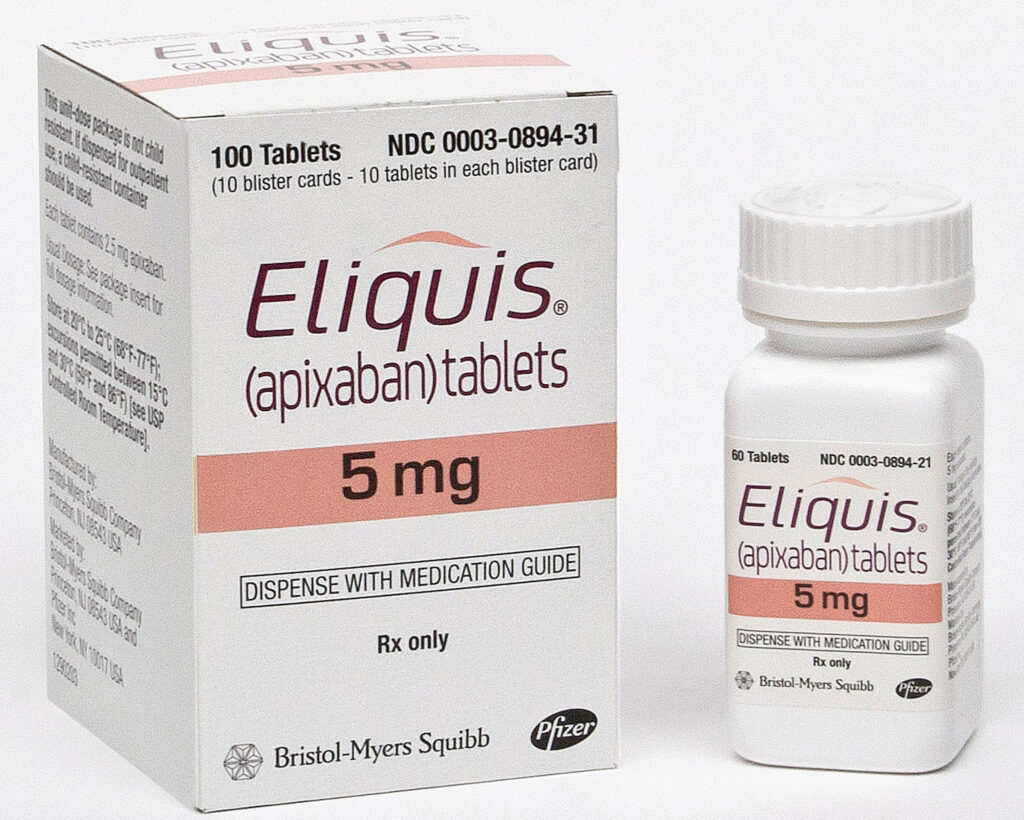
Eliquis (apixaban) is a prescription blood thinner used in humans to reduce the risk of harmful blood clots. Doctors commonly prescribe this medication to prevent stroke in people with atrial fibrillation and to treat or prevent deep vein thrombosis (DVT) and pulmonary embolism (PE).
Because Eliquis changes how your blood clots, some medical conditions make this drug unsafe. These conditions are called contraindications. Understanding these contraindications helps you avoid serious bleeding and other complications.
This article explains Eliquis contraindications in detail and tells you what actions you should take to stay safe.
What a contraindication means
A contraindication is a specific situation where you should not use a medication because the risks clearly outweigh the benefits.
For Eliquis, these contraindications usually involve:
- A high risk of bleeding
- Severe organ problems that affect drug handling
- Certain medical devices or conditions
You should always tell your doctor about your full medical history before you start Eliquis.
Absolute contraindications for Eliquis
Absolute contraindications are situations where you should not take Eliquis medicine at all.
Active pathological bleeding
You must not take Eliquis if you have active bleeding that a doctor considers clinically significant.
Examples include:
- Ongoing gastrointestinal bleeding
- Recent brain bleeding (intracranial hemorrhage)
- Uncontrolled bleeding from a wound or surgery
Because Eliquis blocks clot formation, this medication can worsen active bleeding and make it life-threatening.
What you should do: Tell your doctor immediately if you have bleeding symptoms such as black stools, red urine, vomiting blood, or severe unexplained bruising.
Severe hypersensitivity to apixaban
You should not use Eliquis if you have had a serious allergic reaction to apixaban or to any ingredient in this medicine.
Severe allergic reactions may include:
- Swelling of the face, lips, tongue, or throat
- Trouble breathing
- Severe rash or hives
What you should do: If you ever had this allergic reaction, tell every healthcare provider about this allergy.
Major contraindications related to heart valves
Mechanical prosthetic heart valves
You should not use Eliquis if you have a mechanical heart valve.
Clinical studies showed that direct oral anticoagulants like Eliquis do not protect patients with mechanical valves as effectively as warfarin. These patients also face a higher risk of clot formation and valve failure.
Comparison table:
| Heart valve type | Eliquis use | Reason |
| Mechanical valve | Contraindicated | Increased clot risk |
| Bioprosthetic valve | Sometimes allowed | Depends on clinical situation |
What you should do: Tell your doctor the exact type of heart valve you have. This valve detail directly affects anticoagulant choice.
Contraindications related to liver disease
Severe hepatic impairment
You should not take Eliquis if you have severe liver disease with impaired clotting ability.
The liver plays a major role in:
- Producing clotting factors
- Metabolizing apixaban
When liver function is severely reduced, Eliquis can increase bleeding risk unpredictably.
Clinical concern: Doctors often describe this condition as advanced liver disease with coagulopathy.
What you should do: Tell your doctor if you have cirrhosis, chronic hepatitis, or abnormal liver tests. Your doctor may choose another treatment.
Situations requiring extreme caution (relative contraindications)
These situations do not always forbid Eliquis use, but they require careful medical judgment.
High bleeding risk conditions
You may face higher risk if you have:
- Recent major surgery
- Recent brain injury
- Active stomach ulcers
- Certain bleeding disorders
In these cases, doctors must balance clot prevention against bleeding danger.
Kidney impairment
Your kidneys help remove Eliquis from your body. Severe kidney disease can raise drug levels and increase bleeding risk.
Important distinction: Kidney disease is not always a full contraindication, but it strongly affects whether Eliquis is safe for you.
What you should do: Tell your doctor if you have chronic kidney disease or require dialysis.
Drug and treatment-related contraindications
Spinal or epidural procedures
Eliquis increases the risk of spinal or epidural hematomas in people who receive:
- Epidural anesthesia
- Spinal punctures
These hematomas can cause long-term paralysis.
What you should do: Tell anesthesiologists and surgeons that you take Eliquis before any spinal procedure.
Concurrent use with other anticoagulants
You should not use Eliquis together with another blood thinner unless a doctor specifically instructs you to do so.
Examples include:
- Heparin
- Warfarin
- Other direct oral anticoagulants
Using multiple anticoagulants significantly raises bleeding risk.
Eliquis contraindications compared with other blood thinners
Understanding how Eliquis differs from other anticoagulants helps clarify why some contraindications matter.
| Feature | Eliquis | Warfarin |
| Mechanical valve use | Contraindicated | Allowed |
| Liver metabolism | Significant | Moderate |
| Routine blood tests | Not required | Required |
| Food interactions | Minimal | Many |
This comparison shows why doctors choose medications based on your medical conditions.
Warning signs that require urgent medical attention
You should seek emergency care if you experience:
- Sudden severe headache
- Weakness on one side of your body
- Uncontrolled bleeding
- Coughing or vomiting blood
These symptoms may signal dangerous bleeding.
Practical instructions for patients
To use Eliquis safely, follow these instructions:
- Tell your doctor your full medical history, including liver disease, kidney disease, and bleeding problems.
- List all medications and supplements you take, including over-the-counter drugs.
- Report any bleeding symptoms immediately, even if they seem minor.
- Never stop Eliquis suddenly without medical advice, unless a doctor tells you to stop.
- Inform all healthcare providers that you take Eliquis before procedures or surgeries.
Key takeaways
Eliquis is an effective medication, but this medication is not safe for everyone. Active bleeding, mechanical heart valves, severe liver disease, and serious allergies are major contraindications. Other conditions require careful monitoring and individualized decisions.
When you understand these contraindications and communicate openly with your healthcare team, you greatly reduce the risk of serious complications.