
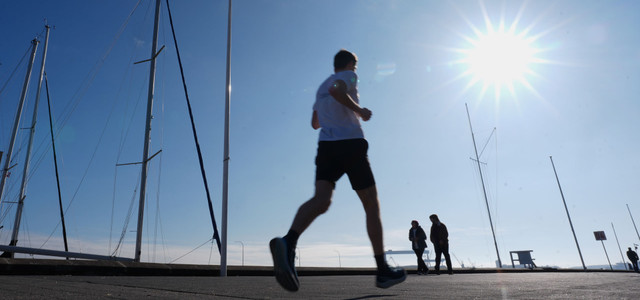
Is two and a half hours of exercise per week enough? A new study suggests that significantly more exercise could also bring greater health benefits.
According to a new study, significantly more exercise than previously recommended by the World Health Organization (WHO) could be useful in order to protect the cardiovascular system more effectively against disease. Adults should try to exercise for around 560 to 610 minutes per week – around 10 hours – in order to significantly reduce their risk of cardiovascular diseases such as heart attacks, strokes or heart failure, recommends a team from China’s Macao Polytechnic University in the British Journal of Sports Medicine.
In the study, exercise means sport that goes beyond light exercise, i.e. either moderate activity – where you get out of breath easily but can still hold a conversation – or intensive activity: the strain is so high that you breathe much more heavily and it becomes difficult to speak.
Different approach than the WHO
The scientists evaluated data from 17,088 people from a British health database – the UK Biobank. These wore accelerometers that recorded their typical activity for a week. Additionally, their maximum oxygen uptake was tested and estimated during a bike test. It was then observed over a period of around eight years which diseases occurred in the test subjects.
The authors summarize the central result as follows:
- According to the study, compliance with the World Health Organization (WHO) recommendation – at least 150 minutes of exercise per week – reduces the risk of cardiovascular diseases such as heart attack, stroke or heart failure by around 8 to 9 percent.
- When the new study recommended 560 to 610 minutes of exercise per week, the reduction in risk was significantly higher, namely more than 30 percent. However, this high level of exercise was only achieved by 12 percent of the study participants.
Why the WHO recommendation still makes sense
The WHO recommendations are intended as a minimum to provide basic protection against a variety of diseases and reduce mortality in the general population. The WHO sets a threshold that is realistically achievable for large parts of the population, since the greatest health gains are achieved when moving from complete inactivity to a little exercise. In contrast to the new study, which is based on measurements from sensors, the data on which the WHO recommendation is based is mainly based on self-reports from study participants.
Different needs depending on fitness
According to the authors, the new study shows that people with less basic fitness need a little more exercise to achieve the same benefits as more athletic people. Although the WHO’s 150-minute rule remains an important starting point, the authors emphasize that significantly longer activity times should be aimed for for optimal resistance.
The team also acknowledges that this is an observational study and no firm conclusions about cause and effect could be drawn. It could be the case that the group examined was healthier and fitter than the average population and therefore exercised more – not the other way around.
** marked with ** or orange underlined Links to sources of supply are partly partner links: If you buy here, you are actively supporting Techzle\.com, because we then receive a small part of the sales proceeds. More info.