
Batteries are used in a huge number of devices. At the same time, there are many uncertainties about this. What kind of batteries are there? How do you use them as optimally as possible, so that you maximize the lifespan? How do you limit the impact on the environment?
Gertjan Groen
 |
 |
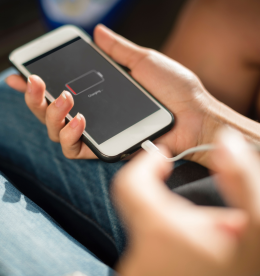
| About using batteries and chargers there are many prejudices |
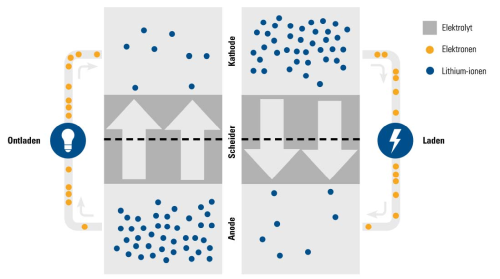
Schematic operation of a battery, such as Lithium-ion |
Batteries or accumulators are in more and more devices. Batteries or accumulators are in more and more devices. Think of your smartphone, tablet and laptop, electric bicycle or car, toys for the children, digital camera, tools, hearing aids, drones and so on. Electricity from the mains is of course preferable: it is about a thousand times cheaper and much more environmentally friendly than power from a battery. But in many devices you simply cannot do without. A rechargeable battery is of course better than a disposable battery and you have already earned back after charging it six times. You can improve the life of batteries yourself by taking good care of them. However, there are many prejudices about it. For example, how (often) and how fully you should charge batteries, whether you can charge them quickly or better slowly, and what other ways you can limit the impact on the environment. In this article we help you on your way.
HOW A BATTERY WORKS
A battery uses two metals, the so-called electrodes, one metal being much more precious than the other. These metals are immersed in a salt or acid solution, a so-called electrolyte. A chemical reaction ensures that electrons are released at the negative terminal (also called anode), while electrons are bonded to the positive terminal (cathode). The difference in electrons creates a voltage. As soon as the circuit is closed, for example by connecting a lamp, a stream of negatively charged electrons will start. At the same time, positively charged particles, or ions, move through the electrolyte. When the ions run out, the battery is empty. When charging, this process is reversed. Charging cannot be infinite, because the chemical reactions cause degradation. As a result, the electrodes, but also the electrolyte, work less and less effectively. Smart charging, so the battery lasts longer. Rather than wait until it is completely empty, try to keep the energy level between 30 and 90 percent. Finally, you also take care of your device and preferably protect it with a sturdy case.
Store batteries safelyThe capacity of a battery decreases when it is not used. This loss of capacity is greater at higher Store batteries in a cool place with ideally 50 percent charge |
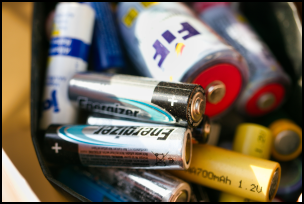 temperatures. If you want to limit the capacity loss as much as possible, store the batteries in a cool room (up to 25 degrees). It is important that batteries are charged before storing them, but no more than 80 percent. About 50 percent is ideal.
 TYPES OF BATTERIES
When we talk about batteries or accumulators, it usually concerns lithium ion. The composition of the anode and cathode can nevertheless differ and that is where most developments take place to improve the properties. Then you can think of, for example, the charging speed, energy density, weight and lifespan. But also safety, such as the risk of overheating, and behavior at low temperatures, such as freezing cold. Naturally, efforts are also being made to achieve more sustainable production. For example, attempts are made in the cathode to limit the content of ‘stabilizing’ cobalt, because of abuses during production in the African Congo. Looking at the developments, most innovations mean a higher charging speed and lifespan. The energy density appears to be a greater challenge. The result is of course that you can charge batteries much faster, but you can no longer run on one battery charge. Another challenge is the road from prototype to mass production.
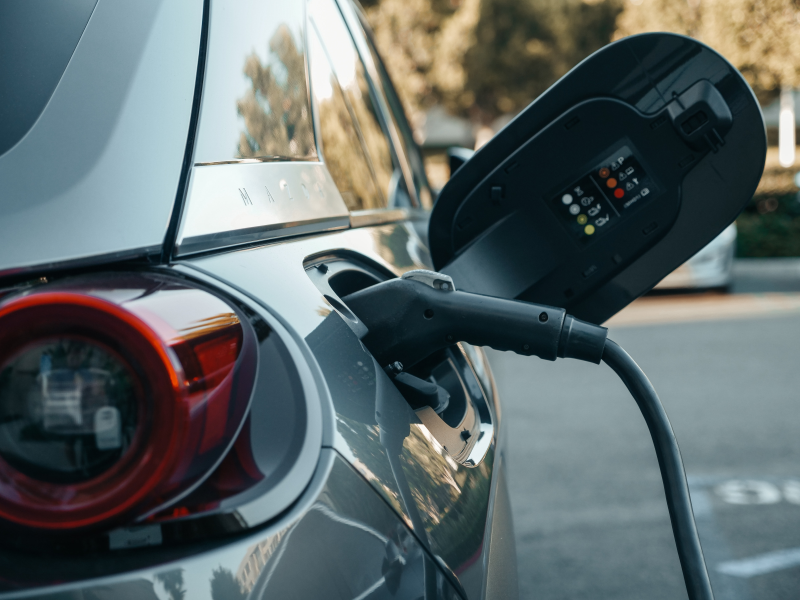 |
| The rise of electric cars is driving the development of new battery types |
ALTERNATIVES TO LITHIUM
Lithium still forms the basis for many developments. It has favorable properties that are difficult to replace. However, experiments are underway with alternatives such as sodium, calcium and magnesium. An Australian company is also working on an aluminum ion battery as a potential successor to lithium ion. The charging speed would be remarkably higher, about sixty times, and the lifespan up to three times higher. This is because the degradation remains very limited. In addition, overheating is not possible, one of the problems with lithium ion. It also offers environmental benefits. The raw material aluminum is much more available and extracting it is less harmful to the environment. We expect the development of new battery types to gain momentum due to electric cars. After all, the battery is the largest, heaviest and most expensive part, while sustainability is becoming an increasingly important theme.
Battery recycling importantIf batteries are not collected and recycled, they end up in the trash or on the street as residual waste. This litter is often incinerated. With batteries, this has disastrous consequences for the environment because of the toxic Recycling batteries is very important |
 substances contained in it. Therefore, take them to the collection bins in the store or supermarket. This also applies to mini batteries such as button cells and devices that contain batteries. Most materials in batteries can be recycled well!
FASTER LOAD?
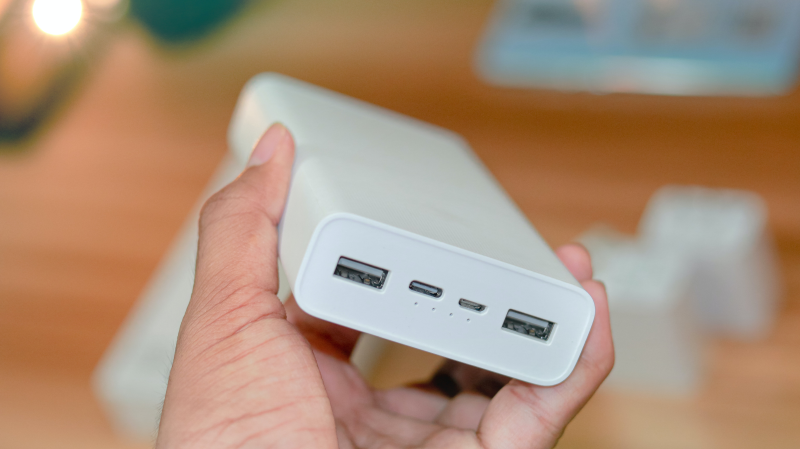
Using a fast charger is possible, but has a small negative effect. Such chargers work with a higher voltage, which, as mentioned above, is not ideal. In addition, they work less efficiently, producing more heat, which is also not beneficial for battery life. Newer types of batteries can handle it better. This is also important with regard to electric cars, so that you can quickly continue with a full charge after a cup of coffee. The same applies to wireless chargers as to fast chargers: more heat is produced due to the inefficient of such chargers. Incidentally, charging at very low temperatures (below freezing) is also a risk, because then internal damage occurs. Ideally, a battery should be neither too empty nor too full, charged and used at a normal speed and under normal circumstances. Slightly different rules apply to storing a battery (for a longer period of time) (see the first box above).
 |
REPLACE BATTERIES
The lifespan of lithium ion batteries is generally about three to five years. That does not mean that they will no longer work after that, but the capacity is clearly starting to decrease. Fortunately, you can replace most batteries yourself. It is obviously better for the environment if you replace a battery and do not buy a completely new device. One problem is that replacement batteries are often expensive and difficult to obtain. However, a search on the internet will often take you further. In any case, dispose of the old batteries properly for recycling (see box). Or dispose of the entire device, if battery replacement is not an option or very inconvenient, such as with recent smartphones and tablets. Many (more) raw materials in these devices can be reused.