

Alternate breathing comes from yoga and can help reduce stress and regulate the nervous system. Here you will find out how you can carry out the breathing technique yourself and what science says about it.
Alternate breathing is a breathing exercise from yoga, also known as Nadi Shodhana. The attention is drawn to the breath by alternately inhaling and exhaling from the right and left nostrils. Alternate breathing is used in practice to harmonize and balance the nervous system.
A lot of research has already looked at the role of breath in coping with stress and shows that alternate breathing can also have some positive physiological effects.
Here we explain what the exercise does to the body, how you can use alternate breathing and what the scientific situation looks like.
Alternate breathing in yoga: What happens in the body?
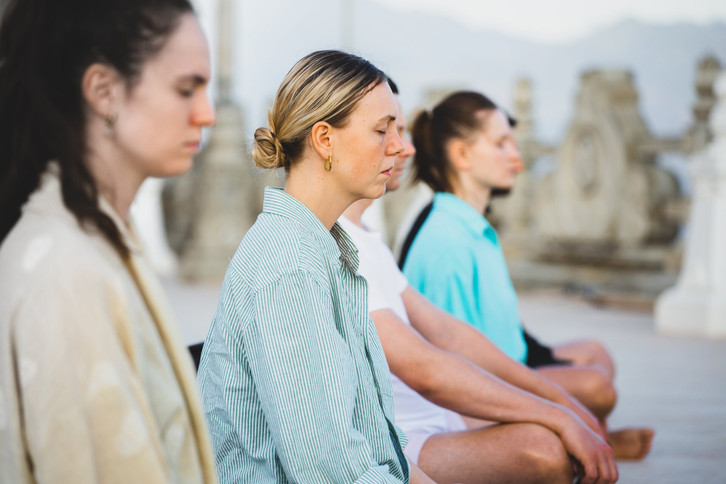
Alternating breathing is just one of numerous breathing exercises, also known as pranayama in yoga. The aim is to bring body and mind back into balance. It is well known and scientifically proven that conscious breathing can help manage stress. But what exactly is alternate breathing supposed to do?
The sports medicine doctor Dr. Ronald Steiner explains in detail which physiological processes underlie alternate breathing. In yoga philosophy we talk about different energy channels that flow through the body. Two polar channels run along the spine into the nostrils:
-
Left nostril: calm, creativity, cooling, feminine energy
-
Right nostril: activity, rationality, energy, masculine energy
By breathing in and out alternately through the left and right sides, the energy channels are supposed to be balanced. This in turn has a positive effect on the central nervous system.
In fact, a kind of alternate breathing happens all by itself in our body. This is called the nasal cycle or nasal cycle: The right and left halves of the nose alternately swell and swell within a few hours in order to regenerate.
Positive effects of alternate breathing
The specific effects of alternate breathing may look different for different people. Basically, the following advantages are attributed to alternate breathing:
-
Relaxation of body and mind
-
Stress management for inner balance
- Reduction of fear and inner restlessness
- Can provide greater focus and concentration
- Can promote mindfulness
Alternating breathing is therefore an easy-to-use method to bring body and mind into balance, promote alertness and manage stress in everyday life.
This is what science says about alternate breathing
Scientific studies have been examining the effects of breathing exercises for many years. Alternating breathing was also examined again and again. Many of the suspected positive effects were confirmed.
Here is an overview of the physiological effects of alternate breathing:
-
Blood pressure and heart rate are reduced.
- The function of the respiratory tract and lungs are improved
-
Cognitive functions and memory are increased.
-
The ability to move is expanded.
-
Mental health is supported, for example fears can be reduced.
Note: It is repeatedly emphasized that the methods for measuring such techniques and their effects do not have a fixed standard. A 2017 review points out that this deficiency makes it difficult to compare and reliably evaluate studies. Further research is necessary.
Risks and side effects
In principle, alternate breathing can be used by anyone. However, if you have health problems such as asthma, lung problems, heart problems or other previous illnesses in the lungs and chest, then seek additional medical advice.
The studies mentioned have not yet identified any significant side effects, but emphasize that alternate breathing should be carried out regularly in order to achieve the effects mentioned above.
Caution: If you experience shortness of breath, headache or dizziness, you should stop exercising immediately.
This is how you use alternate breathing
The basic principle of alternate breathing is simple: you use your thumb and ring finger of your right hand to close your nostrils one after the other. Then breathe in and out alternately through both sides.
If possible, find a quiet place where you can practice comfortably for a few minutes. You shouldn’t lean on it. Instead, sit upright, for example in a meditation seat.
-
Hand position: Extend the thumb and ring finger of your right hand up and fold in the index and middle fingers.
-
Position your fingers: Place your thumb gently on your right side of your nose and your ring finger gently on your left side of your nose.
-
Now close the right nostril with your thumb. Inhale slowly through the left nostril.
- Close the left nostril and open the right nostril instead. Breathe out slowly through the right and in again.
- Close your right nostril and breathe out and in on your left.
-
Repeat this cycle a few times for as long as is comfortable.
You can use alternate breathing whenever you feel like it. For example, integrate it into a morning and evening routine or practice it as part of your meditation.
Even in stressful phases of exam anxiety or similar, the breathing technique can help you regulate your nervous system and ensure more balance.
Read more on Techzle\.com:
- Breathe properly: why it is so important
- Lip brake: This is how the breathing technique helps you
- Wim Hof breathing: This is how the breathing technique works
Independent journalism needs people who stand behind it – including in Google searches. Now send a signal for more sustainability and → Save Utopia as a preferred source.
** marked with ** or orange underlined Links to sources of supply are partly partner links: If you buy here, you are actively supporting Techzle\.com, because we then receive a small part of the sales proceeds. More info.