Apple has announced a new Homepod. This smart speaker offers striking sound quality, extensive Siri functionality and solutions for a safe and reliable smart home.
Apple has announced the HomePod (2nd generation), a powerful smart speaker with many innovations from Apple and Siri intelligence. Advanced computational audio delivers an immersive listening experience with spatial audio support for music. There are also handy new ways to perform everyday tasks and control your smart home. You can now use Siri to automate your smart home, receive notifications when a smoke or carbon monoxide alarm goes off, and check the temperature and humidity in a room – all hands-free.
Elegant design
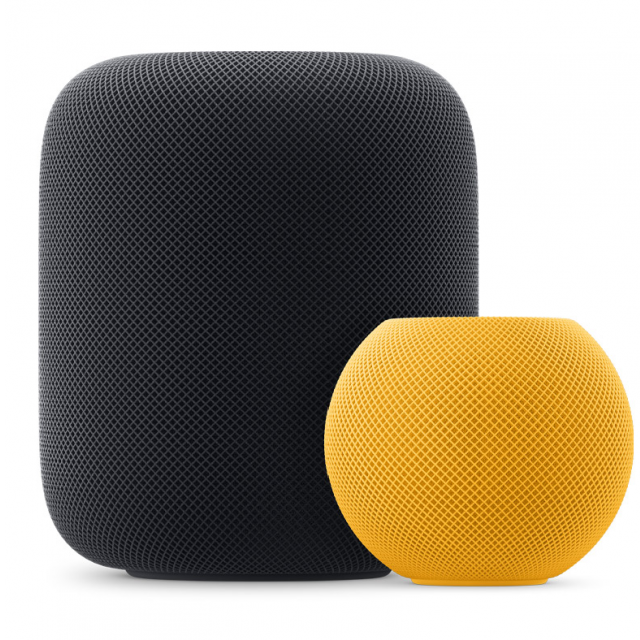
The new HomePod, with a beautiful design with an acoustically transparent mesh fabric and a touch surface that is illuminated from edge to edge, is a sight to behold. The HomePod is available in White and Midnight, a new color with 100% recycled mesh, and comes with a matching woven power cord.
Acoustic powerhouse
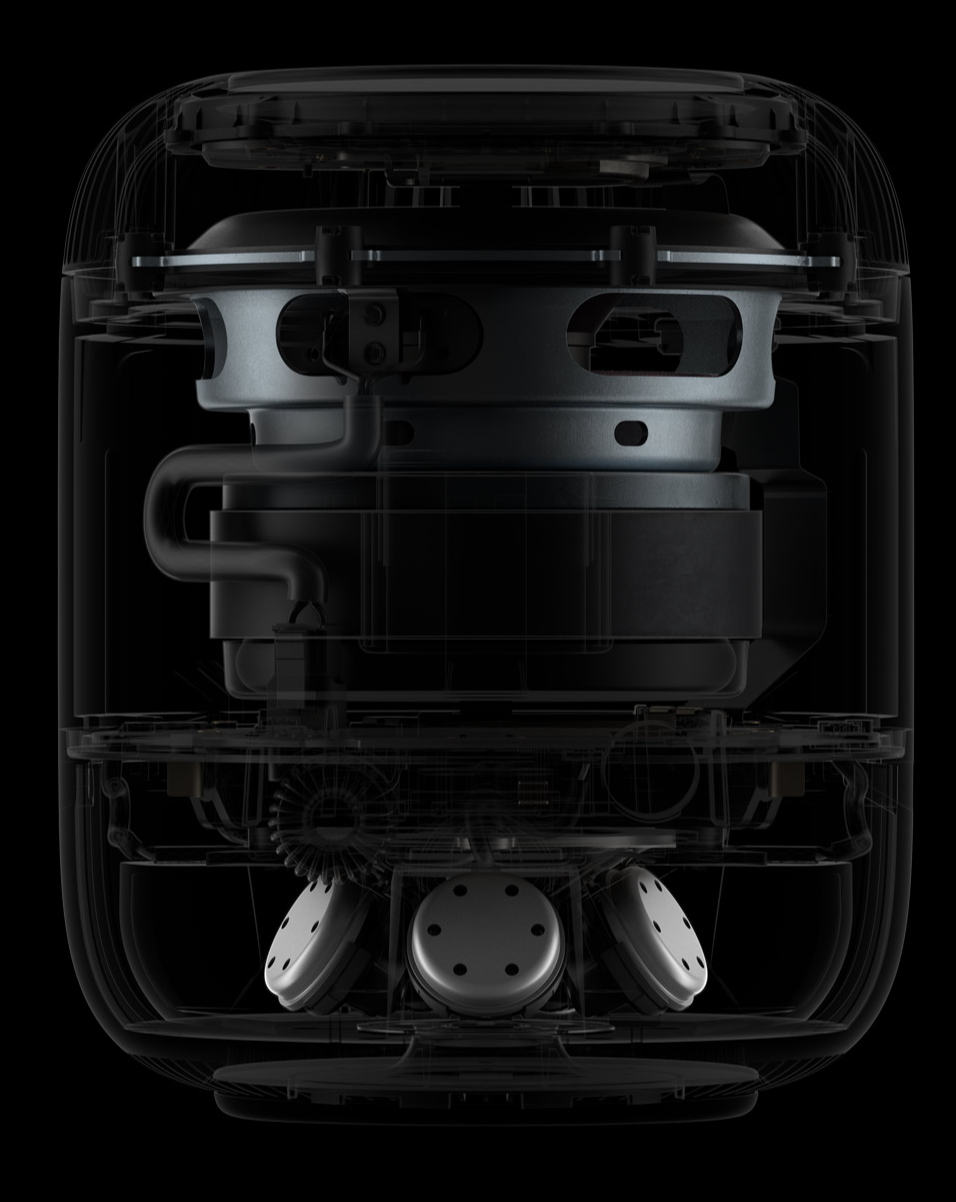
HomePod delivers warm, deep bass, natural mids, and clear highs, said Greg Joswiak, Apple’s senior vice president of Worldwide Marketing. A specially developed wide-excursion woofer, a powerful motor that moves the diaphragm as much as 20 mm, a built-in bass EQ microphone and five beamforming tweeters around the base combine to deliver a powerful acoustic experience. Combined with software and a special system detection technology, the S7 chip enables even more advanced computational audio. In this way, the acoustic system is optimally used for the listening experience.
The HomePod uses room estimation technology to recognize sounds reflected from the environment. For example, the device can determine whether it is placed against a wall or freestanding, after which the sound is adjusted in real time. Thanks to the precise directional control of the five beamforming tweeters, direct audio is separated from ambient noise and bundled. As a result, you are completely absorbed in crystal clear vocals and the full sound of instruments while listening.
Access a library of over 100 million songs through Apple Music (1), enjoy spatial audio with a single HomePod or stereo pair, or create your own home theater with Apple TV 4K. Via Siri, you can consult a musical acquaintance and search for music by artist, song, lyrics, decade, genre, mood or activity.
Multiple HomePod speakers
Pair two or more HomePod or HomePod mini speakers for even more possibilities. For example, if you’re streaming audio via AirPlay (2) in multiple rooms, you can say “Hey Siri” or hold your finger on the top of HomePod to play the same song on multiple HomePod speakers or different songs on different HomePod speakers . You can even use your speakers as an intercom.
You can also make a stereo pair with two HomePod speakers in the same room (3). When using a stereo pair, not only are the left and right channels separated, but each channel is also played in beautiful harmony. This creates a wider soundstage than with traditional stereo speakers.
Integration with the Apple ecosystem
With Ultra Wideband technology, you can transfer anything you’re playing on your iPhone, such as a favorite song, a podcast, or even a phone call, directly to a HomePod (4). Anyone in the house can hold an iPhone near HomePod to easily choose what’s playing or get personal recommendations for music and podcasts automatically. Plus, because HomePod recognizes up to six voices, each family member can listen to personalized playlists, ask for reminders, and schedule Calendar events.
The HomePod easily pairs with Apple TV 4K to create a home theater experience. And thanks to Apple TV 4K’s eARC (Enhanced Audio Return Channel) (5) support, you can use your HomePod as an audio system for all devices connected to the TV. With Siri on HomePod, you can also operate your Apple TV completely hands-free.
With Find My on HomePod, you can easily find lost Apple devices, such as your iPhone, by playing a sound. You can also ask Siri where friends or family members are who share their location with you via the app.
Indispensable in your smart home
With Sound Recognition (6), HomePod can listen for smoke or carbon monoxide alarms and send a notification to your iPhone if so. With the new built-in temperature and humidity sensor you can take measurements indoors and automatically close the blinds or switch on a fan when the temperature in a room reaches a certain value.
Via Siri you can operate a device or set scenes with which you switch on several smart home accessories at the same time (for example ‘Good morning’). Or you can set up a recurring automation hands-free, for example “Hey Siri, open the blinds every day at sunrise” (7). A new confirmation tone lets you know when Siri receives a request to control an accessory that you don’t immediately see change, such as a heater or accessories in another room. Ambient sounds such as ocean, forest and rain have been remastered and further integrated into the experience. As a result, you can now add new sounds to scenes, automations and alarms yourself.
With the updated Home app you can intuitively control, view and organize accessories. New categories for climate, lighting and security make it easy to set up and control your smart home. There is also a new view to view images from multiple cameras at the same time.
Matt support
Launched last fall, Matter enables smart home products to be used across ecosystems without sacrificing security. Apple, along with other industry leaders, is a member of the Connectivity Standards Alliance, which provides the Matter standard. The HomePod connects to accessories that support Matter and acts as a home hub that lets you control your accessories even when you’re away from home.
Customer data is and will remain prive
Privacy protection is one of Apple’s core values. Your smart home’s entire communications are end-to-end encrypted, preventing Apple from viewing your data. This also applies to camera recordings with ‘Secure Video in HomeKit’. If you use Siri, the audio of your requests will not be saved. These features ensure that your privacy at home is well protected, and that gives you peace of mind.
HomePod and the environment
HomePod is designed with minimal impact on the environment in mind. For example, 100 percent recycled gold is used in the solder of multiple circuit boards – a first for HomePod. The magnet in the speaker also contains 100 percent recycled rare earth metals. HomePod meets Apple’s strict energy efficiency standards and is free of mercury, brominated flame retardants, PVC, and beryllium. Thanks to a renewed packaging, the plastic casing is no longer necessary and because the packaging consists of more than 96 percent fiber, we are getting closer to our goal of using no plastic in our packaging at all by 2025.
Apple’s global operations are already carbon neutral, and by 2030, the entire supply chain and all product lifecycles must be 100 percent carbon neutral. That means every Apple product sold will be zero emissions by then, including component manufacturing, assembly, transportation, use, charging, recycling, and recovery of reusable resources.
Prices and availability
• HomePod (2nd generation) is available to order starting today for €349 at apple.com/nl/store and in the Apple Store app in Australia, Canada, China, Germany, France, Italy, Japan, Spain, UK, US and 11 other countries and regions, available Friday, February 3.
• HomePod (2nd generation) works with iPhone SE (2nd generation) and later or iPhone 8 and later with iOS 16.3 or later; or iPad Pro, iPad (5th generation) and later, iPad Air (3rd generation) and later, or iPad mini (5th generation) and later with iPadOS 16.3.
(1) Apple Music requires a subscription.
(2) Multi-room audio requires multiple HomePod or AirPlay-enabled speakers, plus the latest AirPlay software.
(3) A HomePod stereo pair requires two of the same HomePod models, for example, two HomePod minis, two HomePods (2nd generation), or two HomePods (1st generation).
(4) Handoff on iPhone requires iOS 16.3.
(5) For a home theater with eARC support, Apple TV 4K (2nd generation) or later is required, with the latest tvOS software installed.
(6) Sound recognition will be added this spring via a software update. Sound recognition can detect the sound of smoke and carbon monoxide detectors and send a notification to users after recognition. Sound Recognition is not suitable for use in circumstances where you could be injured, in an emergency or in high-risk situations. Sound Recognition requires a Home architecture update, which will be made available as a separate update in the Home app. All Apple devices that have access to a home via the Home app must have the latest software installed.
(7) Smart home accessories sold separately.