
VR glasses are on the rise. VR technology is also becoming commonplace in more and more places in the healthcare sector. It helps patients recover in an innovative and, above all, fun way.
Remco Nieuwenbroek and Serge Beckers
 |
Virtual Reality, virtual reality in Dutch, is a computer technique in which a realistic situation is imitated in a simulated environment. Special VR glasses ensure that you can enter this special artificial world. Not to be confused with Augmented Reality (AR). With AR, images generated by a computer are shown over the existing world, so that you perceive both. In the VR world you only see the ‘computer world’.
Once you have put on your VR glasses, you are cut off from the outside world. You will see a screen divided in two. Because both eyes see their own part of the screen, a 3D effect is created. If you turn your head, the world turns with you when you sit, walk or fly. There are different types of glasses, with 3DoF and 6DoF being the most common. DoF stands for degrees of freedom. With the 3DoF glasses you can look up, down, left and right. Walking through your virtual world is not possible with these glasses. This is possible with the 6DoF glasses. Almost all VR glasses come with controllers. They are equipped with buttons and a joystick, comparable to many game consoles. Supporting more and more handsets hand tracking. Sensors record data about the position, orientation and speed of your hands. A number of manufacturers have special gloves that can synchronize your movements with the VR world.
Not just for fun
VR glasses are mainly known for their applications in the gaming world. Video games become a lot more realistic, fun and exciting if you use special glasses. You enter a completely new world. No computer or laptop screen can compete with that.
But glasses are not only widely used in video games. VR glasses are ideal for many applications. Consider following training or courses, for example to practice dangerous situations in the police, fire brigade or in the army. VR technology is also used for training pilots. In addition, VR glasses offer a solution for the development and testing of new products. In this way, errors can be identified at an early stage. And these are just a few examples of the many VR applications. The conclusion is clear; Actually, VR technology can be used in all sectors and industries.
Applications in e-health
The term e-health is widely used today. In short, this concerns digital applications in healthcare: the use of information and communication technology to support or improve health and healthcare. VR technology is a nice thing here 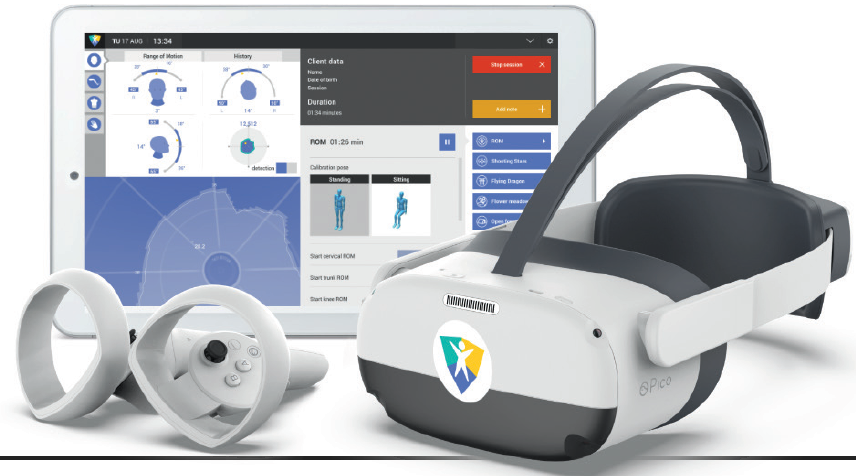
example of. The use of VR is also on the rise within the healthcare sector. Doctors, surgeons and students can use VR glasses to practice complex operations without the need for real patients. VR glasses can provide distraction during an unpleasant treatment, as a distraction from pain. Or it provides relaxation if you are forced to be confined to bed for a longer period of time. You can go to a virtual beach or take a walk in the woods. Or have a conversation on a terrace with your best friends. Relax without actually leaving your room. VR applications in healthcare are also used to treat psychological complaints, such as fear of flying or heights, or to simulate psychosis. It is possible to put yourself in the shoes of a patient with dementia while wearing glasses. What does this person encounter in daily life and how does the environment respond to this patient’s behavior?
More fun and more challenging
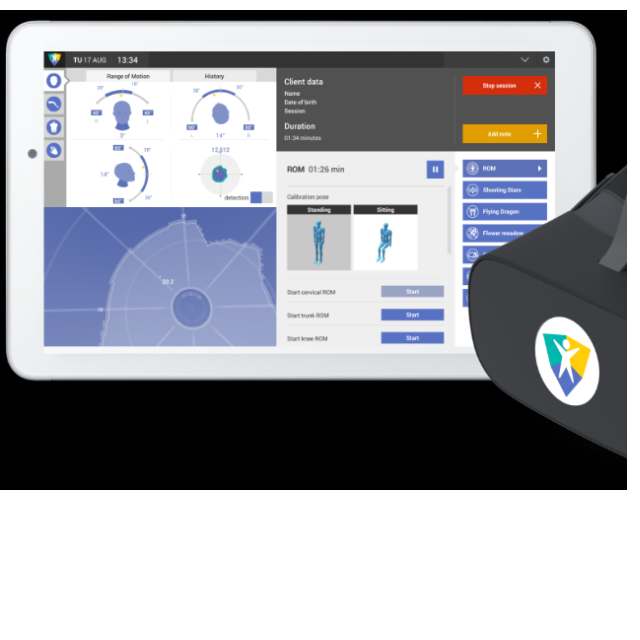
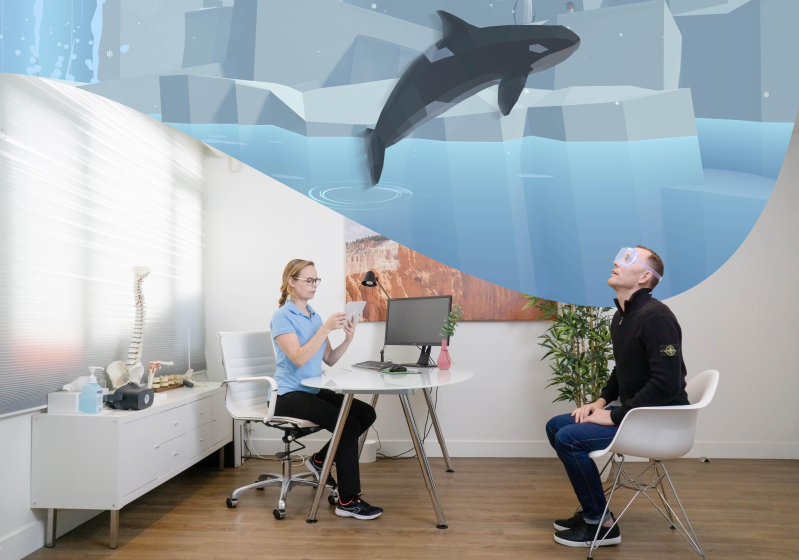
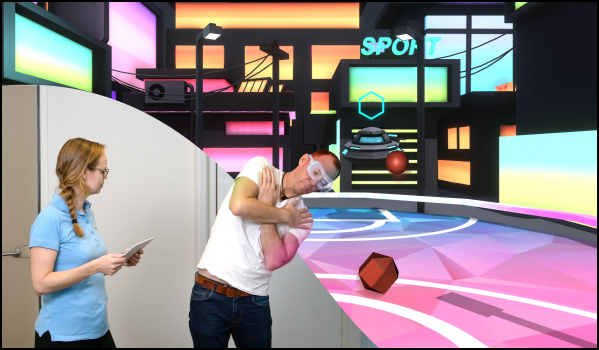
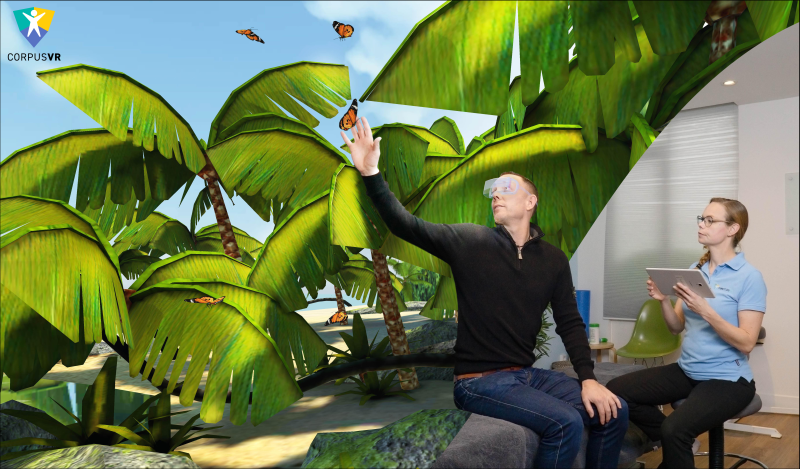
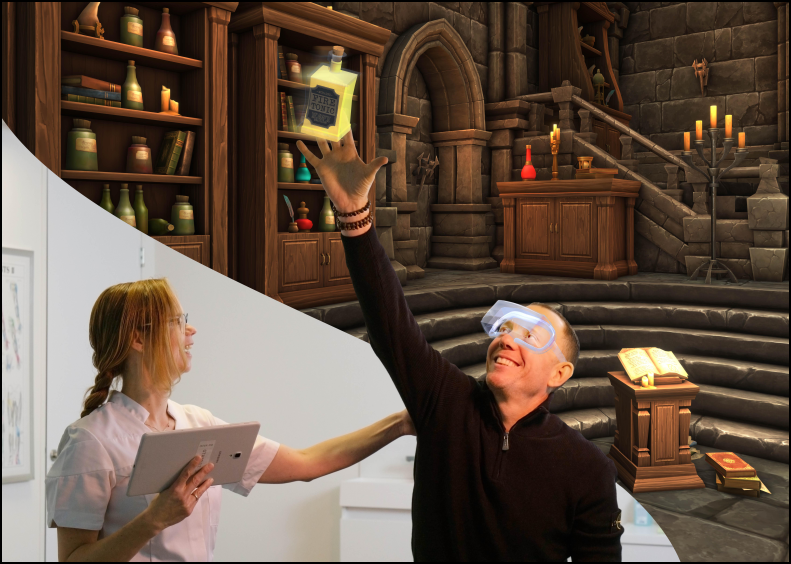
VR glasses are also gaining popularity in the world of physiotherapy. Not only do exercises become more fun and challenging in a VR environment, it is also much easier to practice at home. The physiotherapist can see from a distance exactly what you are doing and how much progress you are making. One of the VR innovations that is widely used is Corpus VR, an exercise platform for physiotherapy, occupational therapy and neurotherapy. The intelligent combination of gamification and smart sensors and the solution’s compatibility with various VR headsets and tablets provide a completely new experience. There are sensors in the headset itself that are used to elicit head and neck movements. The sensors for the arms are in the controllers of the headset. Place the motion sensors for the torso and legs on the body parts to be trained. Corpus VR can be used for physical, behavioral and neurological rehabilitation.
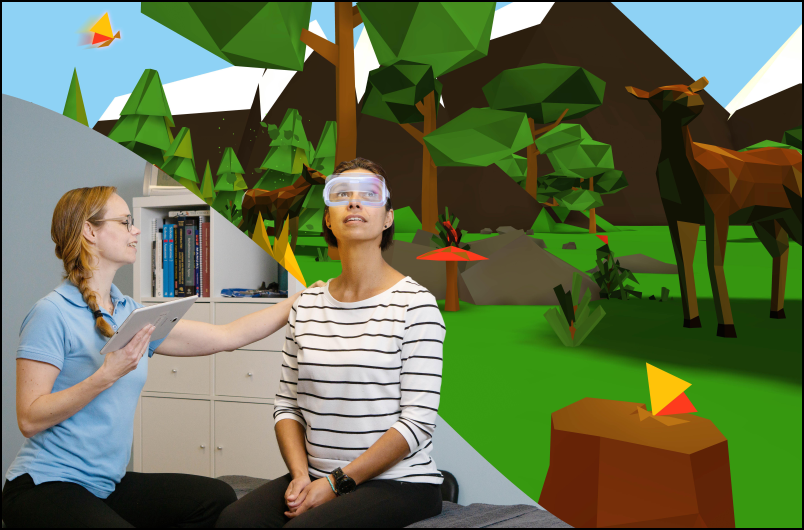
Users can choose from a wide range of exercises, targeting the head, neck and shoulders. The platform uses the power of Virtual Reality to let the patient focus on his or her personal goals. This is done by placing the patient in a game environment in which the exercises are performed. The therapist can monitor the exercises and intensity in real time. All environments are created based on existing exercise methods and they automatically adapt to the patient’s capabilities.
| |
Training in Virtual RealityRehabilitate and do exercises every day. This is often boring and challenging. It is not surprising that 76 percent of people do not carry out their therapy. Corpus VR helps patients recover in an innovative and, above all, fun way. Corpus VR uses gamification in combination with smart sensors. The system is flexible and runs on multiple hardware configurations. Digital therapy provides immediate feedback on progress. There are currently more than thirty VR therapy environments in the fields of physio, behavior and neurotherapy. The solution is easy to integrate with a large number of hardware and software environments. You can also get started with Corpus VR at home or at work. Download the app on your smartphone and get all the modules. If you work with a therapist, they will receive all progress and feedback in the dashboard. This way the therapist can watch, adjust exercises or prepare new ones for you. To use the Corpus VR software, you obviously need VR glasses. A tablet is only required for the Pro editions (for professional use), including a working WiFi connection to allow the VR glasses and tablet to communicate with each other. You can use special VR headsets such as a Meta Quest 2, Pico G2 4K, Pico Neo 2 Pro, Pico Neo 3 Pro or Pico Neo 4 Enterprise. You can also use your own smartphone, based on iOS or Android, and use it in combination with a generic VR headset such as a Bobo VR. |
Corpus VR offers a choice of a professional version – mainly aimed at physio, occupational and neurotherapy – but there is also a program that is very suitable for use in a home environment, with a wide range of exercises. Anyone looking for VR glasses can choose from many models from many manufacturers. The Corpus VR platform works in combination with a number of VR glasses. Exercises can be prepared, updated and adjusted remotely and the results can be viewed. This technology offers the best of both worlds. Users play a relaxing game and work on their fitness or rehabilitation at the same time. And the great thing is: the solution is not only a solution for existing complaints. VR technology can also play an important role in stimulating exercise. It can provide relaxation, combat stress and prevent (burnout) complaints. After a day of sitting still, be active for a while. Even when it’s raining hard outside. This is an important reason that the solution is also starting to find its way outside the world of the physiotherapist, occupational therapist and neurotherapist. After all, the possibilities of Virtual Reality are endless.