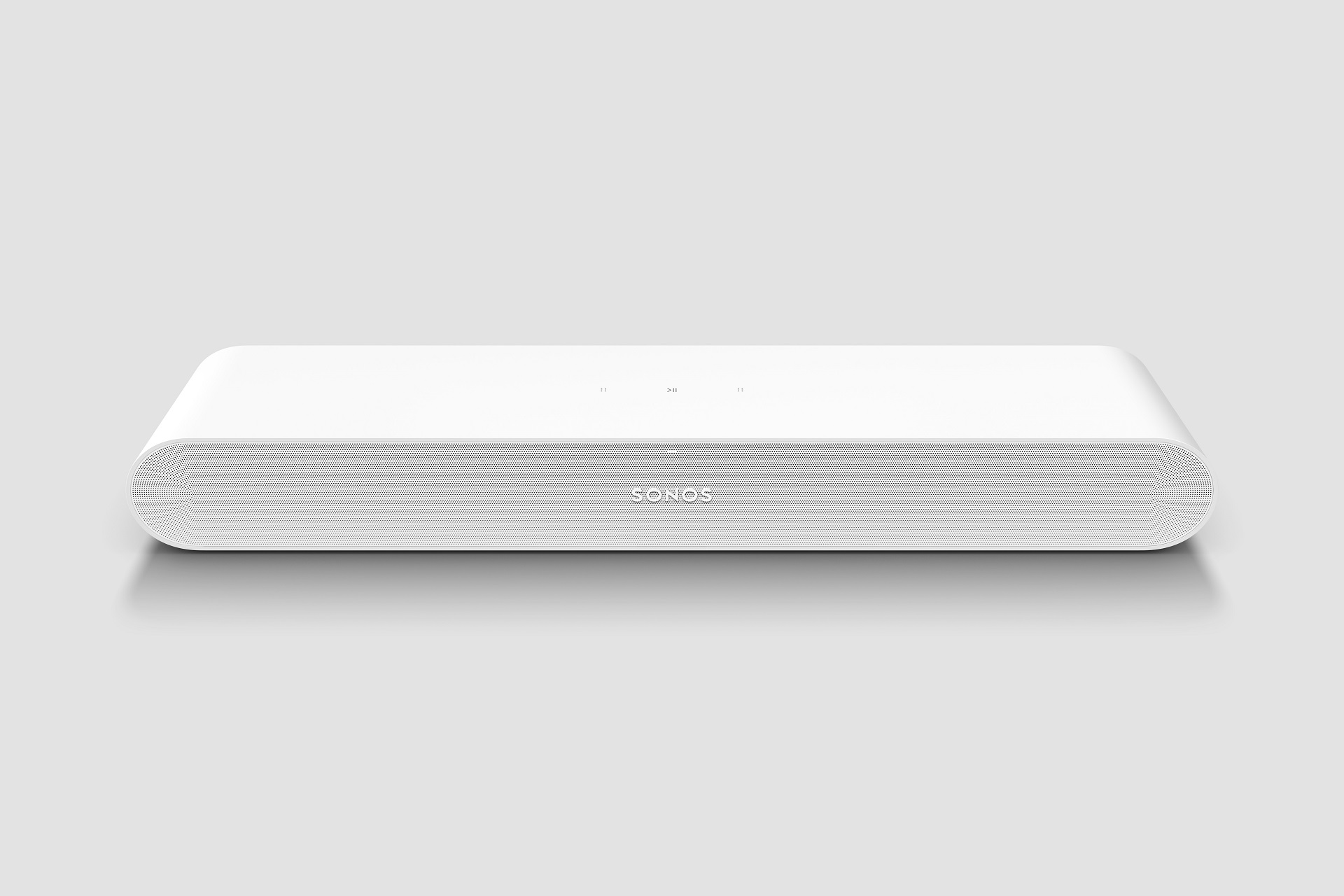
Recently, Sonos has expanded the series of renowned soundbars with the Sonos Ray with an attractive price of just under € 300. PC-Active was one of the first to receive a test model and here you can read the review and whether the Sonos Ray is worth the money.
Aad Munsterman and Rob Coenraads
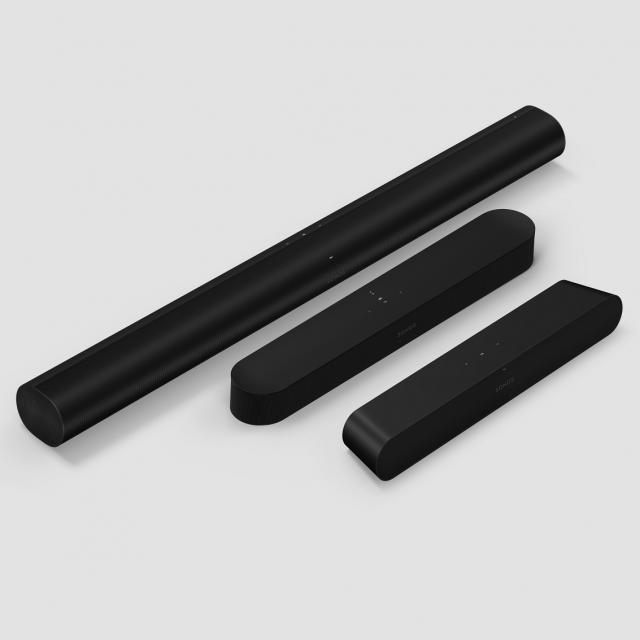
Sonos is a household name for many people, partly due to the good sound, the good app and a beautiful design. The partnership with IKEA made Sonos even more famous and PC-Active tests almost all Sonos products, such as the Ikea Symfonisk smart painting speaker with Sonos. Of course they also supply 100% ‘own’ products, such as the great Sonos Move, the portable WiFi speaker and bluetooth and for outdoor use. In terms of soundbars, you could opt for the somewhat compact Sonos Beam and the more expensive and larger Sonos Arc, which we have both also tested, so that you can nicely compare the new Sonos Ray soundbar with this.
Sonos Ray design and optical connection
Since Sonos already has two other soundbars, when designing the Ray, it was carefully considered who else would like a soundbar and with which TVs it will be combined. Ray is the most accessible soundbar yet, and Sonos expects it to be the first soundbar for many to buy. Others may buy the Ray for their second TV in a bedroom or office. A TV or media box almost always has an optical connection, so connecting to the Ray is easy. Partly for this reason, the Sonos is equipped with an optical connection and not with an HDMI cable. Optical technology excels in these situations, as it’s almost ubiquitous on all TVs purchased in the last 15 years, and it’s fairly plug-and-play as it doesn’t require many settings in TV menus to change.
In addition, the optical cable can transmit a multi-channel audio signal with 5.1 Dolby Digital, so you can build a surround sound system if you want. For the accessible experience, there are no multiple inputs, extra buttons or remotes to switch sources.
Sonos Ray connections and installation
The tap-shaped soundbar measures 56 by 9.5 by 6.25 cm (lxwxh) and comes in the colors white or black. The front speaker grille hides four forward and angled high and mid/low speakers. Low is enhanced with a bass reflex construction. On top there is touch control for volume, stop/pause and skip. The back hides the connections: optical Toslink, RJ45 Ethernet and a connection for the power supply. We also see a sync button there. The Power and S/PDIF Toslink cable are included. Installation is easy via the Sonos app. This also activates the Wi-Fi link. As mentioned, no separate remote control is included, that function is provided by the Sonos app. We can then adjust the sound reproduction with the (Apple only) Trueplay facility to the acoustics of the room in which the soundbar is placed. After that, if desired, personal adjustment of highs and lows is available via the equalizer of the app. The TV volume buttons on the remote can be synced with the Sonos Ray, so only one remote is needed. The app also has provision to accentuate speech and reduce the bass for the evening hours. By adding optional Sonos One systems and subwoofer, it becomes a Dolby Surround multi-channel system.
Stream
Other streams come in via the Ethernet cable or WiFi through the Sonos app with Tunein or Sonos Radio for network radio stations and the well-known streaming services such as Spotify Connect, Tidal, etc. and anything that supports Airplay2 or UPnP, such as Plex and Synology’s DS Audio. The soundbar does not use the newly introduced Sonos voice assistant, but can be put to work via, among other things, the Google Home Assistant: “Hey Google, play Spotify on Sonos Ray”.
Sonos Ray sound
With its limited dimensions, the soundbar is especially suitable for the not-too-large living rooms, bedrooms and children’s rooms. The reproduced sound is free of distortion and clear. The emphasis is on good intelligibility of speech sound, even at low volume, and thus often a significant improvement compared to sound from TV speakers. Due to the speakers directed forwards (and partly obliquely), the soundbar has a somewhat narrow sound image for music and Dolby Atmos is not possible. The advantage here is that it is possible to place the Ray in a cabinet. The low tones are not turned on too heavily. If you want more bass, you can control that with the equalizer and if you want to feel it, a subwoofer is available separately.
Sonos Ray wall mount
If your TV is placed on a sideboard, for example, you can easily store it because of its compact dimensions. If your TV hangs on the wall and you also want to hang the Sonos Ray underneath, an optional wall bracket () is available that costs € 49.
Price and availability
The (recommended) price of the Sonos Ray is € 299,- and it can be reserved here now, with an expected delivery date of June 7th.
Conclusion Sonos Ray
All in all, the Sonos Ray is a soundbar primarily for TV with good quality sound, but with some limited connection options. This is made up for by the attractive price.
Sonos Ray Soundbar
+ compact soundbar with good sound
+ good price/performance
– limited connectivity options (no HDMI and bluetooth)
– narrow soundstage and no Dolby Atmos