
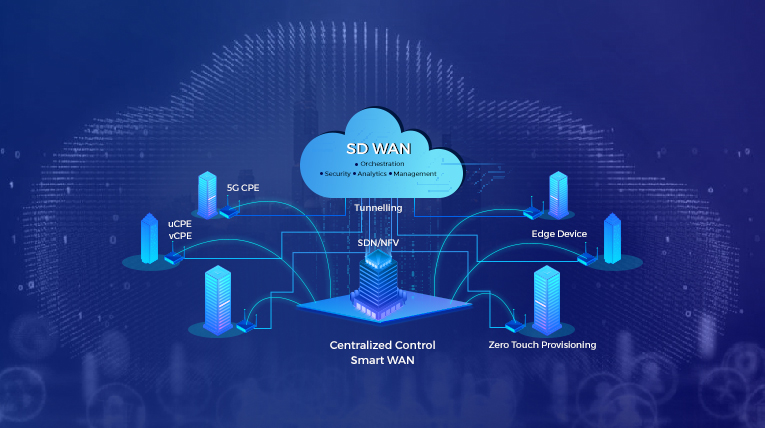
In an era defined by rapid digital transformation and relentless market competition, businesses are constantly on the lookout for innovative solutions to fuel their expansion and adapt to evolving needs. The emergence of Software-Defined Wide Area Network (SD-WAN) technology, often facilitated by a reliable sdwan provider, has ushered in a new era of connectivity, promising enhanced scalability and growth for enterprises. This article will explore how SD-WAN solutions empower organisations to not only survive but thrive in the dynamic and ever-evolving world of business.
SD-WAN: The Scalability Enabler
A. Dynamic Bandwidth Allocation
SD-WAN solutions leverage software intelligence to dynamically allocate bandwidth based on the specific needs of applications and users. This ensures critical applications receive the necessary resources while less time-sensitive traffic can share the remaining bandwidth. As an enterprise grows, SD-WAN can easily adapt, allocating more bandwidth where needed without extensive hardware upgrades.
B. Centralised Network Control
One of the key features is centralised network control. This allows IT administrators to manage the entire network from a single interface, regardless of the number of branch offices or remote locations. When new branches are added, they can be seamlessly integrated into the existing network, making expansion a streamlined process.
C. Cloud Integration
Enterprises are increasingly relying on cloud-based applications and services. These solutions facilitate cloud integration, allowing businesses to connect their branch offices directly to cloud providers through secure, optimised connections. This eliminates the need for costly traffic backhauling through a central data centre, making cloud-based services readily accessible to all locations, irrespective of the scale.
Enhancing Network Performance
Scalability should not come at the expense of network performance. These solutions excel in optimising application performance, even as the enterprise expands. Here’s how they achieve this:
A. Traffic Prioritisation
It can prioritise traffic based on the nature of the application, ensuring that mission-critical applications, such as VoIP or video conferencing, receive the highest quality of service. This guarantees a consistent user experience, irrespective of network load or the number of users.
B. Load Balancing
The technology can distribute traffic efficiently across multiple connections, including MPLS, broadband, and even 4G/5G connections. Load balancing ensures that no single link becomes a bottleneck, thereby enhancing the overall network performance.
C. Network Redundancy
To maintain network availability, it can automatically failover to an alternative link if the primary connection experiences issues. This redundancy safeguards against downtime, ensuring business continuity, a crucial consideration as an enterprise scales.
Cost Efficiency
Scalability often raises concerns about increased costs. However, it can help businesses contain their network-related expenses in several ways:
A. OPEX Reduction
Traditional WAN infrastructure is associated with high operating costs, including expensive MPLS circuits and complex maintenance. SD-WAN simplifies network management, reduces the need for costly hardware, and allows for centralised control, resulting in lower operational expenses.
B. WAN Optimization
The technology employs data deduplication, compression, and caching to optimise bandwidth utilisation. This not only improves application performance but also minimises the bandwidth requirements, leading to cost savings.
C. Competitive Pricing Models
The SD-WAN market offers a variety of pricing models, including pay-as-you-grow and subscription-based options, which can be more cost-effective for businesses in expansion mode. The flexibility in pricing allows enterprises to align costs with their scaling strategies.
Security at the Forefront
As businesses expand, the attack surface for potential security threats also increases. SD-WAN solutions prioritise security to ensure that scalability does not compromise an enterprise’s data protection:
A. Enhanced Security Features
These solutions often include advanced security features such as integrated firewalls, intrusion detection and prevention, and encryption. These features safeguard data and communications, irrespective of the number of branch offices or remote users.
B. Segmentation
Segmentation allows organisations to isolate different types of network traffic, enhancing security by preventing lateral movement of threats. This is especially crucial as an enterprise expands, as it mitigates the risk of a breach affecting the entire network. Scalability and growth are integral to an enterprise’s success in today’s competitive business landscape. A sdwan provider offers a dynamic and efficient approach to network expansion, ensuring an organisation can adapt to changing demands without sacrificing performance, security, or cost-effectiveness. As businesses evolve, adopting SD-WAN technology will remain a critical enabler of their success, helping them stay agile and competitive in an ever-changing world.