
Thanks to Lynk & Co

“The Chinese are coming!” ‘No, they’re here already!’ Yes, now we know. In 2023, we will no longer be surprised by cars from Chinese brands on the Dutch market. This is also evident when you look at the sales figures. For example, while Lynk & Co is a brand new name, its first and only model has been selling quite well for some time. This greatly helps the market share of Chinese brands in the Netherlands. But what is it like in Germany?
Quite a few more will be added, but the phenomenon of ‘Chinese car brand’ in the Netherlands – and on the entire European car market – is no longer new. They are here and they will stay for a while. The brands, such as BYD and Nio, know how to divide the opinions quite well. Many people think it is ethically, environmentally and/or geopolitically irresponsible to buy a car from China, while others are embarrassed by the fact that there are already (virtually) no cars for sale that do not contain Chinese-made parts. So you can buy ‘European’, but you buy ‘Chinese’ anyway.
The fact that there are enough Dutch people who are insufficiently interested – or don’t care – that the logo on the nose of their car was also invented in China, is evident when you look at the fast-growing sales numbers of the Chinese brands in the Netherlands. In 2022, all Chinese brands together still scored a market share of 1.57 percent in the Netherlands, where it was already 4.07 percent from January to April of this year (see table below). In the Netherlands it is mainly Lynk & Co that contributes to the reason for drawing the following conclusion: there are – partly due to the growing supply – more and more Dutch people who think buying a Chinese car is so good that they actually do it .
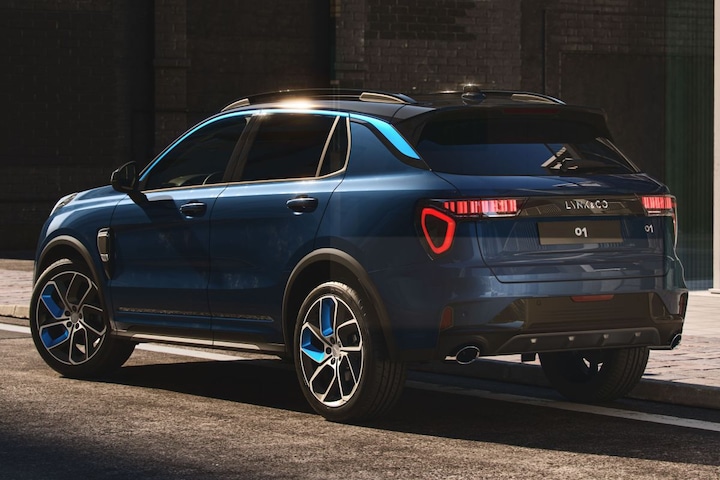
The Lynk & Co 01 is living proof that a new, Chinese brand name does not hinder significant sales figures.
Products from our own country
Or does that say more about the Dutch or more about what’s on offer? To answer that question in part, we take a look across the border with Germany. Many Chinese brands are now also active there. And guess what? The Germans are relatively unaffected by it. The Chinese brands together account for a market share of 0.79 percent among the eastern neighbors – more than five times smaller than in the Netherlands.
We all know that people like to buy cars of brands from their own country and in Germany there are quite a few. It will therefore generally be more difficult for ‘foreign’ brands to take away some market share in a country such as Germany or France, countries with ‘own’ brands, than in the Netherlands. After all, here we do not have a volume brand that is preferable for nationalistic or financial reasons, which is undoubtedly one of the reasons why Chinese brands are doing relatively better here than in Germany.
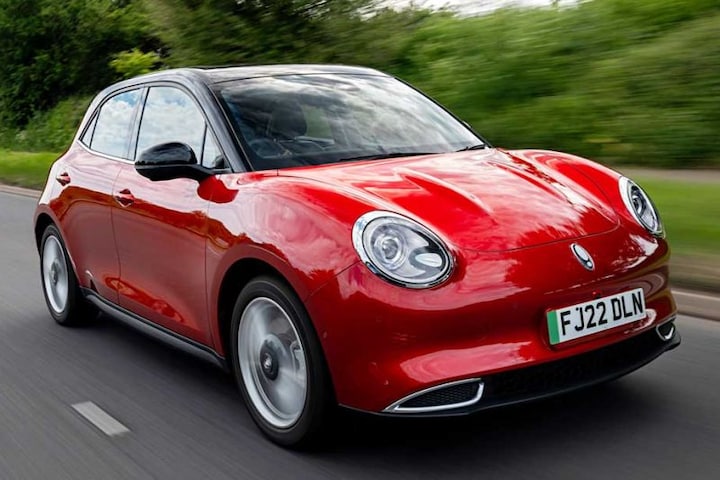
The Ora Funky Cat is one of the Chinese cars that you already encounter in Germany, but not yet in the Netherlands.
Popularity of electric driving
Electric driving is also currently slightly more popular in the Netherlands than in Germany. Because the Chinese supply is largely fully or partly electric, this also helps Dutch relations in favor of the Chinese. After all, in the Netherlands, the electric drive is more often a purchasing argument.
We also owe you some responsibility when it comes to the selection of the Chinese brands. As you can see in the table below, we mention Polestar and Smart separately, while we include Lynk & Co and MG, for example, ‘normally’. Why we do it that way?

The Smart #1, just like the Polestar 2, a Chinese and European product.
Accountability
Well, MG may originally be a European brand name, but it is wholly owned by the Chinese SAIC and was also reintroduced as such on the European market. Lynk & Co is a completely new brand name and, moreover, a brand with its own new design language. The average consumer will therefore experience the brand and product as ‘new’ and ‘strange’. Lynk & Co is mostly Chinese owned, so we include that brand as well.
Then Polestar and Smart. For Polestar, the products have a lot in common in terms of design with the image of ‘European’ Volvo that consumers have long been familiar with. It may be largely Chinese if you look at the owners, but it looks European. In addition, Polestar was already a well-known name as Volvo’s performance label.
Dan Smart: that name is also European, but the brand is now half of the Chinese Geely. Since the Chinese interference, it has been targeting new market segments, which it is already doing in Germany with the Smart #1. Because that car with a partly European background also mixes ‘on Chinese initiative’, we place it in the doubtful category, just like Polestar.
If we include Smart #1 and Polestar sales, we arrive at a Chinese market share of 4.43 percent for the Netherlands and 1.04 percent for Germany. In Germany, the growth of the share due to that inclusion is significantly stronger, because the Smart #1 has already been registered there many times and not in the Netherlands.
What if you wanted to buy a new (electric) car, would you ignore the Chinese brands or not? And how do you feel about that when it comes to ‘doubtful cases’ Polestar and Smart #1?
| Brand | Fashion model | Sales DE (Jan – Apr) | Sales NL (Jan – Apr) |
| Aiways | U5 | 6 | 27 |
| U6 | 17 | – | |
| BYD | Atta 3 | 105 | 381 |
| Han | 3 | 11 | |
| Pliers | 3 | 4 | |
| Ora (Great Wall Motors) | Coffee 01 | 7 | – |
| Funky cat | 268 | – | |
| Hongqi | E-HS9 | – | 28 |
| Lynk & Co | 01 | 1,305 | 3,595 |
| MG | 4 | 3,219 | 376 |
| 5 | 421 | 231 | |
| EHS | 1 | 136 | |
| Marvel R | 229 | 75 | |
| RX6 | 358 | – | |
| ZS | 758 | 279 | |
| Nio | EL7 | 56 | 21 |
| ET5 | 63 | 11 | |
| ET7 | 42 | 14 | |
| Total | 6,861 | 5,189 | |
| Market share | 0.79% | 4.07% | |
| Polestar | 2 | 1,579 | 462 |
| Smart | #1 | 627 | – |
| Total incl. Smart and Polestar | 9,067 | 5,651 | |
| Market share incl. Smart and Polestar | 1.04% | 4.43% |
The total number of new car registrations in Germany is 869,765 and in the Netherlands 127,597. Both cover the period January to April 2023.
.
– Thanks for information from Autoweek.nl