
You no longer keep up with the influx of new Chinese brands. MG, Aiways, Hongqi, Maxus, BYD, Nio, Lynk, Seres, Xpeng, Zeekr, Ora, what next? Omoda. Colleague Jacobs drove the Omoda E5, a name as shapeless as the car. I couldn’t remember him. In the photos you see copycat culture in overdrive. On the dashboard, another wide display wall in BMW and Mercedes style. On the flanks the usual worn-out style nods, the light units forked like a forked tongue that remind everyone from Opel to Nissan, except Omoda.
And the car itself? I didn’t see Frank being very impressed. Recognizable. After dozens of Chinese tests, my conclusion is usually; ok, fine, never a game changer. You feel respect and admiration for the technology, the level of finish and sometimes surprising build quality of the cars, respect for the learning curve. But you see no inexorable technical advance, no stylistic individuality. Do they really want to win, or just draw?
Except for MG and BYD, who realize how the world needs affordable EVs, you don’t see the Chinese forcing a radical price breakthrough. On the contrary; they do not shy away from large sums of money. Such an unsellable Honqi SUV, received lukewarm here, costs a ton. Unfortunately no one wants it. In the Netherlands, at least 28 demo copies of the Honqi E-HS9, a Cullinan copy penned by an ex-Rolls designer, are probably waiting in vain for a buyer for prices between 75,000 euros and 100,000 euros. For that money you also have an iX, a real BMW – and a much nicer, more interesting car.
Wait a minute: this also cannot be worn out on the paving stones. The EV industry is struggling with overproduction due to the hopefully temporary saturation of the market. Even the premium bonus apparently doesn’t get you any further in these difficult times for electric driving. Then as a Chinese debutant you might be scratching your head. What do we make, and for whom? Or, better question: How do we beat Tesla with better performance and superlative technology for less money?
After yet another Model 3 or SUV-like one with ice-cold LED stripe eyes and the obligatory continuous light bar at the rear, one question remains. Why are we flooded with electric mid-marketers, the vast majority of which, with all due respect, do not generate a compelling urge to buy? Or should we just be a little more patient with the Chinese? After all, Rome, the saying goes, was not built in a day. On the other hand, when you think about your first rounds with Xpengs and MGs, you fear that they think the market average is good enough. Maybe they don’t want to reinvent the wheel at all. Perhaps exceptionalism in China is being nipped in the bud by totalitarian conformism. That would explain why so many Chinese manufacturers are fishing in the same tepid pond. However, overkill on uniformity is not a rational strategy. And whatever you can say about the Chinese, they are not crazy.
What a gigantic waste of energy, I recently heard someone express my thoughts. Beats. The Chinese car industry is a crazy machine, a madhouse of escalated ambitions. The Chinese invest large amounts of money in competitive technology that they have to market without a pioneering aura and premium bonus in a market where Musk unfortunately still rules for everyone. What it produces is a mountain of new players who sometimes challenge Tesla without beating it. The result is further fragmentation of a market that now benefits from concentration of technological and ecological priorities. If this arena is really about innovation, China should have hit Tesla with superior technology. This may come in the form of solid-state batteries within a few years, but at prices that you have to wonder whether consumers want and can afford, especially if the current generation of EV drivers can live well with the existing battery technology.
You learn early on: Only one can be the best. Unfortunately, that is usually someone else. The tennis champion of the Netherlands is still not Federer, a smart guy with a degree in physics is still not Einstein. In media and politics, mediocrity appears to pay off. But in the open market you have to be the best. And the Chinese will really have to quickly show how they want to control that market. We know that some of the Chinese newcomers are in dire straits. Which parties will survive the plug crisis? My guess: In ten years a lot of them will be gone. My lucky guess is this: Only BYD remains.
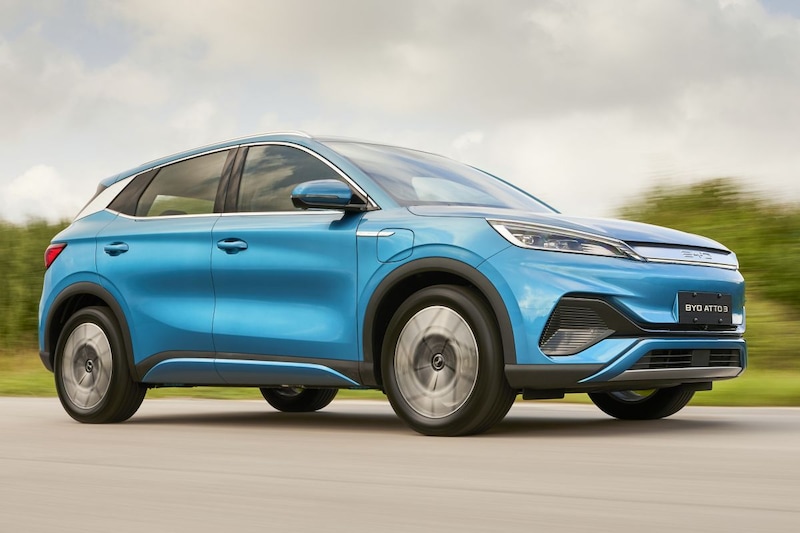
Pictured: the BYD Atto 3
– Thanks for information from Autoweek.nl