
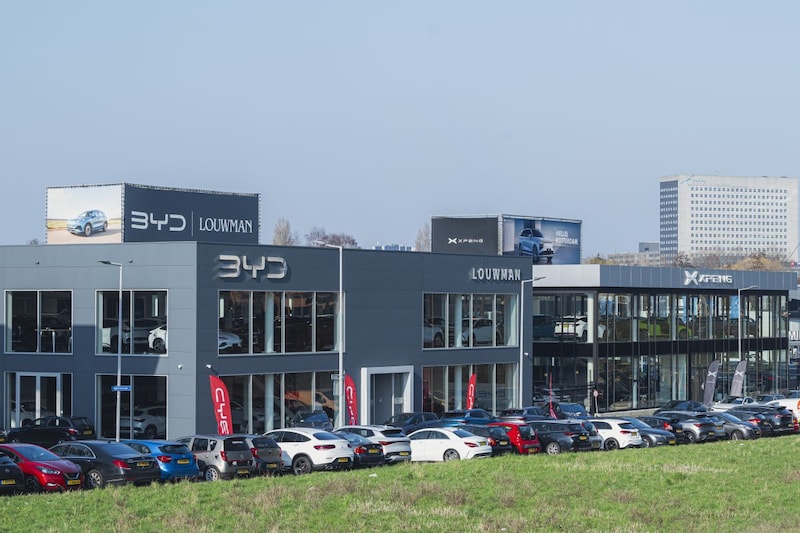
Last week we critically examined the rise of Chinese car brands in the global spotlight. This time we zoom in on the specific situation in the Netherlands, the risks you run in the area of warranty and how justified the often expressed fear of espionage and violation of privacy really is. We also speak to a MEP who makes no secret of her criticism of Chinese cars.
Some brands have not yet delivered cars in the Netherlands, but are already members of the RAI Association, the organization that represents the car industry in the Netherlands. Of the new brands from China, Nio, Aiways, XPeng, Lotus (traditional British brand in Chinese hands), Polestar (Chinese owner) and the new Smart have already joined the RAI.
BYD and Omoda also want it
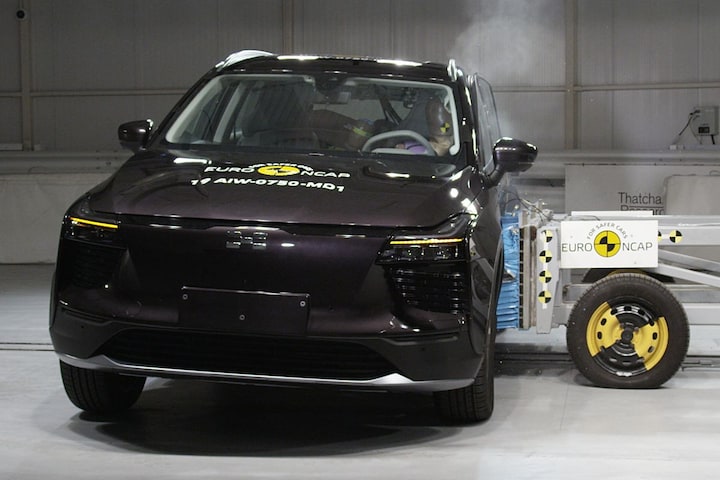
We hear from Huub Dubbelman, chairman of the Passenger Cars and Light Commercial Vehicles section of the RAI Association that they are not the last. “Other brands such as BYD and Omoda are exploring; We are discussing that.” According to him, the quality of new Chinese brands is structurally underestimated. “You hear about concerns about crash safety, for example, but they pass the EuroNCAP tests without any problems. There is no new Chinese car with less than four stars. The times of the Landwind – if people still remember that from twenty years ago – are really over.”
According to him, possible espionage is being carefully examined. “In connection with privacy, there was a major discussion about this two years ago following a number of Chinese concept cars with facial recognition. There are markets, like Germany, where you shouldn’t try that at all. The Netherlands is still quite open. All that technology has been removed, which shows how quickly they want to learn and how quickly they can change.”
MEP Caroline Nagtegaal-Van Doorn (VVD) has been concerned about China and cybersecurity for years and is a lot less trusting. “Build Your Dreams should actually be called Bring Your Data. An average Dutch person might not have to worry about that. But for someone with a politically sensitive position, or a senior employee of, for example, ASML, I still think the risks are extremely high.”
Parts supply no issue
Part of the unrest is also in the deliveries of parts, because what happens to your car if the manufacturer breaks down? According to Dubbelman, that is not a theme. “If you get homologation for Europe, you also have a supply obligation for parts for ten years. As a consumer you don’t have to worry about that, because even if they withdraw from the market, they still have to continue to supply the parts.”
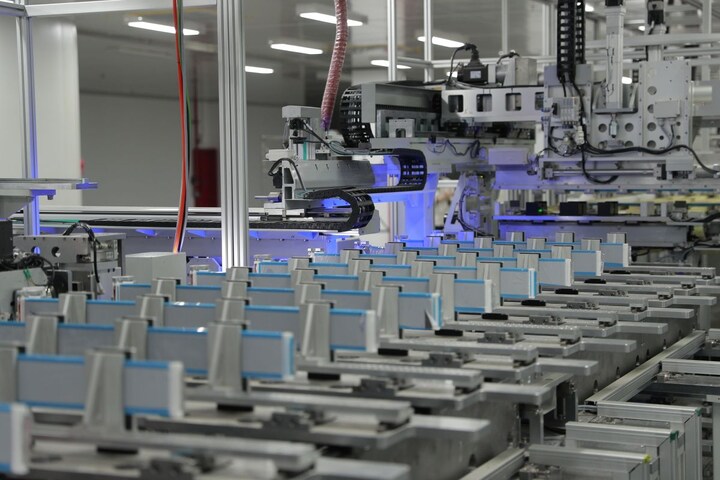
This will become more difficult in the event of bankruptcy, but, he believes: “That risk applies to every new player, no matter where in the world he comes from. That could also be a European brand. In any case, the risk lies more with the smaller brands than with large experienced parties such as Geely, Chery (from Omoda, ed.) or BYD and Nio. For example, with a newcomer like VinFast (from Vietnam, ed.), this seems to me to be a greater concern than with the Chinese brands. They also all learn from Tesla. Everything is robotized and extremely efficient and the Chinese also work harder than anyone else.”
An experienced lawyer in the European automotive sector, who prefers not to be named, warns that it is not that easy. “There was once a requirement for the supply of parts in the European type approval. But that hasn’t been the case for a long time. It may have been removed because it has little to do with technical matters, more with consumer law. I also do not know the exact considerations of the EU at the time.”
According to him, there are certainly risks for people who buy a car from a relatively new brand. “Everyone has the right to a warranty and this also includes an obligation to supply parts. This goes further than the two, three, five or ten year manufacturer’s warranty that the car manufacturers themselves provide. After all, you have the principle of non-conformity, a principle that is part of European consumer law.”
Non-conformity principle
That principle means: a product, including a car, must meet the properties that can be expected of it. A broad concept about which there is a lot of case law in the automotive field. If a spark plug breaks after four years, this is not unexpected and you are not entitled to a warranty if your manufacturer’s warranty has already expired. But if the wheels break off, things are different and you can still recover even after ten years. The non-conformity principle almost always goes further than the manufacturer’s warranty, but in the worst case you have to get your case before a dispute committee or even in court. Only, and then ‘China’ becomes interesting, there must be a party with whom you can get your point.
Warranty from a manufacturer who is away from the Netherlands
“As a consumer, you claim your warranty from the party where you bought your car,” the lawyer explains. “So your dealer or the car company. Or, if a manufacturer does the sales itself, for example online with a collection point, at the manufacturer itself. This does mean that if that manufacturer were to leave the Netherlands, it would be extremely difficult to be proven right if your car breaks down or needs an update. Apart from the fact that it is difficult, to say the least, to sue a party based in China, it is also possible that the car manufacturer has started a separate company to supply the cars in Europe. If that local company is closed down or goes bankrupt, all your rights stop there, even if the manufacturer continues to carry on elsewhere. The claims also lie with that local party. There has to be someone to accuse, otherwise you can be all the right in the world, but that is of no use to you.”
Major players behind BYD and MG
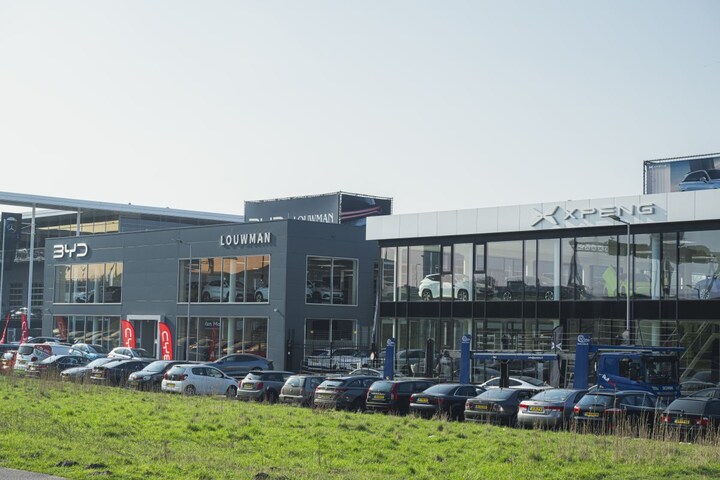
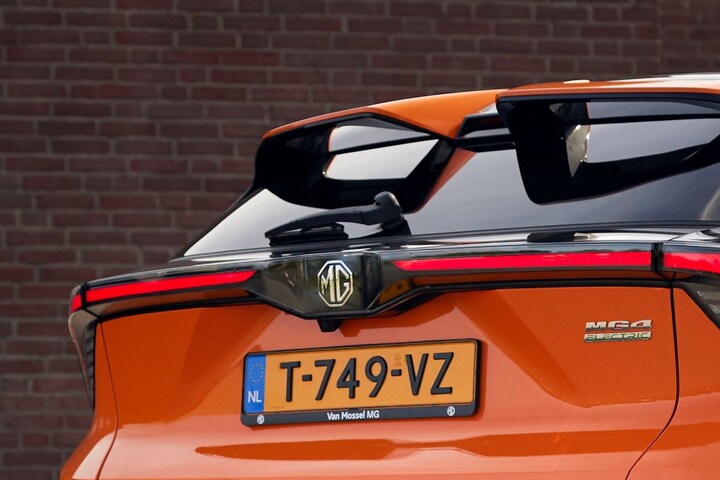
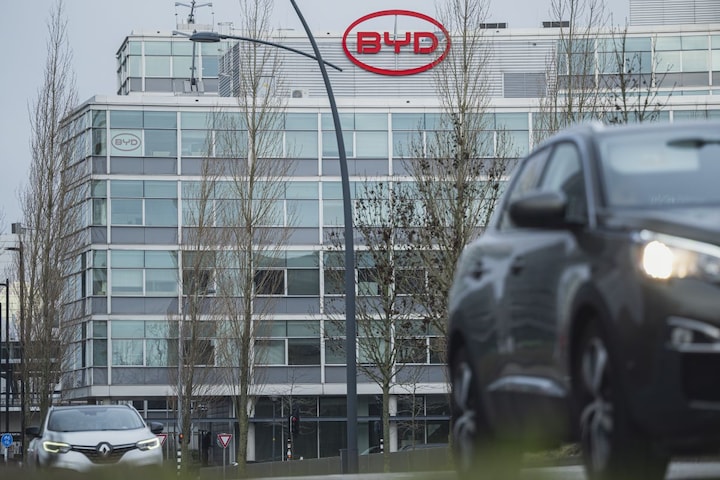
Now, parties like Geely, BYD, Dongfeng and Nio are not exactly small new players who are just messing around in Europe, so the chance that they will suddenly leave is not great. But it can play a role in the choice you make. For example, BYD and MG include a major Dutch player, Louwman and the Van Mossel Group respectively. And Geely works with local dealers through Volvo and Polestar who always remain the point of contact for a consumer. That is different with, for example, Nio and Xpeng, which do it themselves.
The same applies to another continent: Tesla and Lucid also do sales in the Netherlands themselves. Even the fact that a car brand is already an established player does not necessarily make a difference. The lawyer: “When Chevrolet suddenly left Europe, a number of Dutch dealers were left empty-handed. But claiming something was difficult, because Chevrolet Europe simply ceased to exist and with that all agreements were made and contracts were concluded. The fact that the brand continued as normal elsewhere in the world was not legally important, the claims lay with the European branch. The Americans handled that nicely, but it shows how things can go.”
Europe must tighten its purse strings
MEP Nagtegaal is critical of the Chinese advance with the help of, as the European Commission suspects, state aid. “But we must also look carefully at what Europe can do itself. America is now coming up with an IRA package (Inflation Reduction Act, ed.) to stimulate its own economy. Europe must also open its pockets and create European champions. Don’t just point the finger at China. On the other hand, I find it worrying that they want to control the entire supply chain with raw materials. There too, it is up to Europe to become more self-sufficient and a lot of money is being invested in that. This way we can provide a good counterbalance.”
Goal 2035: doesn’t Europe need Chinese brands for that?
On the other hand, the European Commission wants to only allow emission-free cars from 2035. The biggest barrier at the moment is the high purchase price of EVs. Shouldn’t we then welcome the fact that China is supplying cheaper EVs and thus in effect subsidizing our transition? Nagtegaal: “Haha, I get your point. But in any case, the charging infrastructure is not yet sufficient and the electricity network is also reaching its ceiling. Then you also see that we do not have our raw materials in order. We are terribly late with everything.”
Import duties?
Why not impose import taxes, as EC President Ursula von der Leyen suggested last year? Even some car manufacturers don’t like that. Nagtegaal thinks that German car manufacturers fear reprisals from China: “Because they also have a market share in China. But at the same time, we have to recognize that they have already lost that battle.”
No trade war
Nagtegaal concludes with a small nuance to her statement. “You don’t want a trade war, I don’t think anyone wants that. We should not block the Chinese, but we should limit the risks as much as possible. Europe must come up with an economic security package. You cannot expect the consumer to be careful not to put a Chinese product in his cart at the Action or when buying Christmas lights. We are already flooded with Chinese products and to some extent that is not a bad thing, it is called trading. But if there are dangers involved, whether in the form of state aid or lack of cyber security, we as Europe must draw the line. We must treat China as a trading partner, but an honest one, and as a good competitor. Focus on China as a partner and competitor, but eliminate the country as a systemic risk and rival.”
– Thanks for information from Autoweek.nl