
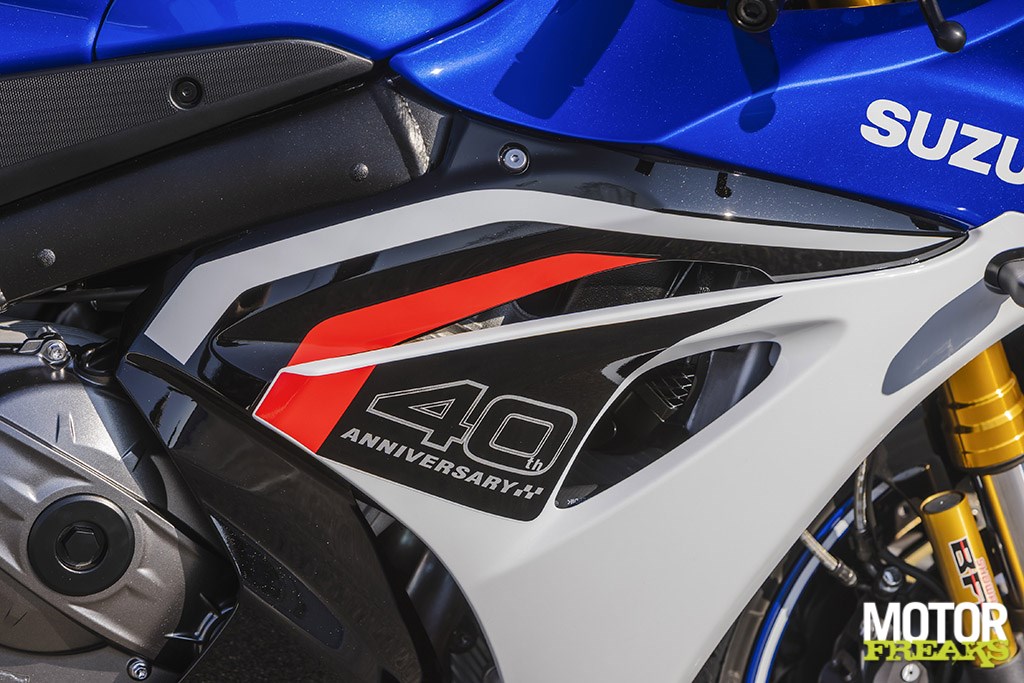
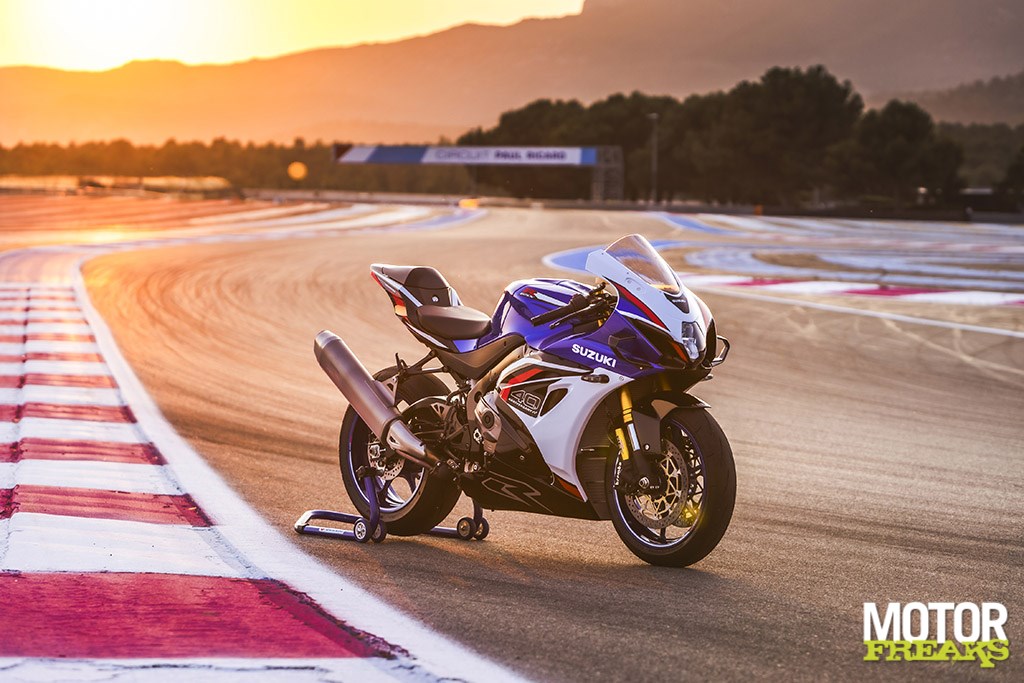
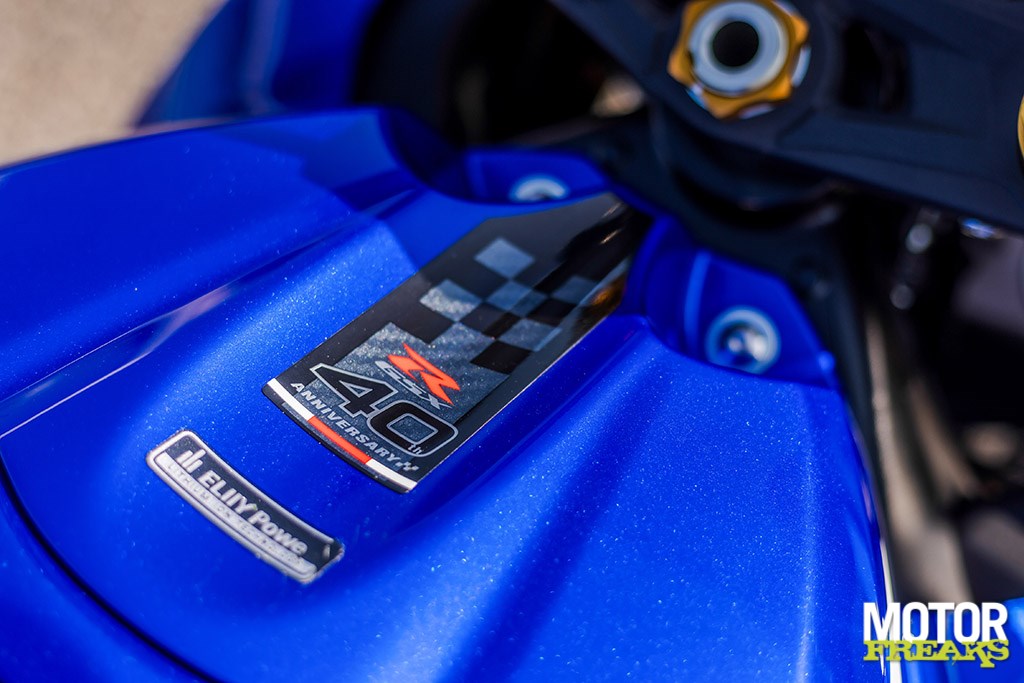
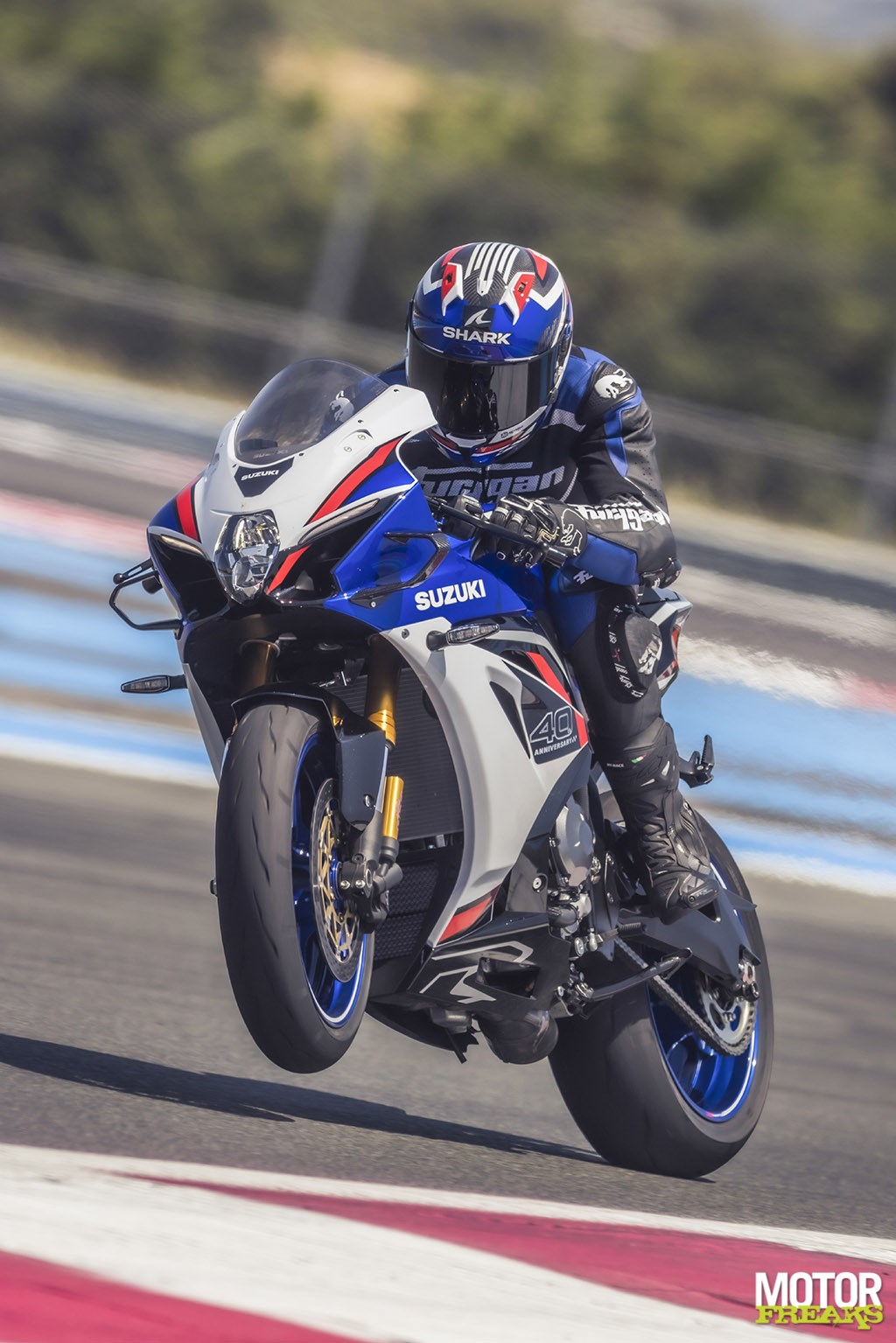
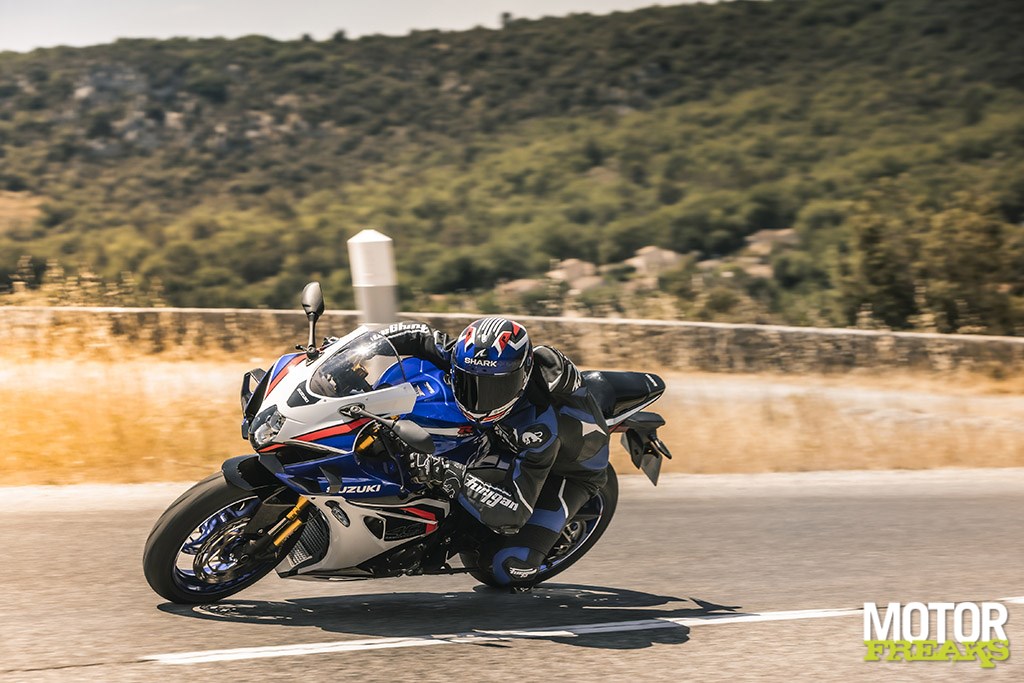
The rumor has been going on for a while, but Suzuki has indeed renewed the GSX-R1000R considerably. And a 40th anniversary color scheme immediately released, because this year it is exactly 40 years ago that the very first GSX-R was born.
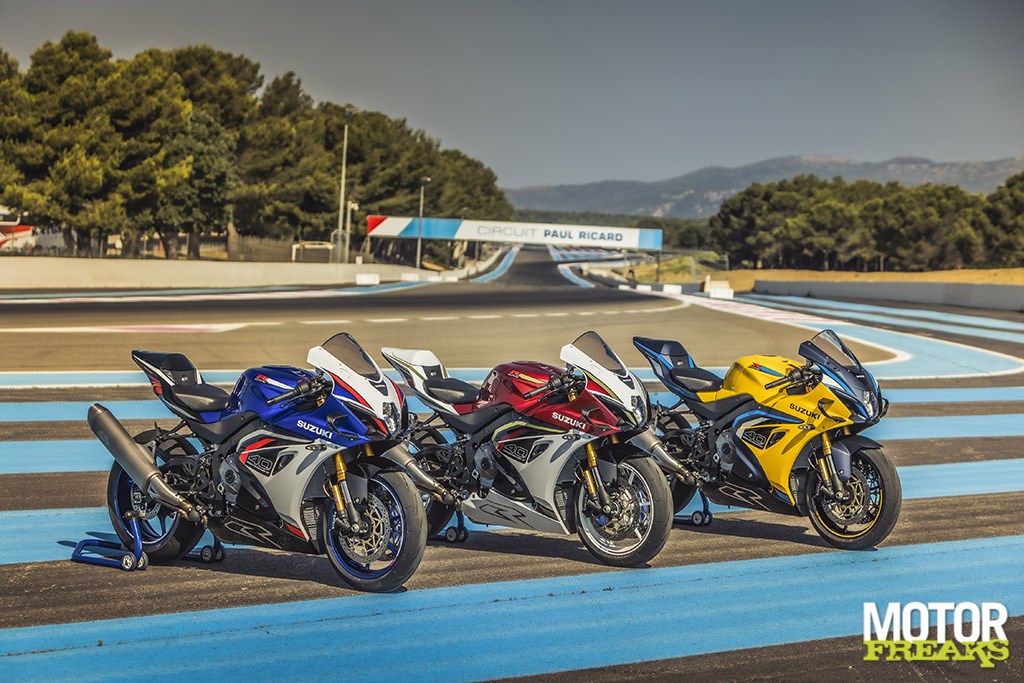
The heyday of the super sport may be far behind us, but we have the idea that it is quite a lot of motorcyclists who have become cheerful of the news that Suzuki has renewed the GSX -R1000R considerably – and, more importantly, has adapted to the Euro 5+ emission and noise standards, so that it can be put on the market here in Europe.
How thoroughly suzuki has it renewed? Just sit in front of it, we have listed it for you.
The new 4-in-2-in-1 (4-2-1) exhaust system of the GSX-R1000R, made from thin-walled stainless steel, has undergone various changes. These changes, such as increasing the diameter of the exhaust pipe, were aimed at maximizing the assets and at the same time meet the latest emission and noise regulations.
In combination with this, an elliptical (racing track -shaped) catalyst with greater capacity in the collector is placed closer to the engine to promote faster warming, which improves performance. A few O2 sensors before and behind the catalyst help to meet the Euro 5+ emission standards.
Another advantage of the new layout is that the design is freer, so that the exhaust damper could be made more compact, with a capacity that has been reduced from 8.3 to 5.5 liters, while the performance remained at the same level as with the previous design. The blasted titanium exhaust damper reinforces the slim appearance of the new exhaust system and reflects the sturdy image of the model.
Each forged aluminum piston has short cheeks and cut sides to reduce weight and friction, a DLC-Coate piston pin to reduce friction and a carefully shaped suction dome to increase compression and at the same time improve combustion efficiency. Thanks to the new shape, the compression ratio has been increased from 13.2: 1 to 13.8: 1. The diameter of the exhaust valves is enlarged from 24 mm to 25 mm and finally the profiles of the camshafts have also been adjusted.
The L-shaped upper piston spring is pressed against the cylinder wall by reducing Blow-by and the seal is improved. The oil control ring is equipped with a chrome nitride coating. This chrome nitride coating is harder and smoother than chromed and helps to reduce friction, increase durability and improve the seal.
The pistons are worn by chrumolybdenum steel connecting rods with a carbonized surface treatment to increase the strength. These new connecting rods are manufactured according to a stricter design standard for the new engine and contribute to improved reliability as a racing machine.
The cylinders are built into the upper carter yellow piece and are equipped with Suzuki’s own, nickel-phosphorus-silicon carbide coating, known as SCEM (Suzuki Composite Electrochemical Material), which reduces the heat transmission, sustainability and ring-depicting.
Excesses in the sides of the cylinder drillings (under the piston report) ensure that air that is stuck under any falling piston can quickly escape to adjacent cylinders where the pistons rise. The recesses minimize the internal air pressure resistance of the crankshaft against the downward movement of the piston, which reduces mechanical power loss and the ring seal is improved.
The water jacket of the cylinder head of the GSX-R1000R is designed to optimize the coolant flow and thus the efficiency of the heat transfer. The smooth internal shape ensures that the coolant flows faster and eliminates areas where the coolant could stagnate differently.
It is so efficient that the engine needs less coolant, which in turn contributes to weight savings. The highly efficient curved radiator with double electric fans also contributes to excellent cooling performance, and the radiator itself has a more compact shape.
The six-speed gearbox with short transmission ratios uses vertically scattered axes to minimize the total length of the engine and at the same time to be able to handle the power of the GSX-R1000R, while the slipper and assistance functions of the Suzuki Clutch Assist System (SCAS) help effectively on the Wegdek.
Not enough for you yet? New fuel injectors with eight holes replace the previous ten gates design to support Euro 5+ emission standards. The fuel pump provides a higher pressure. The Ride-by-Wire electronically regulated gas valve system improves the stationary speed and the power output, with a larger diameter (48 mm instead of 46 mm) and double injectors per cylinder. New inlet skills improve the power at high speeds. Plus large Suzuki Ram Air Direct (SRAD) air inlets next to the headlight.
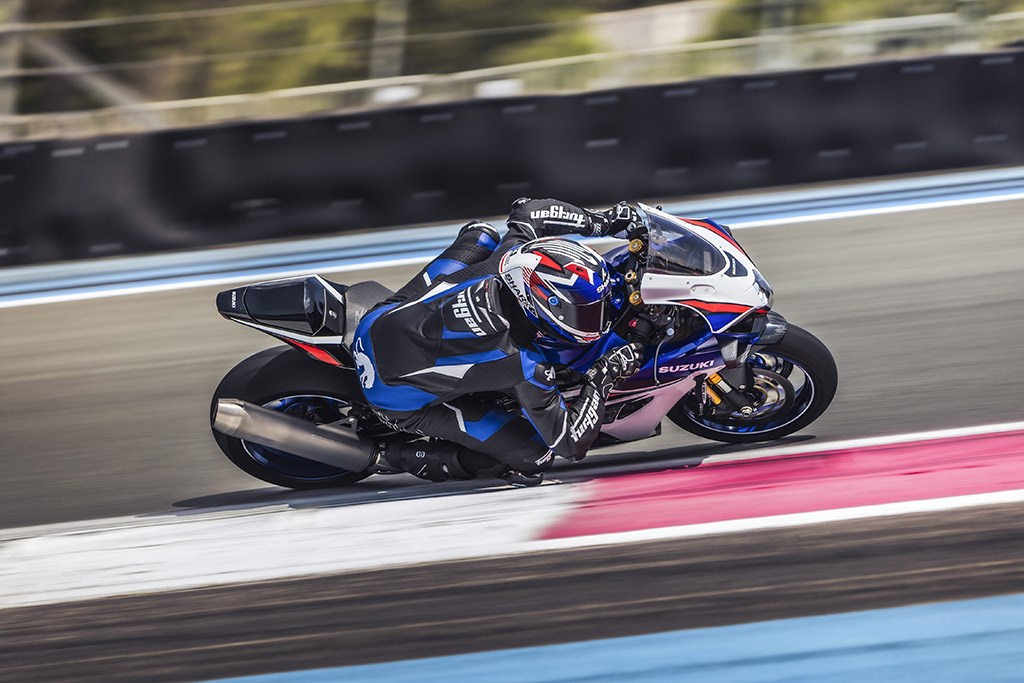
However, all those adjustments have not resulted in an increase in power that Suzuki – just like with the new Hayabusa – has put ‘only’ 195 hp. That’s bales for those who had hoped for 215+ hp, but for 99.9% of motorcyclists, those 195 horses will be more than enough.
So far the innovations that Suzuki has implemented to the engine block. However, it is much more that Suzuki has adjusted. Starting with the electronics. Suzuki’s well -known Drive Mode Selector now has calibrated driving modes for optimum performance under changing circumstances. Smart TLR Control with:
• Suzuki Traction Control System (STCS) with 10 positions (also to switch off) monitors wheel slip, engine racks, gas position, gear position and angle angle via an IMU that measures 6 directions in 3 axes.
• Lift Limiter, popularly called WheelieSonk.
• Roll Torque Control helps with traction in turns.
Smart TLR Control is supplemented with connected riding aids of the Suzuki Intelligent Ride System (SIRS). Those are:
• Launch Control ensures a perfect start from a standstill.
• BI-Directional Quickshifter for very quick and accurate switching without having to operate the clutch lever.
• Motion Track Brake System supports stable braking in turns.
• Slope Dependent Control System limits the lifts of the rear wheel with a strong braking slope.
• Suzuki Easy Start System before starting with one push of the start button.
• Low RPM assist for easy driving out of standstill.
• Suzuki Clutch Assist System (SCAS) for light control of the coupling.
To provide all electronic components and driving assistance systems with sufficient power and a stable on-board voltage, a new P-series Lithium-ion battery from Eliiy has been chosen. This offers a higher reliability, less weight and a longer usage time.
The design of the new GSX-R1000R is all about aerodynamics, further developed in wind tunnels and on the circuit. The theme “Solid & Sleek” stands for pure functionality with a form inspired by racing engines. As an optional accessory, the Suzuki CN Challenge team were designed and winglets made available from “dry-carbon”, which provide more downforce at high speed.
With regard to the bicycle part, Suzuki has equipped the GSX-R1000R with the familiar aluminum bridge frame, with a Showa Balance Free Front Upside Down at the front and a double-sided aluminum swing bridge at the back with Showa Balance Free Rear Cushion Lite Achtershock. Can be set completely, of course. As far as the brakes are concerned, Suzuki has appealed to Brembo, with the Motion Track Brake System as mentioned.
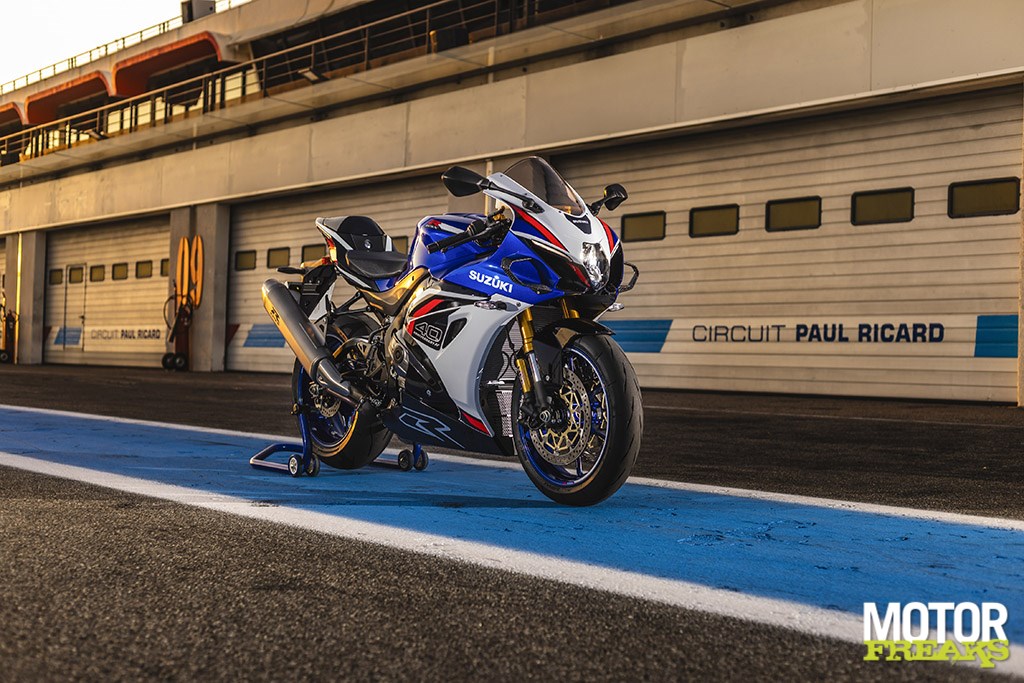
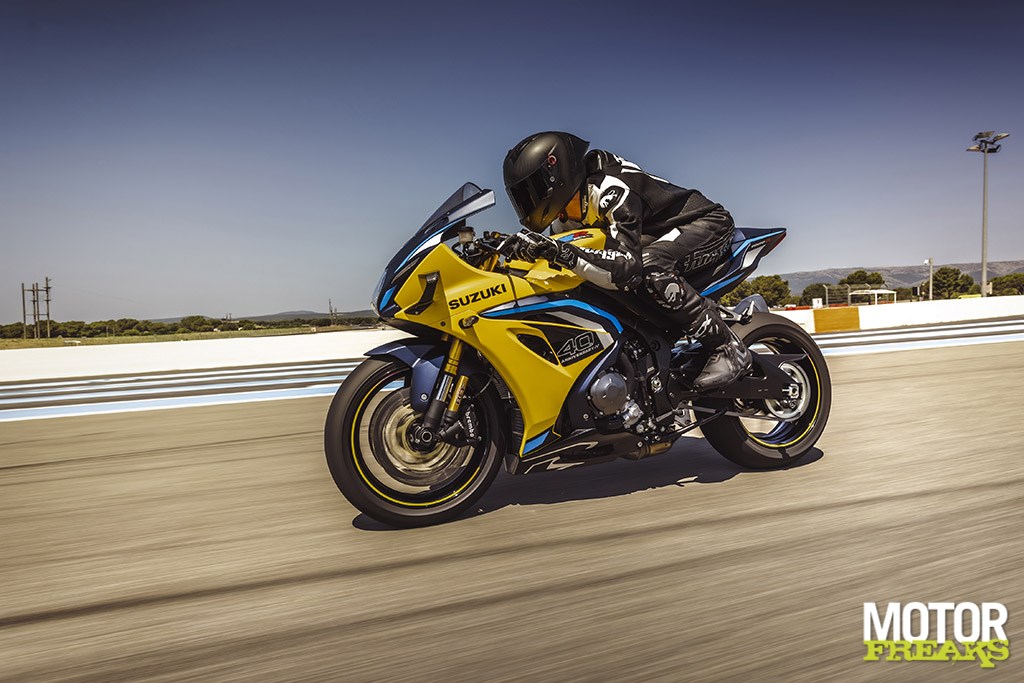
The new GSX-R1000R is available in the colors C6F (Pearl Vigor Blue / Pearl Tech White), C7Q (Candy Daring Red / Pearl Tech White) and C7P (Pearl Ignite Yellow / Metallic Stellar Blue). How much it should cost is not yet known, according to Suzuki, more information will be announced closer to the market introduction.
With which we ended up with the bad news, because that will take another year. The 2026 GSX-R1000R will only be available in the summer of 2026.
– Thanks for information from Motorfreaks.