
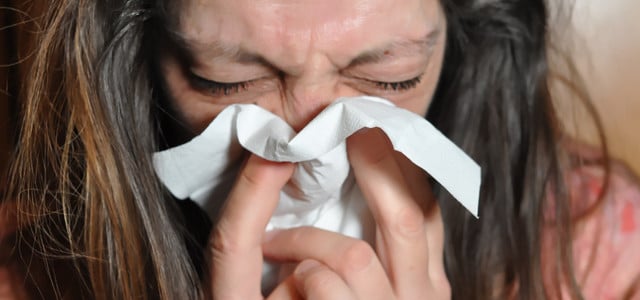
Suppressed sneezing sounds harmless, but can be dangerous. Find out why your body sneezes at all and why you shouldn’t stop it.
Imagine you are sitting in the quiet cinema or in a meeting and suddenly a sneeze announces. Out of consideration, you try to hold it back. Even if that sounds harmless, it is not necessarily. Because Niesen is an important protective mechanism that you should not deny your body.
Why we sneeze
Niesen does not happen by chance, according to AOK health magazine, it is an automatic reflex of your body. Dust, pollen or germs that have settled in the nose are transported out again with a strong air.
Usually the trigger is an irritation of the nasal mucous membranes, and the information is then passed on to your brain at lightning speed via the nerve pathways. This activates the breathing and fuselage muscles and the air escapes explosively. It leaves the body at a speed of over ten meters per second and prevents foreign substances from getting deeper into the body.
Is suppressed sneezing harmful?
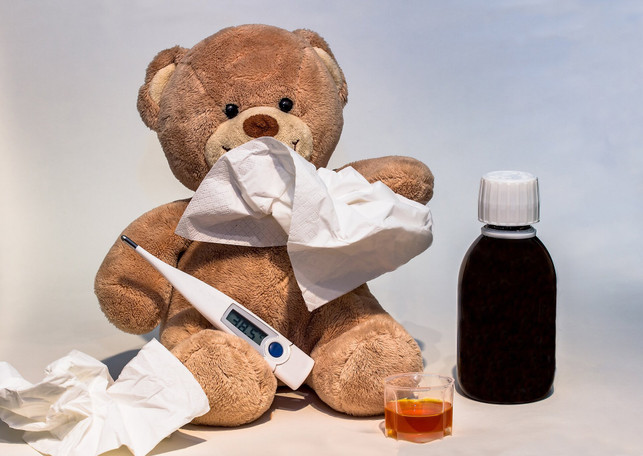
In general, you should not suppress the reflex of the sneezing. With the sneezing, great pressure builds up to remove the foreign body. If you prevent this, for example, if you get your nose, the pressure must look for a different way to escape.
“Although health consequences are rare, they can still occur. Examples of this are: a burst eardrum, hearing loss or even a brain bleeding,” said Dr. med. Univ. Branka Zoric, senior physician of the Clinic for Internal Medicine, Gastroenterology, Pneumology of Marien Hospital Witten.
In addition, according to AOK, fine blood vessels can be damaged in the nasal mucosa and there is a nosebleed. In rare cases, even cracks in the throat can arise.
Breaked veins are also possible in the eye.
So you really sneeze
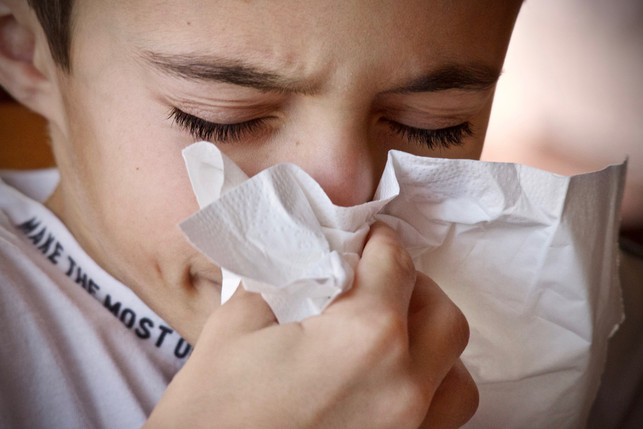
So that it doesn’t get that far, prefer to follow these tips instead of suppressing the sneeze:
-
Handkerchief: sneeze in a paper handkerchief and dispose of it immediately afterwards. If you only suffer from hay fever and no cold, handlebits are the better choice because you can reuse them. However, they should not be used in the event of infections, since the pathogens live on in the damp milieu of the fabric search and, for example, can be passed on in the pocket after a handle.
-
Arm flue instead of hand: If you don’t have a handkerchief at hand, sneeze into your elbow. This is better than the hand because you then distribute fewer germs on surfaces.
-
Wash your hands: Wash thoroughly with water after each sneeze and soap your hands and use disinfectant.
-
Change clothes: sneeze your sleeve and have an infection, put the clothes in the laundry as soon as possible to kill viruses or bacteria. Even if a temperature of 30 degrees is usually sufficient when washing the laundry, you should wash textiles with pathogens at 60 degrees.
-
Keep your distance: Stay at a distance to others if you are cold. So you protect them from infection.
-
Correct greeting: Avoid shaking hands or greeting kisses in an infection due to a possible droplet infection. A friendly waving lowers the risk of transferring viruses and bacteria.
Read more on utopia.de:
- Why do you have to sneeze when you look into the sun?
- Dropche infection: This is how you protect yourself against it
- Cold myths: pull up vitamin C, nose and sport-what myths is there?
** marked with ** or orange underlined Links to sources of supply are partially partner links: If you buy here, you will actively support Techzle\.com, because we will then receive a small part of the sales proceeds. More information.