

The quality of your running shoes should be good. Especially if you run regularly and long distances. This also includes replacing them when they have served their purpose. But how long do running shoes last?
If you like to run a lot, then you may have asked yourself how long running shoes last. After all, they are your most important equipment when jogging. The right shoe is not only comfortable, but can also protect against injuries and incorrect strain.
However, these qualities of your shoe do not last forever. Over time, running shoes wear out. This means that they no longer provide ideal support and, in the worst case, you will notice this through quicker signs of fatigue or even a tendency to injury or pain when running. Therefore, it is important to recognize when you should get new shoes. You can find out how long running shoes last here.
4 signs: This is how you can tell whether the running shoes are still good
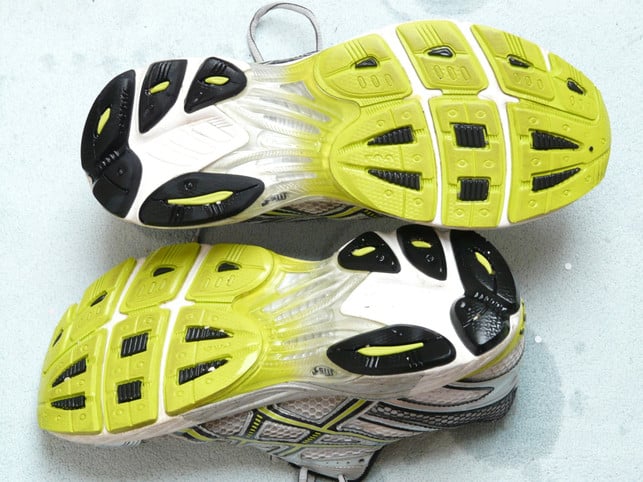
How long running shoes last depends on various factors. The following signs are clear signals that your running shoes are slowly becoming obsolete:
-
The tread is worn out: Over time, the tread on your running shoes wears off. If the sole is very worn, then you should consider a new pair. This is particularly important if you run a lot on uneven surfaces and rely on good support from your running shoes (for example when trail running). The running shoes can then no longer give you proper support, which can be a safety risk.
-
Uneven wear on the sole: Similar to the tread, the outside of the sole of running shoes wears more and more with continuous use. If you notice that the outer soles look unevenly worn or flat, it may mean that it is time for new shoes because there is no longer enough cushioning. By the way: Bring your worn-out running shoes with you to the store when choosing new shoes. Qualified staff can use the wear and tear on your running shoes to determine your running style and biomechanics and thus make better recommendations for your new shoes.
-
Cushioning decreases: Most running shoes have soles with cushioning properties. Over time, the soles wear out and the cushioning noticeably decreases at some point. If you feel like your running shoes no longer provide enough cushioning and are simply making running uncomfortable, it’s time for a new pair.
-
The shoes break on the outside or inside: If you notice holes or cracks in the shoe (for example in the big toe or at the back of the heel), this is not necessarily a sign that you should no longer walk in them. As soon as the damage is no longer just visual defects, but also makes running uncomfortable or painful, you should discard the old running shoes.
Basically, as soon as you repeatedly experience pain while running or the shoes simply feel permanently uncomfortable, you should seek advice about purchasing a new one. Even if the shoes have not yet had their day, pain is a warning signal. It may be that your shoes don’t suit your biomechanics or your preferred running surface and you would do better with a different model.
If you want to dispose of your old running shoes and don’t know how to do it correctly, take a look at this article: Disposing of shoes: This is how to do it correctly.
Factors: How long do running shoes last?
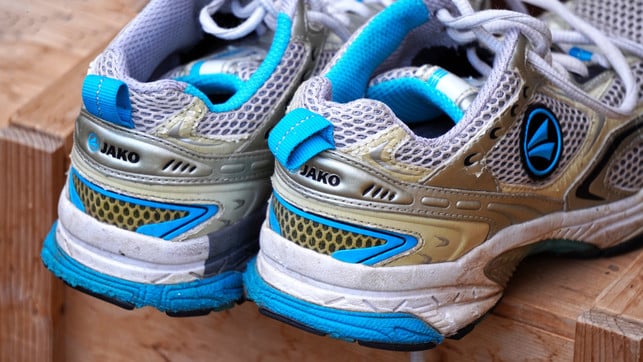
There is no universal answer to how long running shoes last or when the above symptoms appear. Physiotherapists, among others, explain this. Although manufacturers often provide guidelines, the exact point at which your running shoes are considered expired depends on many factors that go beyond the pure nature of the shoe. Based on the design of the shoe, the manufacturer can give an approximate guideline as to when it is time for new shoes. In fact, numerous other factors influence the deterioration of your running shoes, which cannot possibly be taken into account in the manufacturer’s information:
-
Where will the shoe be walked? Challenging or hard terrain such as asphalt or trails wears out your running shoes much faster than soft forest floors or dirt roads.
-
Your weight: Your weight has a big impact on how quickly the cushioning and shape of your running shoes wear out. Therefore, heavier runners should pay particular attention to choosing sturdy running shoes that are suitable for their weight.
-
Your biomechanics and running style: How runners perform and distribute their weight while running varies from person to person. It’s no wonder that every pair of running shoes experiences different levels of wear and tear, depending on the wearer’s biomechanics and running style. For example, if you strike more on your heel, the shoe will wear differently than runners who have a different running style. Depending on the nature of the shoe, your running style can have a big impact on how long your running shoes last.
The condition of the running shoes also plays a role.
Thrust characteristics: Light shoes wear out faster
How long the running shoe lasts also depends on the condition of the shoe. Running shoes come in many different varieties. From minimalist, lightweight running shoes to models with thickly padded soles and robust outer materials – the selection can quickly become overwhelming. When choosing your running shoes, you should always consider a variety of other factors:
Lighter running shoes with less support wear out more quickly than more robust models.
But that doesn’t mean that one model is better than the other. Choosing a running shoe just because it’s likely to last longer can backfire. Running shoes must be tailored to your individual needs so that you can run in them for a long time without pain or injury. If your physical requirements and athletic goals recommend a lightweight shoe with less cushioning and support, stick with it instead of choosing a stiffer model just because it won’t wear out as quickly.
Tip: Either way, we recommend that you choose sustainable running shoes when choosing shoes.
So what should be done? Keep a close eye on the condition of your running shoes and take proper care of them. This can extend the lifespan of the shoes.
Extend lifespan: This is how running shoes last longer
Both for financial reasons and with regard to the sustainability factor, it is commendable if you want your running shoes to last as long as possible. The lifespan of your running shoes cannot be extended indefinitely. However, with a few tips you can minimize signs of wear and tear and keep your shoes in good condition for longer:
-
Only use your running shoes for running. Some of us also wear our running shoes when we walk in everyday life. That’s understandable, because the sports shoes are ideally very comfortable and also stylish. However, the shoes also wear out much faster because you wear them constantly. Especially if you value 10,000 steps a day. It’s best to only wear the running shoes for running, so you can significantly extend their lifespan.
-
Care for your running shoes conscientiously: Proper care of running shoes is crucial when it comes to how long the running shoes should last. Because at this point you also have control when it comes to extending the life of your running shoes.
Care for running shoes properly
To ensure that your running shoes last a long time, you can follow the following care tips:
-
Drying: After each session, you need to allow the shoes to dry properly before putting them away. It’s best to simply let the shoes air dry and, if necessary, stuff them with some newspaper to make things quicker.
-
Note: Do not dry wet shoes on the heater. This can lead to damage to the material. Likewise, tumble dryers, hairdryers or drying in the blazing sun are a bad idea.
-
Cleaning: Do not wash the running shoes in the washing machine. This ruins the material pretty quickly and is a guarantee of rapid wear. Better: Clean shoes by hand with soapy water and a brush. If the shoes are not very dirty, wiping them with a damp cloth is sufficient.
- You can find more tips on how to wash sports shoes properly here: Wash sneakers – this is how they get clean again
-
Waterproofing: It is also advisable to waterproof running shoes (environmentally friendly).
Read more on Techzle\.com:
- Infinite Running: The running shoes with interchangeable parts
- Everything OK? Here you can find better & more sustainable sports fashion
- Natural Running: Is it healthy to jog barefoot?
** marked with ** or orange underlined Links to sources of supply are partly partner links: If you buy here, you are actively supporting Techzle\.com, because we then receive a small part of the sales proceeds. More info.