

Anyone who pets a cat infected with cat fungus can contract the skin disease themselves. Children are particularly susceptible because they touch their faces a lot. We’ll tell you what you should know about fungal spores.
For some, petting a cat on the street is the highlight of a walk. But be careful: stray cats (as they often occur in the Mediterranean region) and cats from farms can be infected with the contagious cat fungus, according to the medical newspaper. The fungus is a zoonosis and is also transmitted to humans and causes annoying symptoms.
According to Focus Veterinarian, the disease is transmitted by the spores of the fungus Microsporum Canis and causes a so-called dermatophytosis, a skin disease, in cats. Although “Canis” actually means “dog,” the fungus particularly often affects the skin and fur of cats. It lives by breaking down keratin, which is found in the upper layers of the skin as well as in the hair.
Cat fungus is not life-threatening because the fungus does not spread to internal organs. Nevertheless, the associated symptoms are annoying and can also affect people.
We’ll explain what you need to know about cat fungus and how you can protect yourself.
Which cats are at risk?
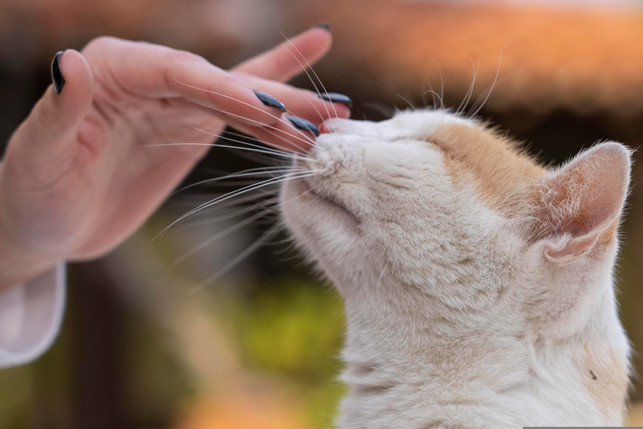
In principle, all cats can become infected with cat fungus. However, some animals are more at risk than others. According to Focus Vet, these include:
- Stray cats
- Cats that live in the Mediterranean or other areas with a warm, humid climate
- Young kittens that are still nursing
- Cats whose immune systems are already weakened by medication or parasite infestation
- Animals suffering from skin injuries
- Cats that have a lot of contact with other members of their species (for example in an animal shelter)
- Persian cats (due to genetic predisposition)
Domestic cats can also become infected with cat fungus. This happens, for example, when owners pet an infected cat and then bring the fungus into their own home. This is one of the reasons why it’s best not to touch strange animals at all or to practice good hygiene when doing so.
Possible symptoms in cats
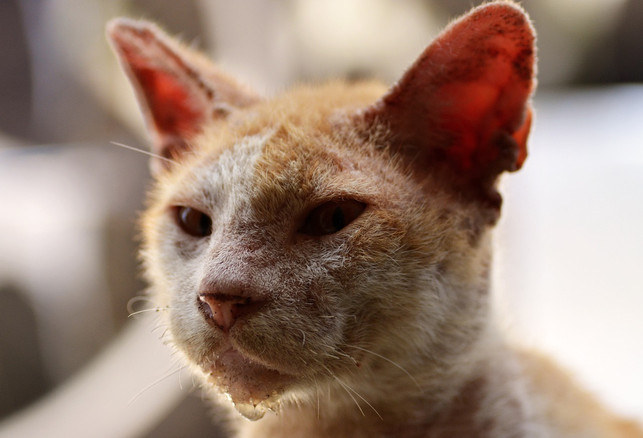
You can’t necessarily see the fungus in cats: According to Focus Veterinarian, the symptoms are not always clear and can also indicate other illnesses. Whether a cat actually has cat fungus can often only be determined with a close look. Cats with weak immune systems in particular quickly become infected with cat fungus, as do animals that are already weakened by other illnesses.
An infestation with cat fungus can also be a warning signal and indicate other illnesses. If you notice any symptoms, you should always have them checked out by a veterinarian. According to the medical newspaper, the incubation period of the cat fungus is ten days.
The pet magazine My Pet lists the most common symptoms of cat fungus in cats as follows:
- Thin and dull-looking fur (particularly common on the head and surrounding regions)
- Circular and patchy fur loss
- Skin inflammation on the bald areas
- Claw infections
- Reddened areas
- White scales
- The cat scratches excessively because the fungus causes itching
More rarely, well-groomed domestic cats can also suffer from cat fungus. Veterinary care is essential in this case. The cat is then usually given an antifungal medication that is injected or administered orally. Shampoos or ointments are also used.
People with a strong immune system rarely become infected with cat fungus. However, caution should be exercised, especially with children, as they often touch their faces and their children’s skin cannot fight off the fungus, according to an expert in the medical newspaper.
Symptoms and diagnosis of cat fungus in humans
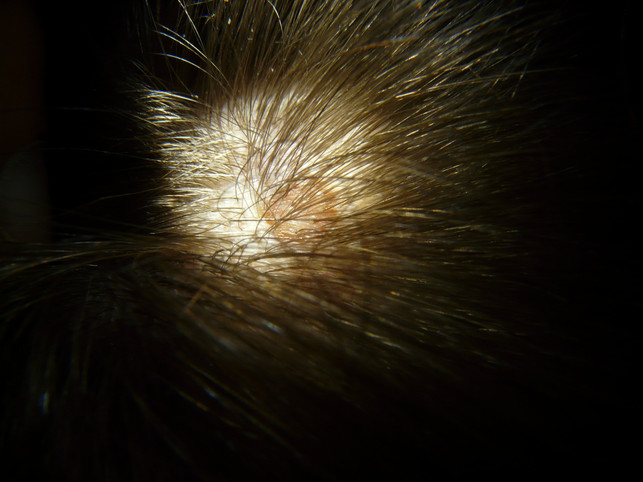
When a person becomes infected with the cat fungus, they often develop visible symptoms. According to the Pharmacy Review, the most common signs include:
- If the scalp is affected, the cat fungus causes round areas with short hair because the hair breaks off just above the surface of the skin. This often results in bare areas.
- Redness with white scaling may form on the scalp.
- Cat fungus is also often accompanied by severe itching in humans.
- Rarely, yellowish blisters or pustules can also develop.
Although cat fungus usually affects the scalp in humans, it can also spread on the face or other areas of the skin and reach the scalp. On the skin (for example on the face) it initially resembles an insect bite. Gradually the area turns into an itchy redness with a whitish coating (as if dusted with flour). Nodules and water blisters may develop. Such spots can occur singly or multiple times.
Dermatologists make a diagnosis by examining hair and skin samples under a microscope and conducting a fungal culture. UV lighting can provide initial information: the fungus glows greenish-yellow under the UV light.
Cat fungus: protection and therapy

Protecting your cat from cat fungus:
According to “My Pet,” you can protect your cat from cat fungus with a vaccination. The vaccination costs around 15 euros and protects the animal for nine months. Vaccination cannot always prevent infection. However, the disease is often proven to be less acute in vaccinated animals and heals more quickly, according to the pet magazine.
Protection of humans from cat fungus:
The best way to protect yourself and other people from cat fungus is to stay away from stray cats. If you have still had contact, you can reduce the risk of infection by washing your hands thoroughly after stroking or rubbing them with a disinfectant.
If the cat fungus breaks out, the therapy is lengthy and complex, according to Pharmacy Review:
- All family members (including pets) must be checked for the fungus. If the infection goes undetected, there is a risk of a ping-pong effect in which everyone keeps infecting each other.
- According to Pharmacy Review, sick people must undergo combination therapy in which antifungal agents and ointments/shampoos are used for several weeks to months. (Important: You must wear gloves when applying so as not to infect healthy skin).
- Those affected should change socks, stockings and underwear daily and wash them at 60 degrees or hotter.
- Contagious children should stay away from school or kindergarten after consulting a doctor.
- According to the Pharmacy Review, anyone who neglects to visit a dermatologist and receive treatment for too long risks permanent bald spots on their head.
Edited by Jennifer Watzek
Read more on Techzle\.com:
- Feeding cats: This is how you feed your cat sustainably and healthily
- Cats hit: what you should do now
- Psoriasis: These home remedies can help
** marked with ** or orange underlined Links to sources of supply are partly partner links: If you buy here, you are actively supporting Techzle\.com, because we then receive a small part of the sales proceeds. More info.