

Walking correctly has to be learned – because an incorrect gait pattern can quickly lead to pain and orthopedic problems. We’ll tell you how you can walk better.
Walking correctly has nothing to do with speed. If you walk correctly, you put optimal strain on your joints. However, if you go wrong, it can lead to tension or problems in your back and knees. Walking is not as easy as you might think: walking is a very individual process. That’s why every person has their own way of walking.
How someone walks depends on physical requirements, living conditions and individual walking techniques. However, there are currently no general studies or clear research results on which gear is the right one. What is certain, however, is that walking is good for us humans. Studies even prove this: Among other things, regular walking can improve your mood. So that your body also benefits from it, you should make sure that you walk correctly.
Walking correctly: Your posture is also important

From an orthopedic perspective, our gait should be upright and the movement should come from the hip joint. Correct posture and body tension are therefore essential for proper walking. You can actively do something to improve your posture when walking:
- Make sure you walk upright. The head should point towards the sky and the pelvis should sink towards the floor. This resulting stable center also helps with a hollow back. Under no circumstances should you lean your upper body too far forward when walking.
- Swing your arms slightly to walk properly. By the time you’re on foot, your arms should be able to swing freely. The palms of the hands should always face the body.
- If you want to walk properly, you should avoid handbags – they are often too full and cause back pain. In comparison, a backpack is much better for your back.
Walk correctly: Pay attention to stride length and landing technique
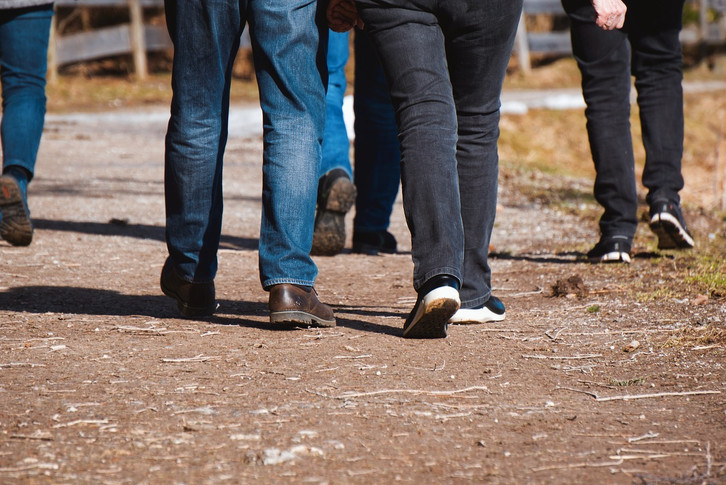
Not only posture plays an important role in walking correctly, but also how big your steps are and how you place your foot. This is explained, among other things, by the specialist Dr. Martin Rinio from the Gundelfingen Joint Clinic.
This is how you can walk correctly:
- Avoid taking steps that are too long as they will cause you to straighten your knee. As a result, the step is not sufficiently cushioned. This not only puts strain on the knee, the shock can even extend up to the spine.
- Variety is also important. This means that you should sometimes step with your heel and sometimes with the front of your foot. And very important: Don’t forget to let your arms swing and roll gently.
- Come on gently and not too forcefully. You can do this, for example, if you look for soft, springy soles when buying shoes.
The best way to change an unhealthy gait is to consciously focus on walking. By walking with concentration you can better avoid instability.
It may still take some time for you to internalize the new pace. It’s important that you stick with it anyway. This can help you prevent back problems, joint pain and tension. Walking barefoot can help you improve your gait. Barefoot shoes can also be an option.
But if you just can’t manage it or if you have persistent problems walking, you can also contact an orthopedic or physiotherapy practice.
Read more on Techzle\.com:
- Nordic Walking: Effects, techniques and tips
- Cracking joints: why and whether it is unhealthy
- Cross your legs – why you shouldn’t do it
** marked with ** or orange underlined Links to sources of supply are partly partner links: If you buy here, you are actively supporting Techzle\.com, because we then receive a small part of the sales proceeds. More info.