
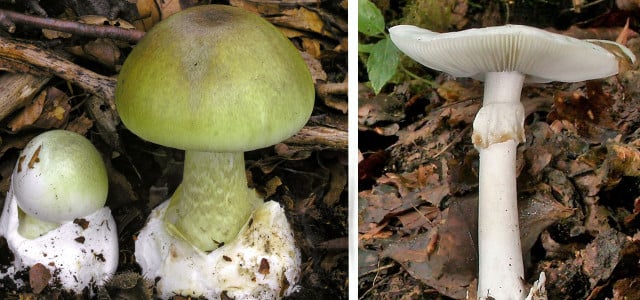
The mushroom season is starting – and with it the risk of dangerous mix-ups increases. The green death cap mushroom is particularly treacherous. Doctors and mushroom experts warn urgently: even the smallest amounts can be life-threatening.
When mushroom season begins in late summer and fall, the risk of confusing edible mushrooms with poisonous species also increases. The green death cap mushroom (Amanita phalloides) is particularly dangerous. It is one of the most poisonous mushrooms in Europe and can easily be confused with edible mushrooms – especially button mushrooms and green mushrooms. Even small amounts can cause serious and possibly fatal poisoning.
According to the German Society for Mycology (DGfM), the green death cap mushroom is widespread in Germany. It grows particularly in deciduous and mixed deciduous forests, in parks and on forest edges – often near oak and beech trees. According to the German Liver Foundation, the green death cap is responsible for around 90 percent of deaths from mushroom poisoning.
Recognize green death cap mushroom: This is what the toadstool looks like
- The hat is greenish, greenish-yellowish or almost white. The color may fade towards the edge.
- The hat is initially hemispherical and later flatter. It can grow up to about 15 centimeters wide.
- The stem is whitish and has a bulbous thickening at the base.
- At the base of the stem is a sack-like covering, the so-called volva. However, it can be hidden in the ground and is easily overlooked when pulled out.
- The slats are white.
- The smell can be sweet or honey-like – but the smell is not sufficient for a reliable identification.
Risk of confusion with mushrooms
Particularly young or light-colored specimens can look harmless. The green death cap mushroom is confused with, among other things, mushrooms, green mushrooms or pearl mushrooms.
An important distinguishing feature from mushrooms are the lamellae: in young mushrooms they are initially pink and later turn brownish. The lamellae of the green death cap remain white. The sack-like covering at the base of the stem is also a warning sign.
Nevertheless, individual features, photos or a mushroom app are not enough to approve food. If you have any doubts about something you find, you should not eat it and have it checked by a certified mushroom expert.
At the top of the photo you can see the green death cap mushroom on the right and left. On the right in the picture is the pigmentless variety of toadstool, which is even more similar to edible white mushrooms. (Photo copyright: German Society for Mycology)
Other mushrooms with a risk of confusion:
- Collecting porcini mushrooms: Beware of these lookalikes!
- Recognizing meadow mushrooms: Beware of confusion!
- Collecting parasol mushrooms: There is a risk of confusion here!
- Crested Tintlings: Danger of confusion with other Tintlings
Symptoms of death cap poisoning
The tricky thing is that symptoms often don’t appear immediately. After consumption, several hours may pass before the first symptoms begin. Common are:
- Nausea and vomiting
- watery diarrhea
- severe stomach pain
- Dizziness and circulatory problems
The symptoms can initially seem like a gastrointestinal infection. However, if poisoned with amatoxins, severe liver damage can subsequently develop. In severe cases, there is a risk of liver and kidney failure.
Mushroom poisoning: what to do in an emergency?
Anyone who suspects that they have eaten a poisonous mushroom should call for medical help immediately – it is best to call 112 or a poison control center.
Important:
- Save leftover fungus, vomit or leftover food and take it with you to the clinic. These help with diagnosis and can save lives.
- Do not use home remedies!
The Federal Office of Consumer Protection and Food Safety provides a list of the relevant poison emergency hotlines on its website.
How to protect yourself from mushroom poisoning
- Only eat mushrooms that can be clearly identified – if in doubt, leave them alone.
- Do not use mushroom apps or images from the Internet as your sole source of determination.
- Mushroom experts can examine collected mushrooms free of charge (address: German Society for Mycology).
- If you want to enjoy mushrooms, you are always on the safe side with cultivated mushrooms from the trade.
Also important: snails or maggots in the mushroom are not a sign of non-toxicity – some animals can tolerate mushroom poisons that are fatal to humans.
If you get symptoms after eating mushrooms you have collected yourself or are not sure which mushrooms you ate, you should not wait. Contact the poison control center or a doctor immediately. If you have severe symptoms, impaired consciousness or circulatory problems: dial 112.
Why the 2026 mushroom season may start later regionally
How many mushrooms appear depends largely on rainfall, temperature and soil moisture. After the dry and unusually warm summer of 2026, the mushroom season may start late in some regions.
After a long period of drought, a few showers are not enough to permanently stimulate fungal growth. However, after heavy rainfall, the situation can change within a few weeks. Then poisonous species such as the green death cap can also appear. A regionally weak or delayed mushroom season does not mean that the risk of confusion disappears.
Conclusion: Better caution than risk
The green death cap is beautiful but deadly. The risk of confusion is high and people end up in hospital every year because of it. Experts advise: Stay away from unknown mushrooms. If you want to collect mushrooms, you should get training or go with experienced mushroom experts – and if in doubt, it’s better not to.
With material from dpa.
Read more on Techzle\.com:
- Warming up mushrooms – is it dangerous?
- Identify mushrooms: 3 apps in comparison
- Edible mushrooms: You should know these 8 local species
Independent journalism needs people who stand behind it – including in Google searches. Now send a signal for more sustainability and → Save Utopia as a preferred source.
** marked with ** or orange underlined Links to sources of supply are partly partner links: If you buy here, you are actively supporting Techzle\.com, because we then receive a small part of the sales proceeds. More info.