
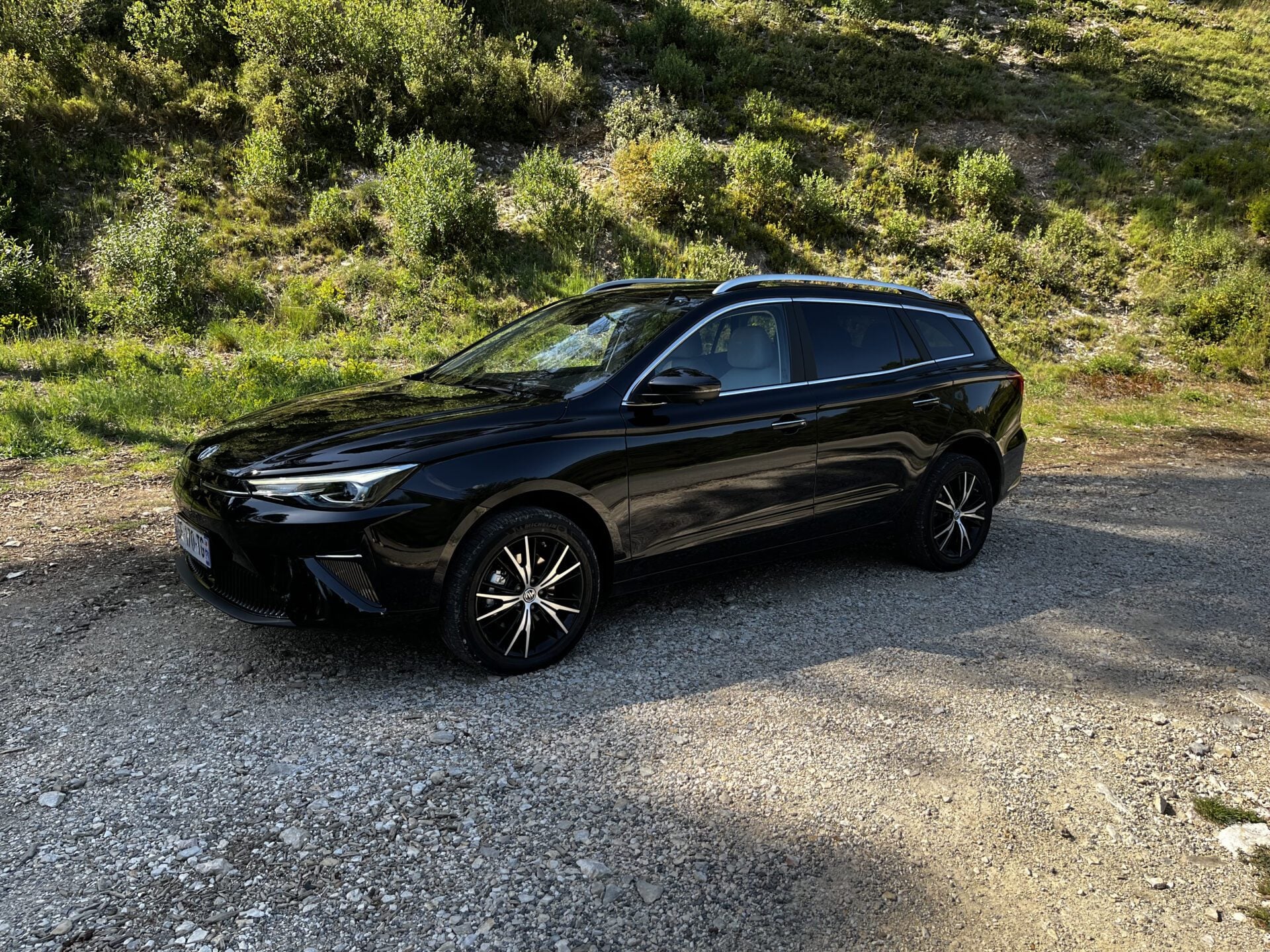
Dimitri Charitsis – 01net.com – The MG5 in its Luxury finish in the extended autonomy version.
MG never ceases to amaze. After the ZS, the cheapest electric SUV on the market, here is the MG5, the most affordable electric station wagon in its class.
Editor’s note: Originally published May 22, 2022 at 8:27 a.m., this MG5 review was updated on 07/19/2022. Indeed, during our first test of the vehicle, we were not able to have a complete overview of the performance of its battery. This update therefore concerns the autonomy part of the test and it alone.
The MG5 isn’t the first 100% electric station wagon on the market, but it’s probably the only one you can afford. Indeed, the only existing alternative is called Porsche Cross Turismo, and is about four times more expensive than our “modest” test vehicle.
MG has also made a specialty of attacking the electric market with cars with unbeatable value for money. Its ZS EV is the perfect example among SUVs, the MG5 only confirms this strategy before the arrival, at the end of the year, of a probable MG4, which promises to be the cheapest electric compact on the market. .
With an unusual format and a particularly attractive price (32,490 euros, excluding ecological bonus), the MG5 certainly deserved to be looked into. Here is his test.
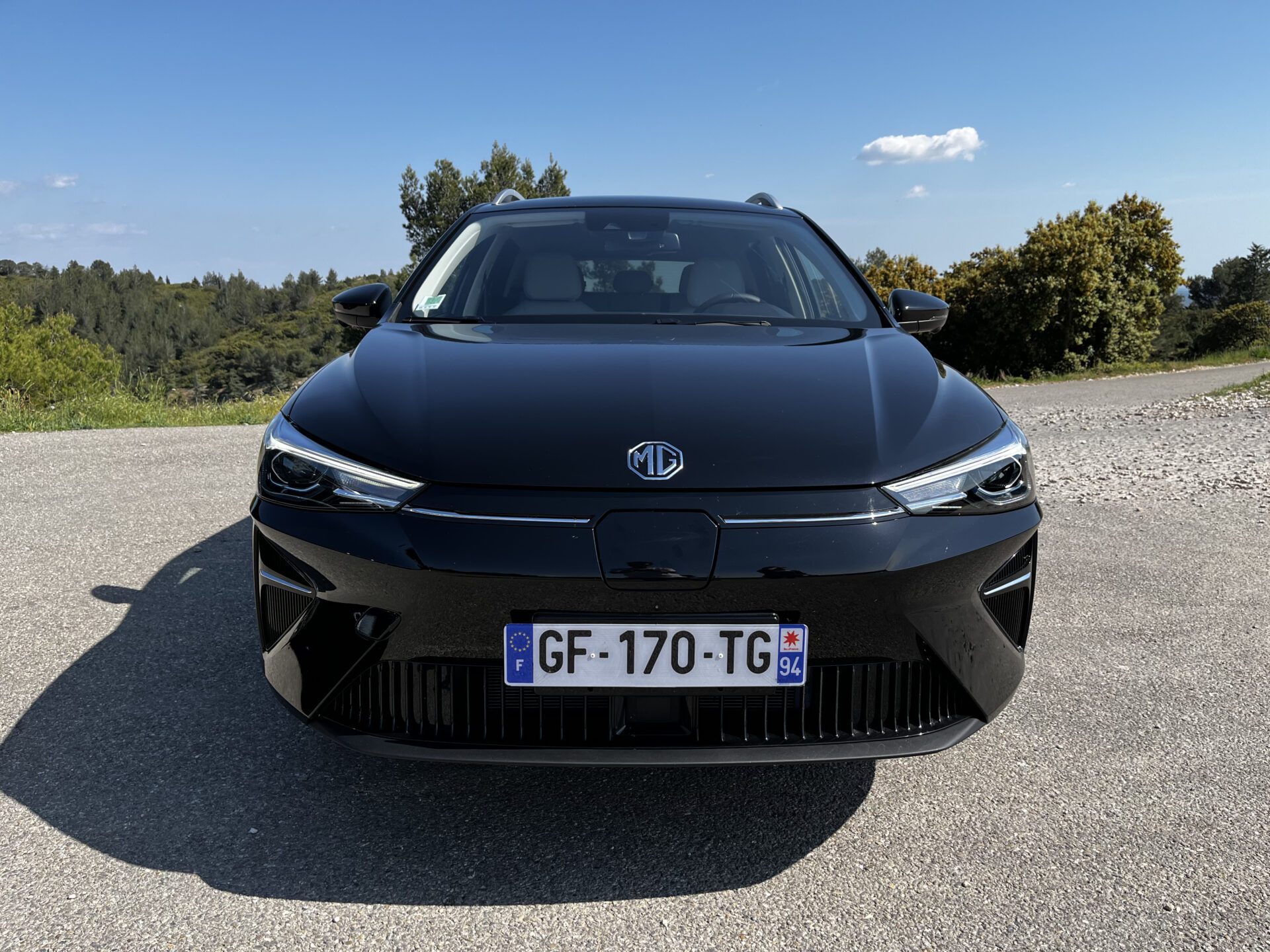
The technical model of the ZS declined in break
MG did not look far when developing its station wagon. This already exists in a thermal version on certain markets, he was content to integrate a battery/motor block almost identical to that of his SUV, the ZS EV.
As for the latter, the MG5 is available in two versions, “small” and “large” battery and two engines. Like what has been done for SUVs, the two battery technologies are different on each version.
In its “Standard autonomy” version, the break incorporates a 130 kW (177 hp) synchronous motor and a 50.3 kWh LFP (Lithium-iron-phosphate) battery. As for the “Extended Autonomy” version, it offers a 61.1 kWh NMC (Nickel-manganese-cobalt) battery but a slightly less powerful motor (115 kW, or 156 hp). It is this last version, in the “luxury” finish, probably the one that will be the most sold in France, that we have decided to test.
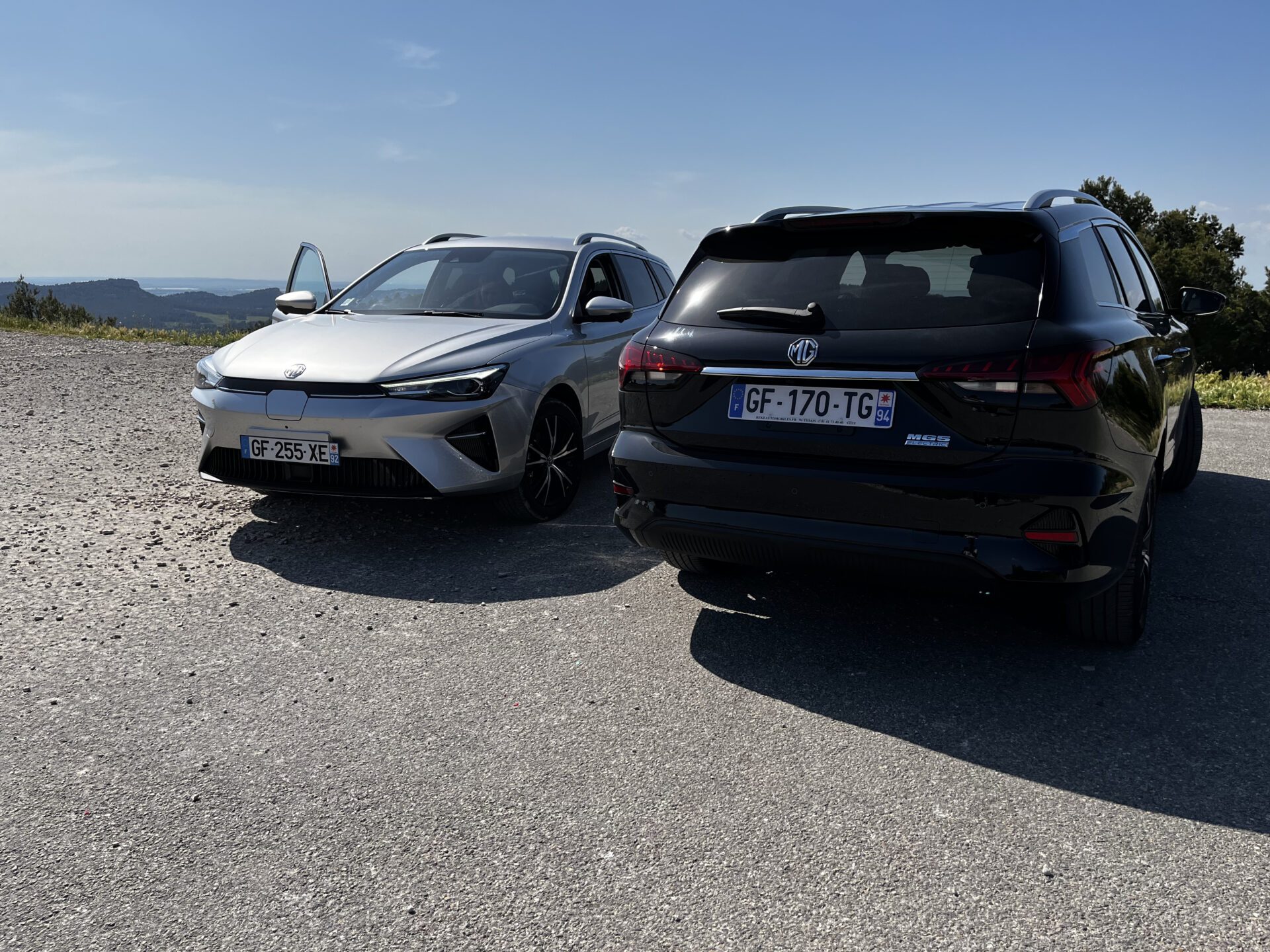
Design: she won’t win a beauty contest
There are many reasons why MG manages to offer electric vehicles cheaper than its competitors. The manufacturer, owned by the Chinese SAIC Motors, benefits for example from advantageous prices on batteries, and has its own transport boats.
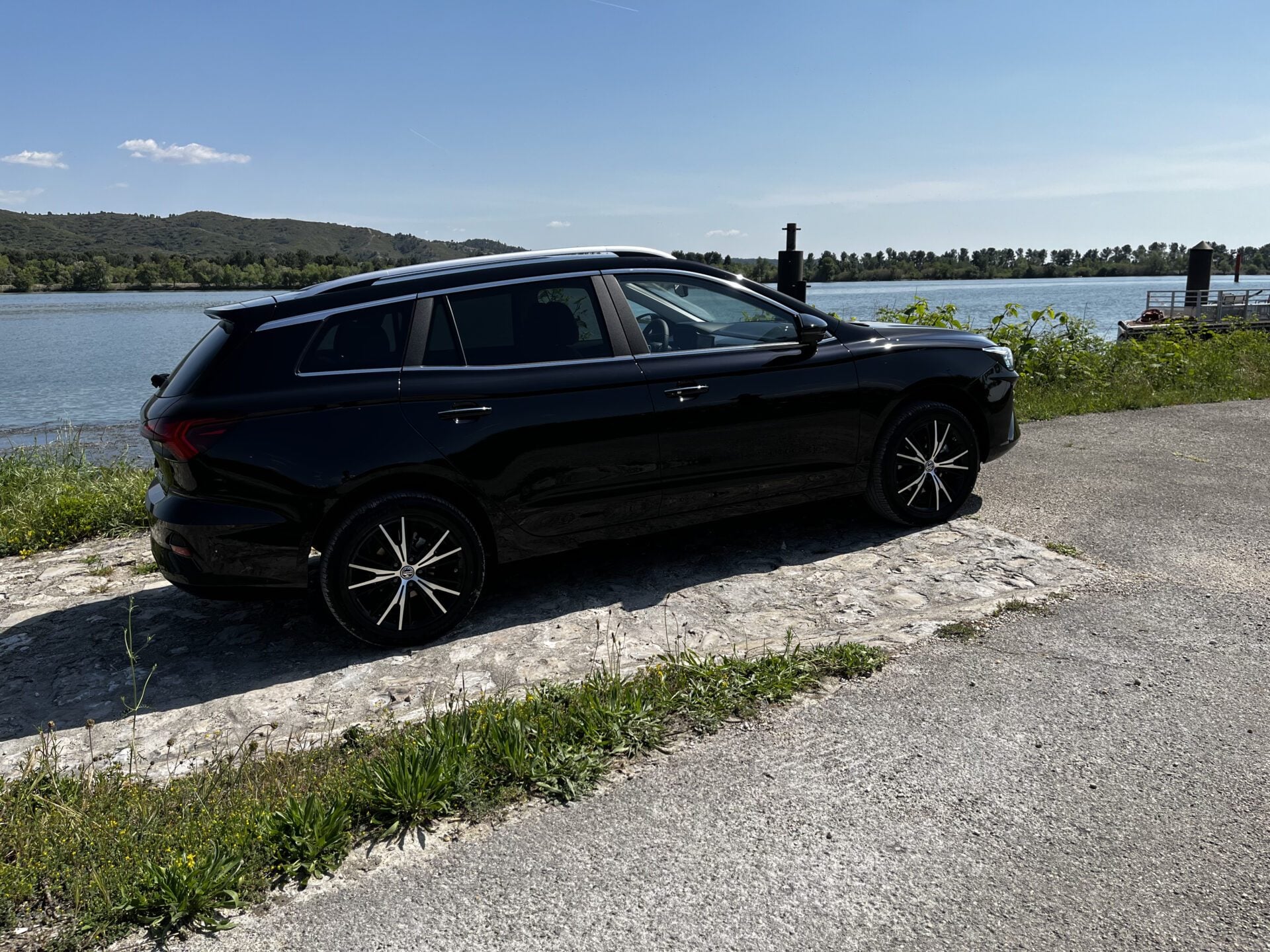
If he certainly realizes savings on these two important sources of expenses, it is possible to suspect him of doing the same on the salaries of his designers. Indeed, without being particularly naughty, the brand’s vehicles struggle to seduce. The MG5 is no exception and even if it manages to avoid the “hearse syndrome” specific to certain station wagons, it clearly lacks sex appeal. Let’s concede one thing to him, however: he is much less sad in reality than he is in the photo, which will certainly surprise future buyers.
In any case, the design is not the main asset of this electric station wagon. Fortunately, there is no shortage of assets once the slight disappointment of the missed love at first sight has passed.
Impressive equipment for the price
It is once slipped into the passenger compartment of the MG5 that one perceives the most what makes the success of the mark. The materials and the quality of the finishes are worthy of cars sold 10 to 15,000 euros more expensive and the number of on-board equipment (standard) far exceeds what the majority of competitors offer.
It is undoubtedly for this reason that MG only has two finishes in its catalog, the most basic (“comfort”) being already very well equipped with a 10.25-inch central screen compatible with CarPlay and Android Auto, headlights LED, and even heated seats in the front, an option usually reserved for the top of the range.
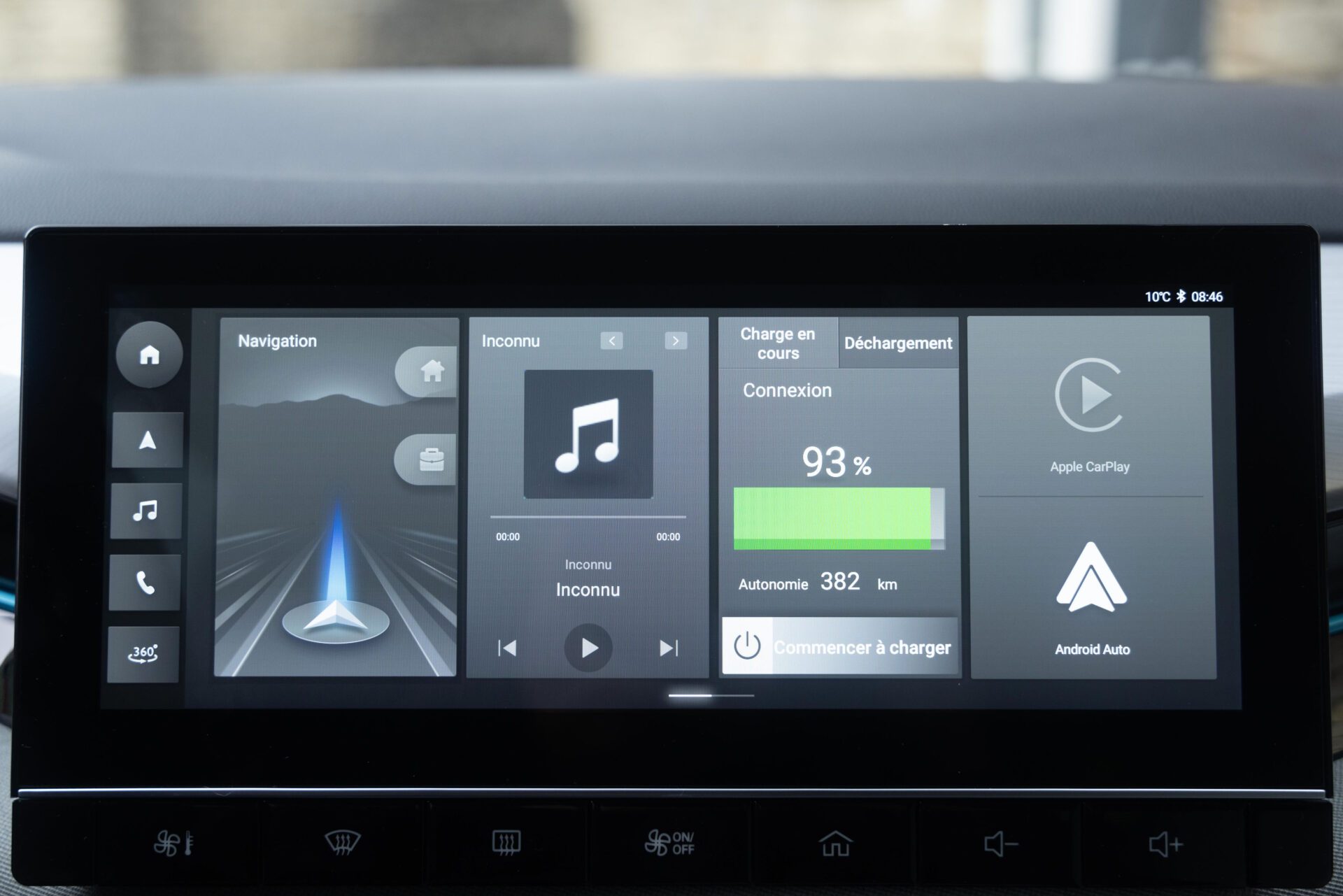
As for our luxury finish, sold for 1,500 euros more, it adds a 360-degree camera (of dubious quality), an electrically adjustable driver’s seat, 17-inch rims and a few comfort sensors (air conditioning, rain, etc.).
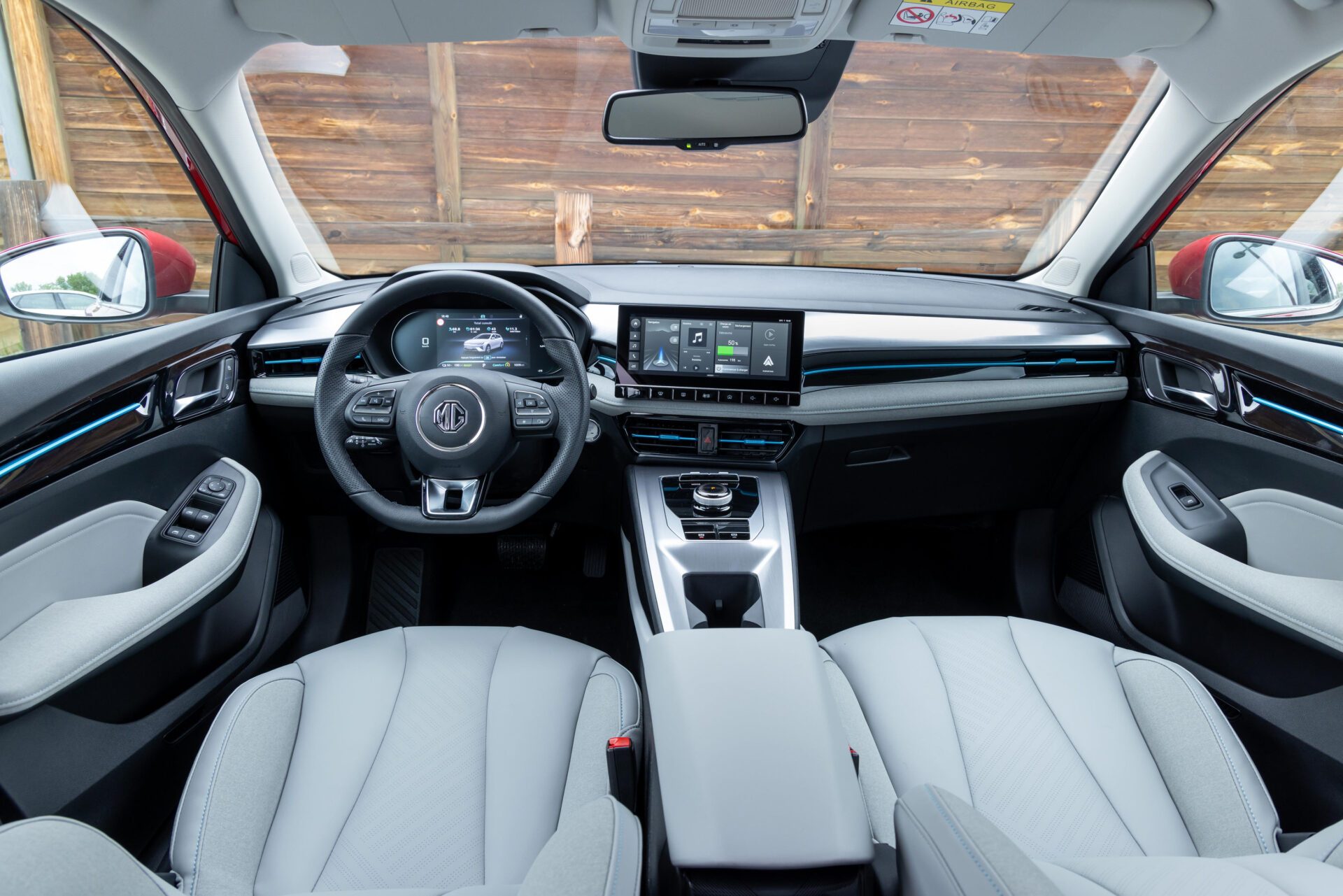
On the OS part, we find here again the same system as the ZS, certainly in progress compared to the first vehicles marketed by SAIC, but still weighed down by some approximate translations and very singular names.
Thus, the pre-conditioning of the battery before charging becomes “heating up the battery while driving” at MG. These few slags are all the more forgivable as they can be corrected via an update.
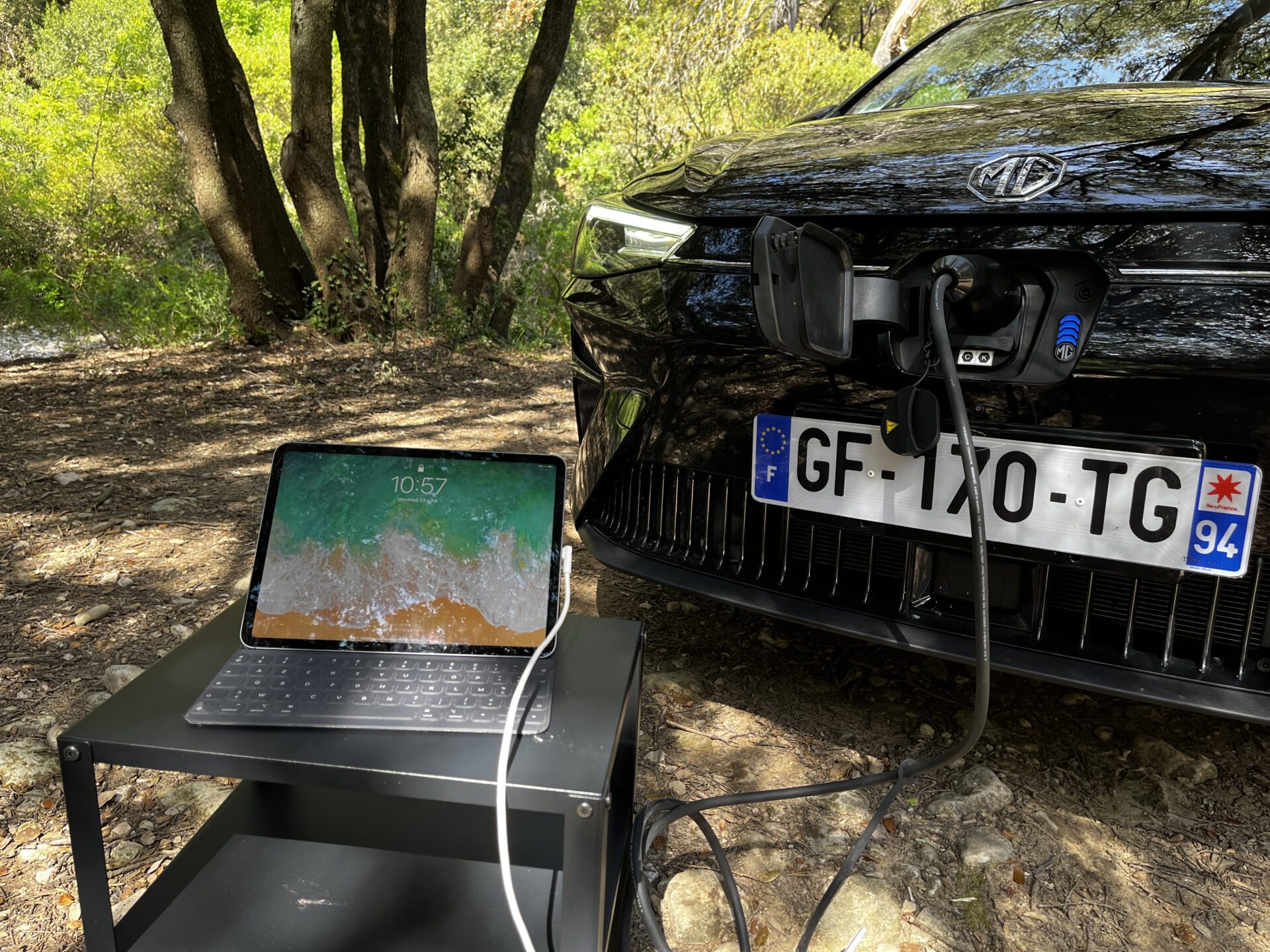
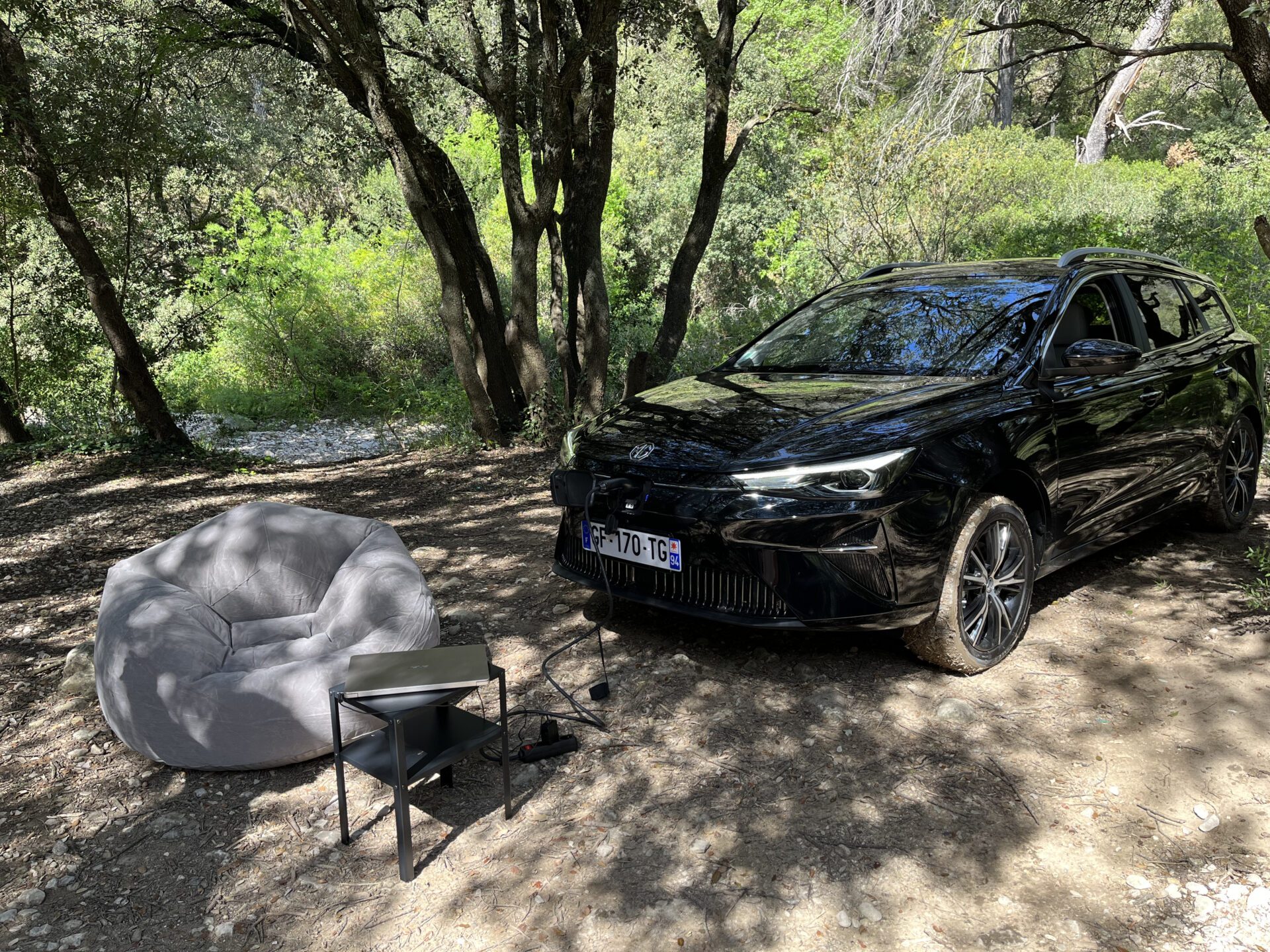
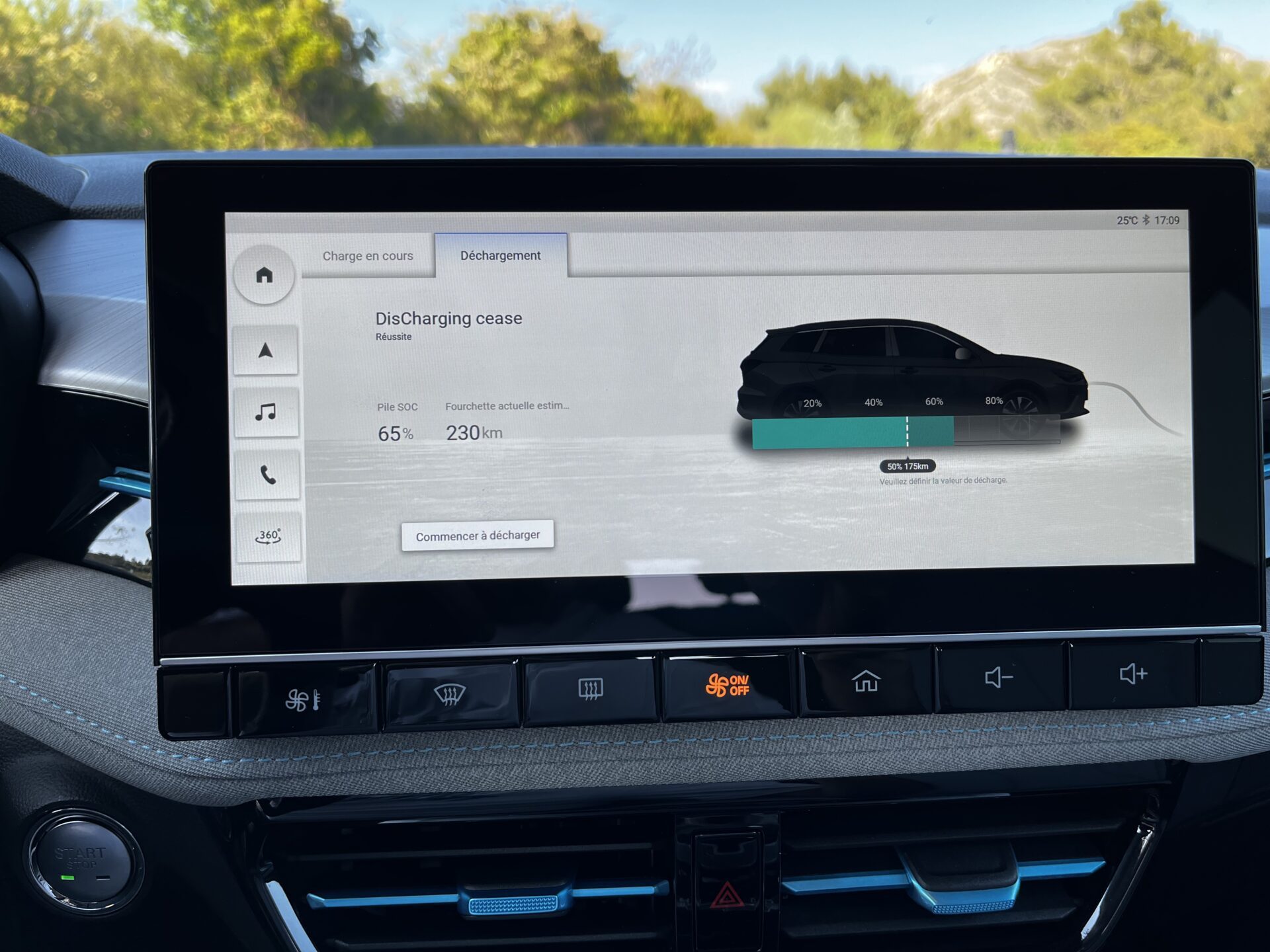
Finally, this is also a little surprise, the MG5 incorporates V2L technology, in other words reverse charging. Concretely, this is a mode during which the car is able, thanks to an adapter, to recharge its electronic equipment. In our case, we took advantage of the V2L of the MG5 to power our iPad, charge our smartphone, but also to connect a compressor to it. Be careful, however, if the V2L is available as standard on the MG5, the adapter is optional, at 650 euros. It’s expensive to top up.
Autonomy: where the break format buries the SUV
Since the technical platform of the MG5 is the same as that of the excellent ZS EV, we were expecting a fairly close performance in terms of autonomy.
Admittedly, on paper, the station wagon has a certain aerodynamic advantage, but we were far from suspecting the performance gap between the two formats.
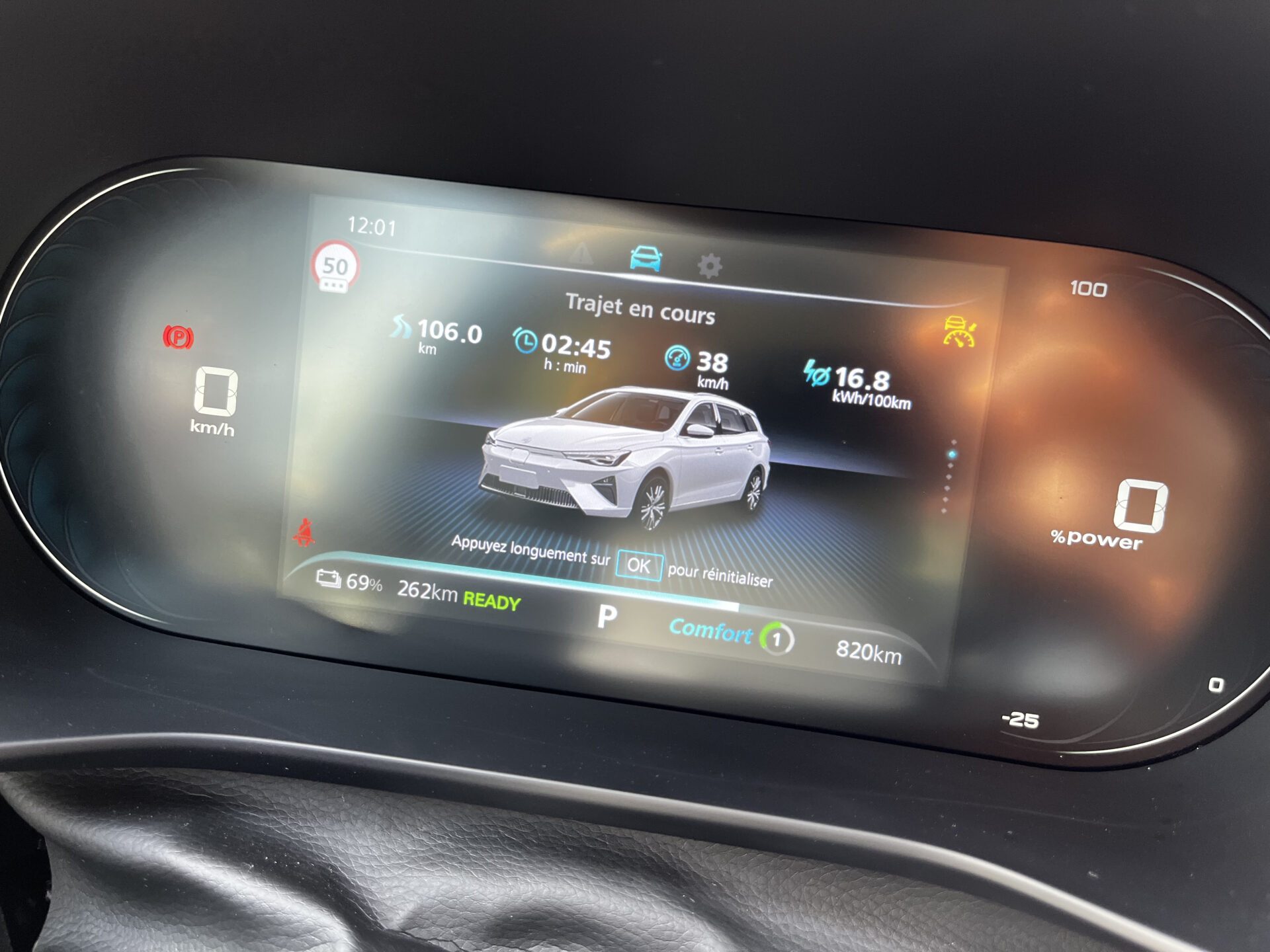
Indeed, during our test of the SUV, we had noted an average consumption of 20 kWh / 100 km, one of the few slight defects of the vehicle. However, with a similar battery capacity and an identical engine, this consumption drops below 17 kWh/100 km, and this, without any form of eco-driving.
By having a fairly flexible foot and playing fully on recovery, it even seems possible to go below 15 kWh/100 km, which makes the MG5 one of the least greedy vehicles.
We also subjected the MG5 in its large battery version to a motorway course as well as another consisting of several fast axes (80 km/h, 110 and 130 km/h) in order to check whether the good service conditions in the middle urban could be applied to long journeys.
On a pure motorway journey, at 130 km / h on the regulator and in rather mild weather, the consumption of our station wagon rose to 21.7 kWh / 100 km. On the instrumentation side, the consumption in real time indicated approximately 24 kWh. The difference is obviously explained by the vagaries of the road, which mean that we don’t always drive at 130 km/h all the way. In this configuration, the consumption of the MG5 is in the average of its competitors. Given the size of its accumulator, such consumption allows it to drive around 230 km on a road-only course. Suffice to say that it is not ideal for going on vacation to the other end of France unless of course you are patient and carefully identify the charging stations upstream.
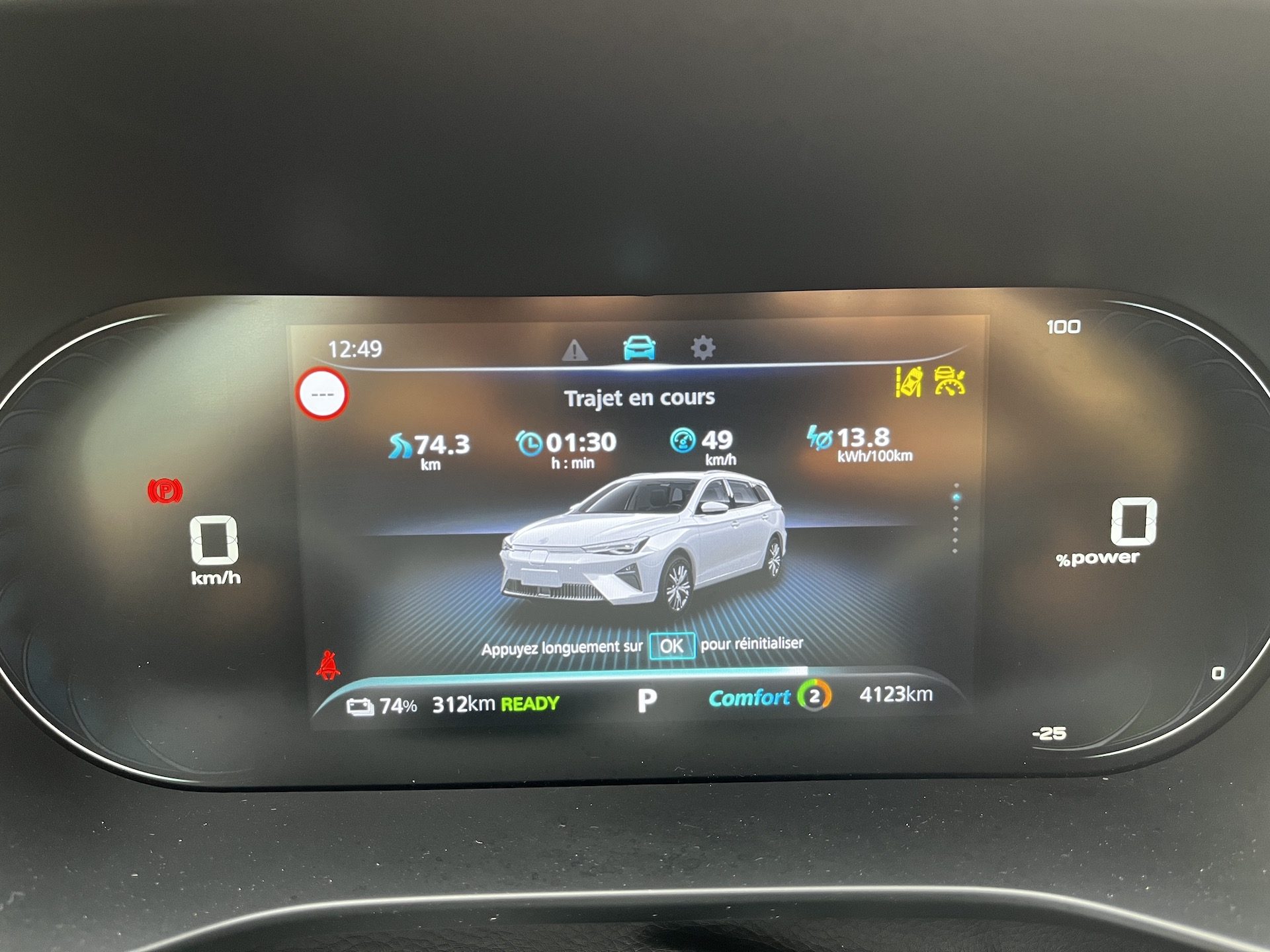
It was on our second course, certainly on a fast track but around the Paris region that we had the best surprise of this test. Indeed, our 74.3 km route, completed in 1h30, mainly included motorway sections limited to 110 km/h, a few fragments of road where the maximum authorized speed went down to 80 km/h and, finally, some peaks at 130 km/h. h, the last two cases being largely in the minority. Also count one km at the start and end of the route to access the motorway network and you have a complete overview of our walk.
Here again, the weather conditions were more than mild during our test and we also had to deal with three slowdowns, one of which lasted more than 5 minutes. In the end, our average speed during this 1h30 test was 50 km/h, but more importantly, our consumption was 13.8 kWh/100 km.
In conclusion, if the MG5 suffers, like its competitors, as soon as the speed exceeds 110 km, it excels when it does not exceed this threshold. Better still, it was in a mixed course that was ultimately quite typical of a classic day of traffic in the Paris region that it presented its best face. Finally, the excellent news is that in favorable conditions, the MG5 exceeds 400 km of autonomy.
On the other hand, the picture is slightly less rosy with regard to recharging, not on the capacities of the battery, but more on the methods of charging.
With a maximum charging power of 92 kW, the MG5 can be recharged from 10 to 80% in 30 minutes. The performance is all in all decent for a vehicle that is not intended for long journeys.
It is more home charging that raises questions, MG still refusing to provide a home charging socket by default. The future purchaser will have to sign an additional check for 200 euros if he wishes to load his vehicle at his home, in other words that this expense, a priori optional, is almost compulsory.
In driving, what does the MG5 look like?
With its rather contained power, the MG5 is of course not a thunderbolt. This does not prevent you from feeling a few slight shivers when accelerating – thank you to the 280 Nm of torque. The 0 to 100 km / h is shot in just over 8 seconds, but you will understand, there is not really the interest of the vehicle.
However, MG does not hesitate to offer several driving modes with a strong character. There is indeed a clear difference in sensations between the car’s eco mode and its sport mode, which is much firmer and more lively when accelerating.
We would have liked to feel the same difference on the various levels of energy recovery offered by MG via the car’s “kers” button.
Nothing happened, only level 3 (the highest) being truly worthy of interest when you want to recover braking autonomy. Moreover, it would also have been welcome for this system to be accompanied by a single-pedal mode, but the deceleration of the kers does not allow the MG5 to come to a complete stop.
For the rest, driving with the electric station wagon is quite pleasant and rather comfortable, even if the steering clearly lacks precision. Some may criticize it for a slight lack of dynamism given its rather contained weight and streamlined look, but keep in mind that this is an affordable family vehicle.
Trial Verdict
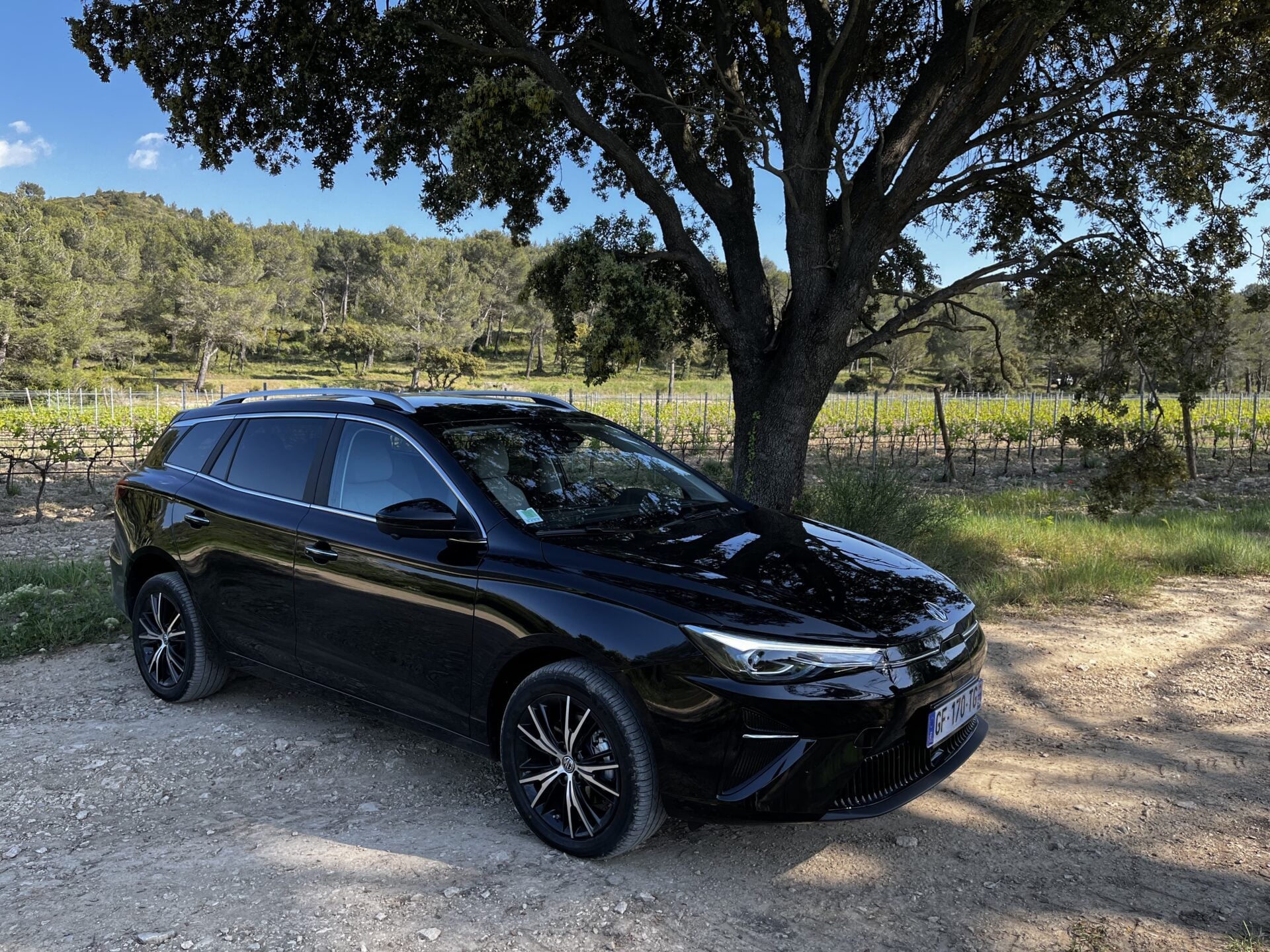
The MG5 is a proposition as atypical as it is interesting. Electric station wagon with an almost bland design, it manages to convince on almost all points, starting with its price. Not content to go and tease the Zoé on its price (to be others) while being better endowed, more spacious and more versatile, the latest MG even allows itself some fantasies usually reserved for more elite vehicles such as the reverse charging.
But, above all, on board, we must salute the quality and density of the equipment provided by MG, whether on the finishes or on the comfort equipment. Like, for its SUV, the SAIC Motors brand hits hard with a car with excellent value for money