
Not a good prospect
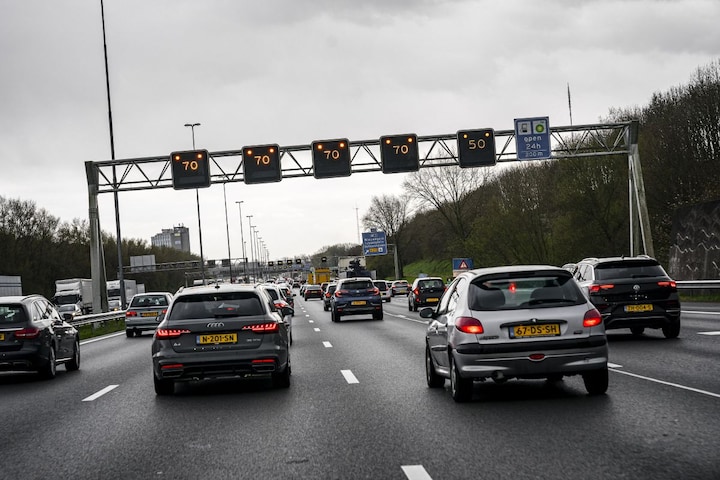
Anyone who is regularly on the road has undoubtedly noticed that it is quite busy. We are all wasting more time in traffic jams and certainly not only during the morning and evening rush hours. The number of traffic jams outside these peak times has also increased sharply, the ANWB notes.
As a result of the home working advice, it was logically extremely quiet on the road during the corona pandemic, but there seems to be little talk of working from home. On the basis of the traffic jam figures, ANWB Traffic Information reports that the roads are old-fashioned busy again. Arnoud Broekhuis, Traffic Information manager at the ANWB, says that there are even more delays than in pre-corona year 2019. Traffic congestion has also increased outside peak times. And not just a little bit.
“Since the corona measures were lifted at the end of March, the road has been exceptionally busy again. Compared to the pre-corona year 2019, we see in both the morning and evening rush hours that it is now a few percent busier. But during the day we see a surprising increase of the number of traffic jams by no less than 17 percent,” says Broekhuis. The morning and evening rush hours are particularly busy on Tuesdays and Thursdays, but the Wednesday evening rush hour can now best be labeled as ‘a thing’. It is also striking that the peak of the traffic jams is about half an hour later than before. Nowadays it is usually busiest at 08:30.
How come? According to ANWB Traffic Information, the crowds are of course related to the fact that people are simply working in the office again. The increased size of the Dutch vehicle fleet also plays a role. According to ANWB, 360,000 cars have been added since 2019. On Tuesday morning, September 27, there was no less than 925 kilometers of traffic jams in the Netherlands. This made the morning rush hour the busiest rush hour of the year. The morning rush hour of Thursday 7 April has the dubious honor of being the second busiest rush hour of the year with 887 kilometers. This month there were already four morning rush hours with more than 600 kilometers of traffic jams. In September 2019 there were only two rush hours with more than 600 kilometers of traffic jams. Arnoud Broekhuis expresses the expectation that we will have to deal with such extremes more often, “[…] especially if we also have to deal with slippery conditions and other winter conditions.”
South Holland is as usual the province with the most traffic jams, although there are 17 and 21 more traffic jams in Gelderland and North Brabant successively than before. In North Holland, traffic congestion has decreased by 17 percent, Broekhuis reports.
– Thanks for information from Autoweek.nl