
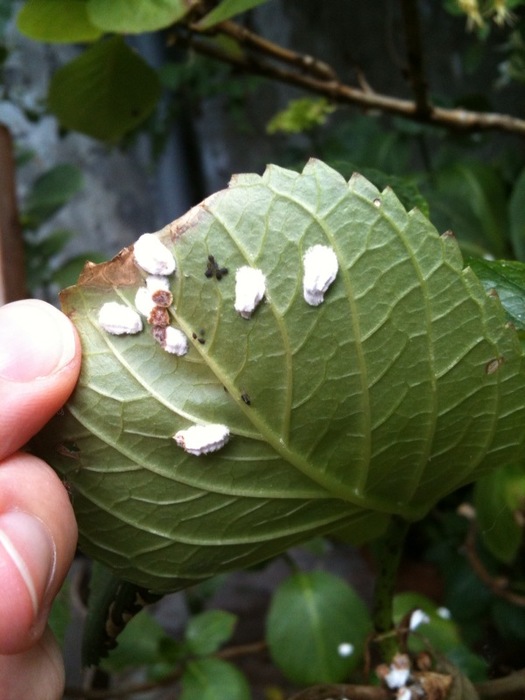
These white bugs with a black head(?) or tail(?) are sitting on my hydrangea for the first time and are losing their leaves. I don’t see them moving. Sometimes there are small black insects next to it, but I don’t know if they have anything to do with it.
Answer
Dear Swaane
The white insects on the leaves are pulvinal aphids, more specifically the hydrangea aphid Pulvinaria hydrangeae. This aphid is provided with typical waxy silk threads in which the eggs are laid. These are the so-called “egg sacs”. The eggs usually hatch at the end of June; the young larvae that hatch from the eggs leave the egg sac and crawl around (crawlers) in search of a suitable place to feed. These larvae are still very soft and move with legs. It is when they crawl around that the chance of an efficient control is greatest. Once the larvae are established (no more legs) they suck juice on the underside of the leaves; the hibernation happens as a larva, there is only 1 cycle per year. The egg sacs that are now visible are full of eggs, at this moment perhaps also larvae, which will start crawling quietly. Each aphid can lay 200 to 300 eggs. Over time, the larvae attach themselves with a kind of sucking beak that punctures the plant cells. In addition to the direct damage that occurs, they also secrete sugary substances that make the leaves sticky (honeydew); Sooty molds can grow in this area over time, causing the leaves to turn black. With regard to chemical control, it is best to treat twice at the beginning of July with an interval of 8 to 10 days. There are various products on the market that can be used for this purpose, including pyrethroids (Decis, Karate, Ninja, Splendid), chloronicotinyl compounds (Calypso, Confido, Thiacloprid).
Kind regards
Hans

Answered by
Hans Casteels
identification of pest insects in agriculture and horticulture, stock goods and homes

Burg. van Gansberghelaan 96 box 1 9820 Merelbeke
http://www.ilvo.vlaanderen.be
.