
Maybe distribution problems
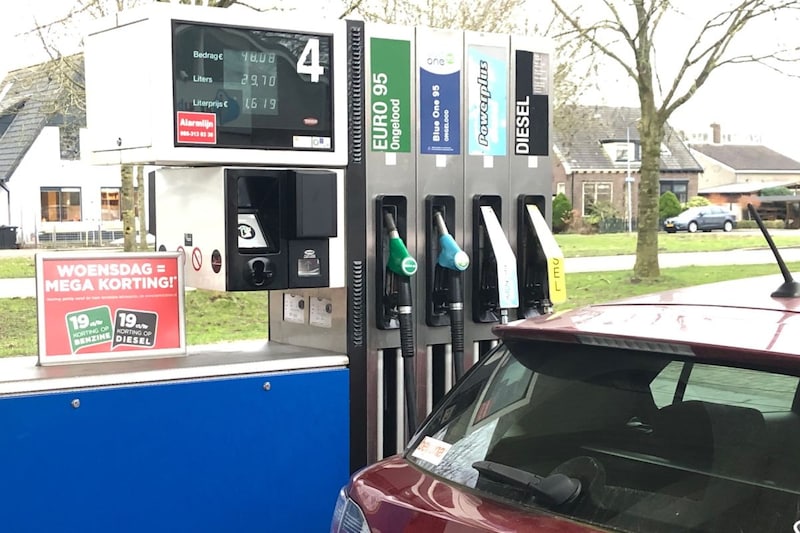
Diesel drivers are looking forward to the coming months with fear and trembling, as further restrictions on imports from Russia will push up scarcity and thus prices. According to the director of the Association of Dutch Tank Storage Companies (VOTOB), there are no real shortages for the time being, although prices will continue to rise.
Due to new sanctions, no more crude Russian oil may be imported into the European Union from 5 December. The next step will follow on February 5, and ready-made Russian fuels will no longer be imported. “These measures are particularly hard on diesel, because 30 to 40 percent of ‘our’ diesel comes from Russia,” says Willem-Henk Streekstra, director of VOTOB. “Since the start of the war in Ukraine, that share has been somewhat lower, but still high.”
According to Streekstra, the crude oil from Russia is ideally suited for making diesel. The oil used for gasoline often comes from elsewhere. Moreover, Europe is simply more dependent on imports for diesel: “We make less diesel in Europe than we use ourselves, while we make more from petrol than we need ourselves.”
Even higher prices
That will not improve the prospects if the apparently very important diesel flow from Russia comes to a standstill. Still, according to Streekstra, there is no reason to panic yet. “There will be no real shortage for the time being. The EU requires countries to have 90 days’ supply. In the Netherlands we have a little more, so there will be enough diesel available for the first few months.” Moreover, it is certainly not the case that diesel can no longer be produced at all. “We also have refineries in the Netherlands. That diesel is sold to the highest bidder, and the Netherlands is rich enough to be the highest bidder. So there will also be diesel further in the future, but prices will rise even further.”
Distribution issues
That even higher diesel price is of course not only annoying for those who (still) drive a passenger car on diesel, but ultimately affects us all. After all, the transport sector is still almost completely dependent on diesel. More expensive diesel means more expensive transport and therefore higher prices for all kinds of goods, which is already partly a cause of inflation. Moreover, due to the higher prices and more difficult availability of diesel, problems can indeed arise in the logistics area: “It may well happen that it is not possible to supply all filling stations on time.” That is in line with what the chairman of the Tank Stations Interest Association said earlier. Streekstra: “However, we still have it easy in the Netherlands. In Eastern Europe you cannot distribute as quickly and smoothly as here. Although they also make their own diesel there, they are no longer allowed to use oil from Russia. So distribution is a much bigger problem there.”
National crisis plan
Although Streekstra is not afraid of a serious diesel shortage, he does know that a national crisis plan is being worked on if it does come to that. In that case, a national assessment is made of who is and who is not allocated diesel.
By detour
According to Streekstra, boycotting Russian oil and diesel does not mean that no oil from Russia ends up in Europe at all. “A lot of that oil is sold to India, goes through the refinery there and eventually ends up here. In this way we actually make Putin even richer than he already was. He sells a little less, but because of the worldwide shortages at a higher price.” Will the ‘rerouting’ of Russian oil also be restricted? “I don’t expect that. Many politicians want it, but others are against it. After all, by taking action against this too, the shortage will only increase.”
– Thanks for information from Autoweek.nl