
Possible effects investigated
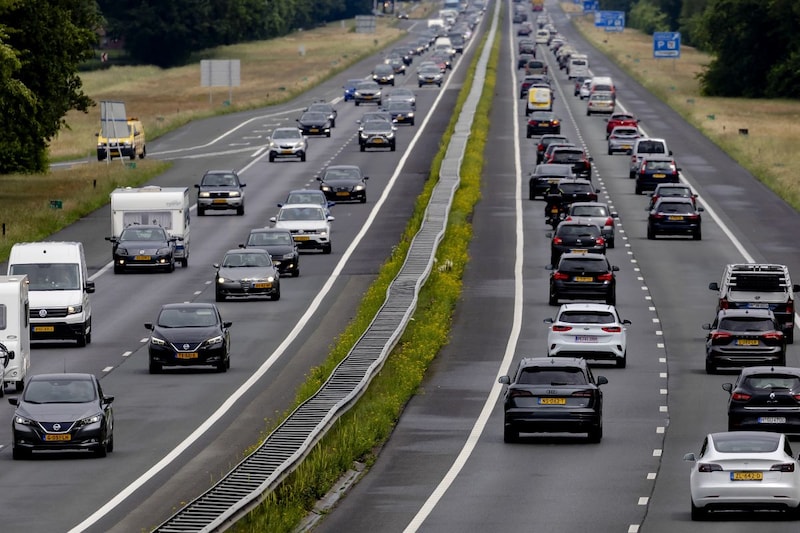
For the time being, the plan is that we will have a ‘kilometre charge’ in the Netherlands from 2030 to replace the fixed motor vehicle tax. The Knowledge Institute for Mobility Policy (KiM) conducted research into the possible consequences of this. It expects us to drive less, but car ownership actually increases.
There have been discussions for decades, but it has never been so concrete: in 2030 the kilometer charge really has to come. At least that is the aim of the current cabinet, and it can be swept off the table by a subsequent government, among other things. If it really does come about, it will have clear consequences for driving in the Netherlands. Not only do drivers notice it in their wallets, but a different picture may emerge on the roads. KiM is now outlining an expected picture of the future. According to the institute, people drive less: “A tax on car use is expected to lead to fewer car journeys, a lower distance traveled by all cars together and fewer traffic jams. As a result, fewer traffic accidents and better air quality.”
KiM does not yet have concrete figures, because it is still far from certain exactly how payment according to use will take shape. Nevertheless, this global expectation of KiM is not exactly unfounded, because logically there will soon be fewer frequent drivers than now. After all, the kilometer charge is unfavorable for them, because the costs for driving will most likely be higher in that case than they are now with the fixed motor vehicle tax. On the other hand, driving a car could become cheaper than it is now for people who drive little.
More car ownership
According to KiM, however, the latter will not be reflected so quickly in more traffic on the road, but rather in more car ownership: “A BnG levy (pay according to use, ed.) that is the same for all vehicles will probably lead to a growing fleet, because car ownership becomes cheaper.” According to the institute, this creates a new problem: “Those extra cars also have to be parked somewhere, which increases the pressure on the scarce public space.” Another possible change is that heavier cars are more popular with car buyers. “The average weight of a car is expected to increase, because with an equal rate compared to the current motor vehicle tax, there is less incentive to purchase a smaller car.”
For example, anyone who occasionally wants to drive a car such as a Mercedes-Benz S-class, whether or not as a hobby, will possibly look forward to the moment when the fixed motor vehicle tax makes way for the kilometer charge. However, they should not celebrate too soon, because there is a considerable chance that the ’emissions’ factor plays a role in the amount you pay per kilometre. Depending on how heavy that turns out, the kilometer charge may be less favorable than mrb. There is a good chance that the Dutch vehicle fleet will mainly grow due to the kilometer charge with cars with low or no direct emissions at all.
– Thanks for information from Autoweek.nl