
Aimed at heavy transport, but possibly also for consumers
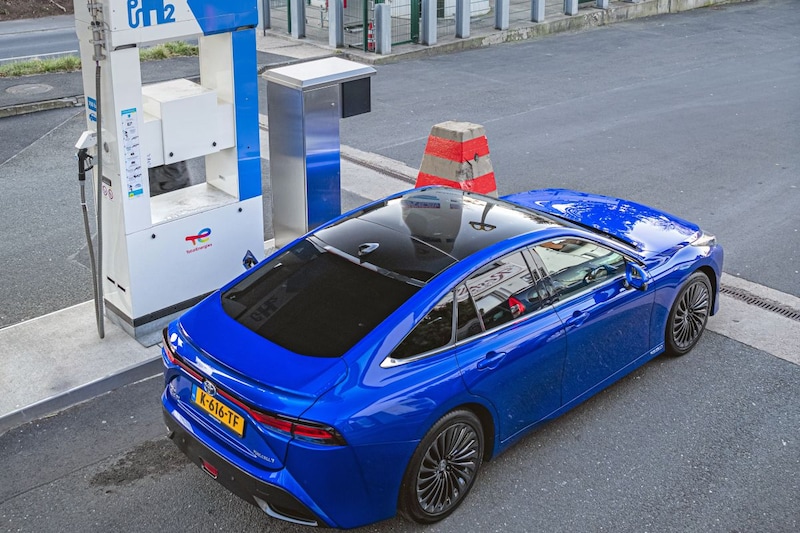
State Secretary Vivianne Heijnen (CDA, Infrastructure and Water Management) has made a subsidy of €22 million available for the construction of hydrogen filling stations. That money should stimulate investment in heavy transport on hydrogen, but may also lead to more hydrogen filling stations that can be used by private individuals.
The Ministry of Infrastructure and Water Management reports that there are currently fourteen hydrogen filling stations in the Netherlands, but that not all of them are accessible to trucks. This makes it unattractive for entrepreneurs to invest in hydrogen-powered heavy transport, partly because such trucks or buses are already much more expensive than equivalents on diesel. That is why the ministry writes the following: “The core is that plans (for a hydrogen filling station, ed.) receive a subsidy if both a filling station is built and the accompanying trucks are purchased.”
According to Joris Schouten, spokesman for State Secretary Heijnen, this does not mean that the filling stations to be realized with the subsidy will only be available for heavy transport: “One does not exclude the other. The usability of a hydrogen station depends on at least three factors: the device (which takes into account the angle of rotation of trucks, ed.), the size of the hydrogen reservoirs and the filling pressure.” The first two are less important for hydrogen-powered cars, but the filling pressure should generally be higher for cars than for trucks.
Five to ten additional hydrogen filling stations
The subsidy scheme should start in 2024. The amount of €22 million is an initial capital injection. Whether that amount will be increased later remains to be seen. The initial sum should encourage the construction of five to ten additional hydrogen filling stations, with twenty to twenty-five new hydrogen-powered heavy vehicles per station. The subsidy contributes to the ambition that all new trucks in the Netherlands will be emission-free by 2040. With an average useful life of ten years, this should lead to the majority of the Dutch transport sector operating emission-free by 2050.
Recently, there was also news at European level about increasing the number of hydrogen filling stations.
– Thanks for information from Autoweek.nl