
What we already knew confirmed with recent figures
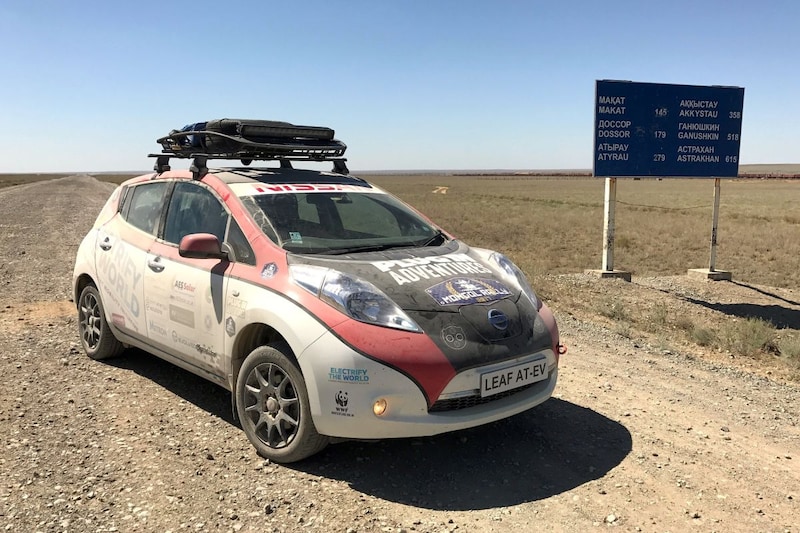
It is of course no surprise that the population and governments of African or South American countries are less concerned with electric driving than we are here. A blogger from market watcher Jato expresses the differences using recent figures. And they are big.
The size of the share of electric cars in sales statistics varies widely worldwide, concludes market research agency Jato Dynamics based on recent figures. Not only across the world, but also within the largest markets – think of the US and Europe. This fact in itself is not news, but the figures show how large the differences are. For example, less than 0.2 percent of new cars in Africa are fully electric and in Russia only 0.04 percent (figures for Q3-2022).
Europe and the US
Within Europe, the differences are also large. For example, according to Jato, the ‘more stable economies’, Germany, Austria, Switzerland, France, the Benelux, Ireland and Iceland (accounting for two-thirds of the European car market), have an average EV share of 15 percent. The demand for electric cars is growing and will continue to grow for the time being. In the Mediterranean countries (except France), Portugal, Central Europe and the Baltic States, the market share of EVs is only 3.8 percent. This is because there are less government incentives in those areas, infrastructure is less developed and fuel prices and purchasing power are lower.
Norway still takes the cake with its EV share: in September, 77 percent of new cars sold in the country were fully electric. The surrounding Scandinavian countries, which, like Norway, have government incentives for electric driving, also have a large share. We see something similar happening in the United States. California is the absolute EV sales leader there. That state created the ZEV program, where ZEV stands for Zero-Emission Vehicle. It states that a certain share of sales per manufacturer must consist of zero-emission cars.
Fourteen other states have adopted that program and also have a relatively high share of EVs. This is not the case in the states that do not participate in the program. Thus, the average share in the ZEV states is 8.7 percent, while outside it is 3 percent. The ZEV states are mainly located on the coasts of the US.
Worldwide
If we zoom out to a global level, it becomes clear that the electrification of the vehicle fleet only plays a significant role in the three economic centers (the US, Europe and China) and in Canada, Oceania and Japan (see table below). It is virtually non-existent in other parts of the world, while developing countries account for about a fifth of new car sales.
| Country/territory | EV share in Q3 2022 |
| China | 19.2 percent |
| Europe | 11.5 percent |
| Japan | 11.3 percent |
| Canada | 7.7 percent |
| Oceania | 7.7 percent |
| United States | 5.2 percent |
| Middle East | 1.5 percent |
| India | 1.3 percent |
| South East Asia | 1.1 percent |
| South America | 0.45 percent |
| Africa | 0.15 percent |
| Russia | 0.04 percent |
.
– Thanks for information from Autoweek.nl