
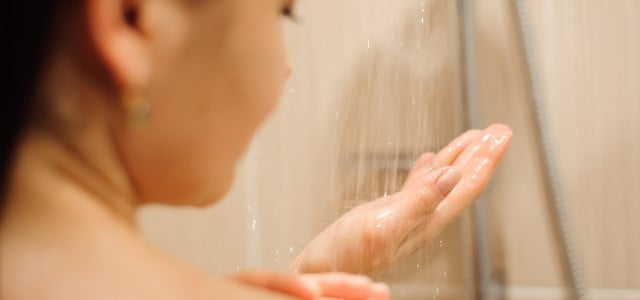
Alternating showers are a booster for our immune system. We’ll tell you why you should make it a daily habit and explain how to do a contrast shower.
Taking a cold shower doesn’t sound particularly pleasant at first. Nevertheless, the contrast shower method has its advantages: In addition to strengthening your willpower (after all, it takes some effort to turn the water in the shower from nice and warm to ice cold), the contrast shower is said to have many other positive effects on your health.
In this article we explain in detail what contrast showers can really do and how you can approach it step by step.
This is how contrast showers work on your body
A contrast shower is said to have numerous positive effects on our body: it promotes blood circulation, is a good wake-up call in the morning and can help keep the blood vessels healthy. Alternating showers are said to strengthen the immune system and prevent colds in the cold season.
In summary, according to Öko-Test, alternating showers should have the following positive effects:
- Circulation and blood pressure are stabilized and the strain on the heart is relieved.
- Alternating showers are said to be able to prevent infections such as colds and other illnesses.
- Alternating showers stimulate your metabolism.
- The method can help improve sleep.
- In addition, contrast showers can also help against the symptoms of depression and generally improve your mood.
The effect is based on the same principle as Kneipp treatments. The alternating cold and warm stimuli cause our blood vessels to constrict and expand. The capillaries are trained and your circulation gets going. The effort is worth it, because after a contrast shower you will be rewarded with a refreshed and warmed feeling.
However, Öko-Test also emphasizes: In many cases there is still a lack of clear scientific evidence for the health-promoting effects of contrast showers. In addition, people with previous heart disease should consult a doctor before taking a contrast shower.
Simple instructions for contrast showers

Alternating showers can easily be integrated into your daily routine. This is how you do it according to the Öko-Test:
- Shower with warm water for a few minutes until your body is warmed up.
- Then set a significantly lower water temperature. If you are just starting out with contrast showers, lukewarm water is sufficient. Guide the shower jet from your right heel over your calf and up the back of your knee to your bottom. Repeat the process on the left leg.
- Apply cold water to your right arm from the fingertips along the outside of the arm to the shoulders. Repeat the process on the left arm.
- Then you can briefly shower your back, stomach and chest with cold water.
- Soak under warm water for two to three minutes, then repeat steps 2 to 4.
The alternating shower ends with cold water, so: warm/cold, warm/cold. You should always start on the right foot, as this point of our body is furthest from the heart. The optimal application time is ten minutes. Afterwards it is important to warm up your body again.
Alternating foot bath: Natural help for cold feet
Alternating foot baths are a good remedy for chronically cold feet. They also have a relaxing and toughening effect. You need two bowls to use it. You fill one with warm water and one with cold. The process is simple:
- Place a comfortable chair (possibly with a cushion) in front of the bowls and sit so that your legs can dangle in the water without touching the floor.
- First soak your feet in warm water for five minutes.
- Switch to cold water for 30 seconds.
- Repeat the process once.
- Dry your feet well.
- Put on thick socks to warm your feet up again.
You can do alternating foot baths as often as you like. You should only be careful with varicose veins and vascular spasms.
Tip: A rising foot bath can help with colds.
Edited by Jennifer Watzek
Read more on Techzle\.com:
- Taking a cold shower: Why it’s sometimes difficult for me, even after almost two years
- Walking barefoot: That’s why we should go without shoes more often
- 15 tips for saving energy in the bathroom: How to reduce electricity and water consumption
** marked with ** or orange underlined Links to sources of supply are partly partner links: If you buy here, you are actively supporting Techzle\.com, because we then receive a small part of the sales proceeds. More info.