
16 percent less
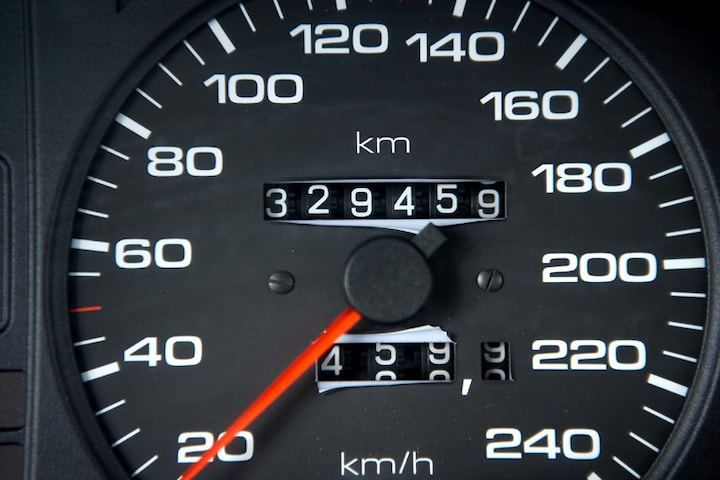
This year, for the first time, the Dutchman is measurably taking action and making more sustainable choices. The same goes for car use. This means that the average Dutch motorist will drive an average of 2,000 kilometers less this year than in 2020.
Research agency I&O Research conducts research into the sustainability choices of the Dutch under the heading ‘Sustainable thinking/sustainable action’. To do this, it looks at a number of factors, subdivided into the categories of food, housing, transport and belongings. In the transport category, the number of car kilometers comes to light. This shows that the average Dutch motorist, who drove 12,353 kilometers per year in 2020, will drive 10,357 kilometers in 2022. That means a decrease of just under 2,000 kilometers, or 16 percent. It will also be discussed that the relative number of electric drivers quadrupled in the same period: it increased from 1 to 4 percent of motorists.
Less because of sustainability and finances
It is measurable for the first time that the average Dutch person makes more sustainable choices. According to I&O Research, these are on the one hand due to sustainability considerations. On the other hand, financial dilemmas play an important role. Compared to 2019, the average CO2 emissions per capita have decreased by 13 percent. This decrease is largely due to other transport choices: for mobility purposes, average CO2 emissions fell by 24 percent.
This is undoubtedly largely due to the change in flying behaviour, because the Dutch will fly 44 percent less often in 2022 than in 2020. This is striking, because that decrease is not compensated by an increased number of car kilometers. On the contrary; the amount of car kilometers is decreasing. We suspect that this is mainly due to the decrease in the number of non-essential trips. Because although more than half of the number of car commuters indicated that they want to go to the office less often, the amount of traffic jams has increased considerably since the abolition of the corona measures – although this can already be the result of an increase of only a few percent in the amount of traffic. At least it doesn’t suggest that we’ve been driving less to the office. At least not compared to 2020, because the stricter corona measures at the time did indeed lead to fewer commuters.
– Thanks for information from Autoweek.nl