
Will never become a classic
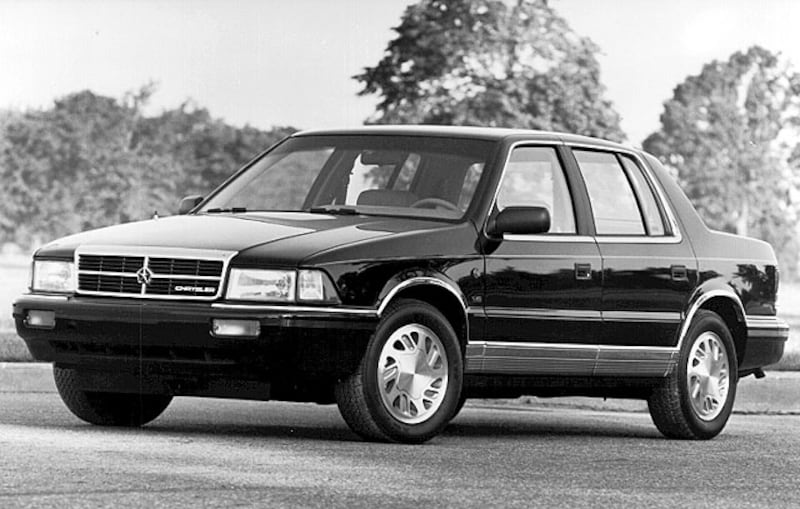
Michiel Willebrands brings up a car that he might be better off keeping for himself, again an American. In the previous ‘Guilty Pleasure’ Michiel dared to admit his weakness for the Pontiac Transport, now it is a sedan from the late eighties: the Chrysler Saratoga.
Why is it that certain cars can fascinate you immensely, while similar models leave you completely cold? There is of course no definitive answer to that question. It’s just like falling in love; you feel something special for someone, while someone else is ‘just’ nice or nice. It is a sum of factors that are decisive.
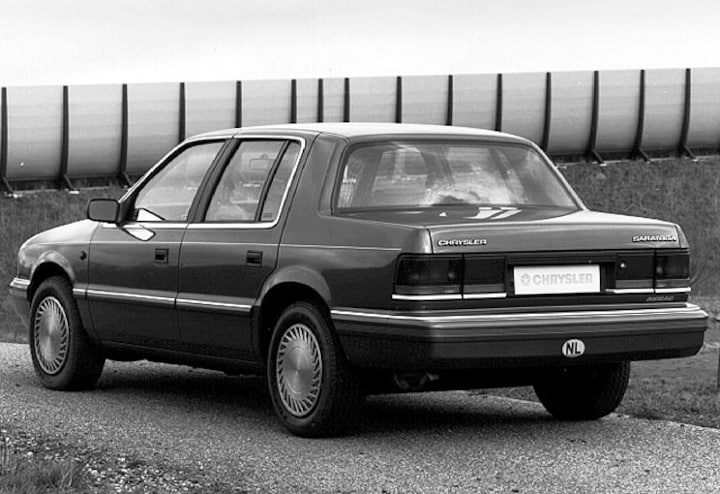
Take the Chrysler Saratoga, a car that, at first glance, has nothing to like about it. An ordinary American sedan of modest size. Now, sedans have always had an advantage for me, so I can’t look at these types of models completely blankly. The fact that the Saratoga was born in the US certainly does not work against it. But still: why the Saratoga and, let’s face it, not a Neon? Its strength lies in its simplicity, I think. A rectangular grille, two rectangular headlights next to it; I have seen American facades more imaginative. The same goes for the back: a typical late-80s fill-in exercise. Yet it looks like a glove, thanks to the traditional, angular but rounded in the right places bodywork that is located between front and rear. Look at that upright C-pillar; pure limousine chic on a bourgeois sedan. A little chrome along the windows, all good. Smooth V6 in it: great. As usual, the Saratoga is a descendant of the Chrysler family with a number of half-brothers and vague cousins, all derived from the Dodge Spirit, which was the model for the Saratoga as we know it. The American car enthusiast will be amazed at the photos on this page. Chrysler dusted off the time-honored model name – you already had Saratoga’s in the forties – only available for Europe. The model was, not surprisingly, only marginally popular with us. In six years, almost 1,000 were registered with Dutch license plates. Nowadays you can buy them for the proverbial turd and three marbles – if you can find one at all. The Saratoga will never become a sought-after classic and that is understandable. He is far too ordinary for that. But it’s precisely those wallflowers that usually make me smile bigger than the usual suspects. Because to me, anyone who buys a thirty-year-old, worn-out Saratoga for €1,500 is a bigger hero than the person who carelessly pays 50 grand for a beautifully restored Imperial.
– Thanks for information from Autoweek.nl