
American invented cross between Ferrari 365 GT and Jeep Wagoneer

Ferrari is about to launch the Purosangue, but there was an all-terrain vehicle with the prancing horse in the grille before. A casino tycoon wanted a luxurious 4×4 to drive from the gambling town of Reno to his mountain cabin. Because he couldn’t find a suitable car, he ‘merged’ his Ferrari with a Jeep. The Jerrari was born.
Help, which way does this car want to go now? The controls interpret our steering commands with as much freedom as Jimi Hendrix interprets the melody of the American national anthem. In the 1960s, many cars gave you the sensation of stirring through pudding when you turned the wheel – especially a Jeep. That makes it all the more clear that we are mainly dealing with a Jeep Wagoneer, despite the Ferrari appearance. When owner Alec Löckmann, in his fifties, from Würzburg, Germany participates with this car in an old-timer event, many people doubt the origin of his special means of transport. At the front it is unmistakably a Ferrari, but in the wheel arches you can see the leaf springs and the typical freewheel hubs of an off-road classic.
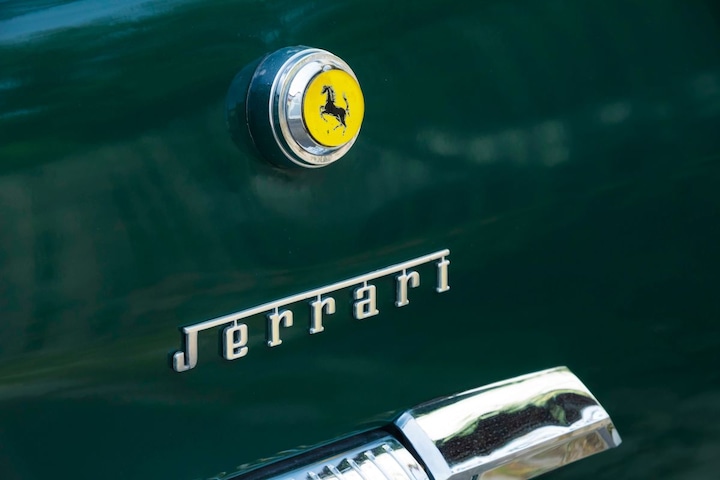
Jerrari, because it’s a Jeep and a Ferrari
The engine may sound like that of a Jeep, but that was not always the case. Called Jerrari, this odd man out is unique, invented by American casino magnate William F. ‘Bill’ Harrah (1911–1978). For the trips between his casinos in Reno and his 6,000-foot home in snowy Lake Tahoe, accessible only by a 8,000-foot mountain pass, he needed a fancy 4×4. But which car should he take now? The most posh four-wheel drive car at the time was the Jensen FF. However, the British GT was only sold with right-hand drive. And it was so stuffed with technology that both the manufacturer and the mechanics who had Harrah’s huge car collection (approximately 1,500 cars!) under their care saw no point in converting the car.
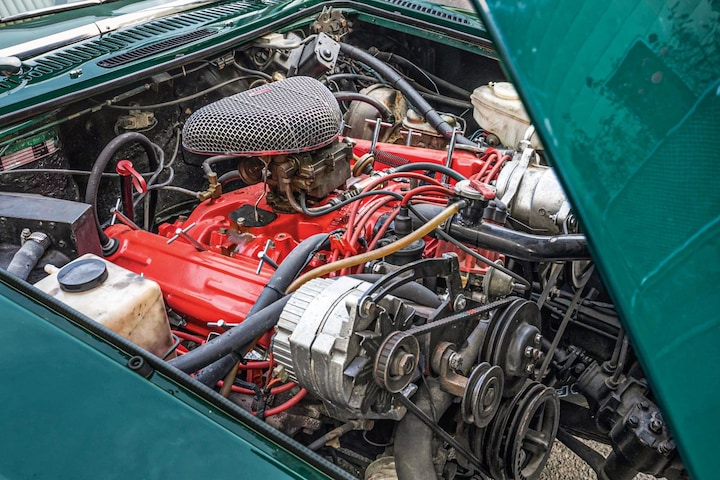
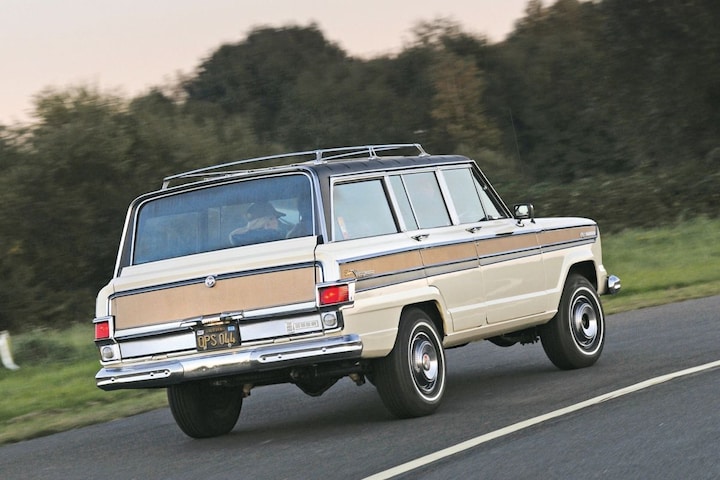
Jeep Wagoneer most comfortable 4×4 of that time
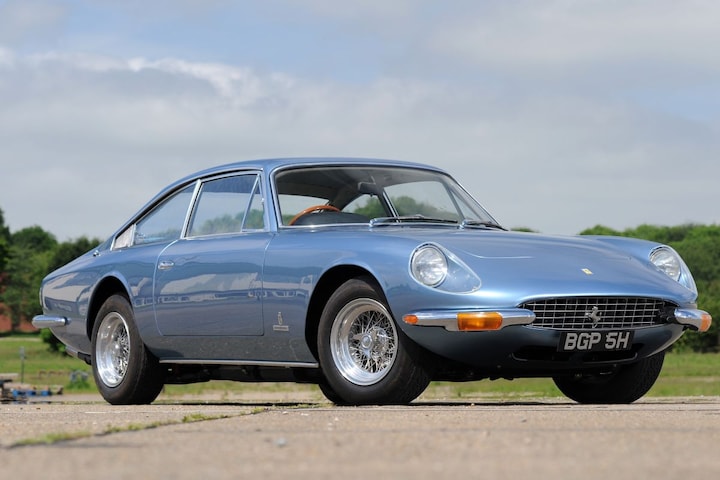
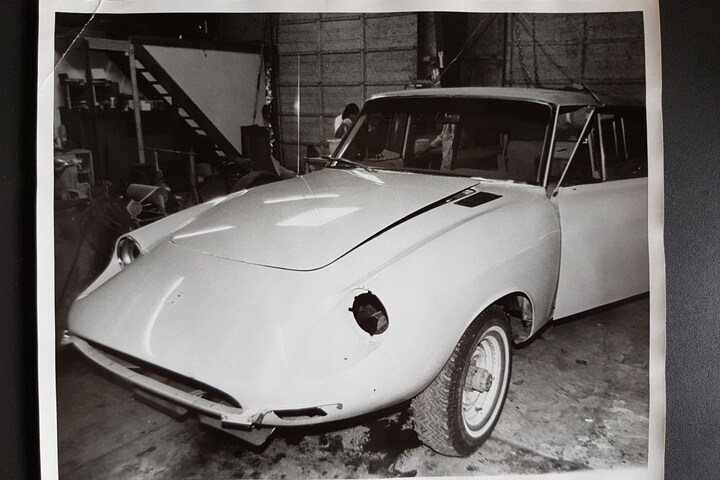
The most comfortable off-roader at the time, the Jeep Wagoneer, didn’t have enough power in Harrah’s eyes, nor was it exclusive enough. In 1969, his security guard Harrah’s new Ferrari 365 GT crashes into a bridge pier after picking it up from the dealership, just before final destination Reno. He escapes without too serious injuries, but he can look for another job. As Harrah examines the wreckage, the front and engine of which are virtually undamaged, an idea strikes him. His mechanics could pair the Ferrari’s front end, engine and five-speed transmission with the space and four-wheel drive of a Jeep Wagoneer. They rise to the challenge and get to work: extending the chassis a bit, widening and elongating the cigar-shaped Ferrari front, modifying the angular Jeep doors with new door panels (and a good amount of filler, as the current owner has determined) to more voluptuous Ferrari-like doors, they shorten the drive shaft at the front and make the car longer at the rear.
Sitting for a lot of time
The details take a lot of time: a recess has to be made in the crankcase of the Ferrari engine to prevent contact with the housing of the deeply sprung front axle differential. The clutch is a mix of Ferrari parts and American components (the pressure plate comes from Ferrari, the clutch plate comes from GM warehouses), as does the air conditioning (compressor from Ferrari, the rest is traditionally from Kaiser-Jeep). The result looks like a real Janus head, a kind of forerunner of today’s extravagantly styled super SUVs, the Aston Martin DBX and the Lamborghini Urus, with a head start of fifty years. In addition, the ‘Jerrari’ looks much more harmonious in real life than on photos. When you see it driving, you don’t have the idea that it is actually two cars. The design is somewhat French and is reminiscent of the large Citroën models of the time, such as the state limousine Présidentielle.
Jerrari doesn’t drive for a meter
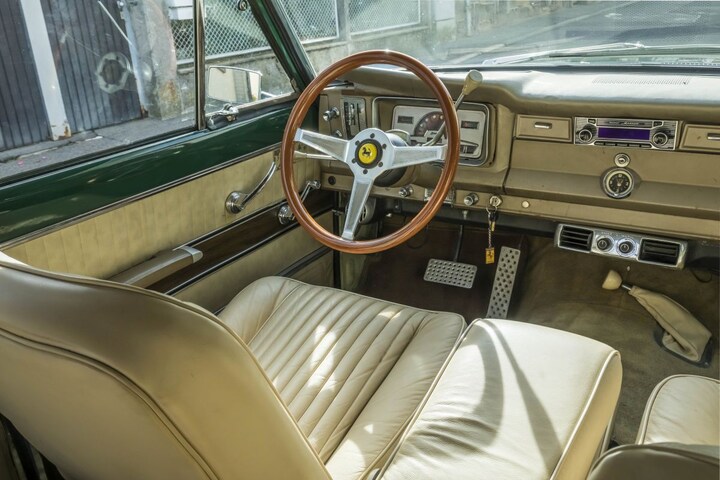
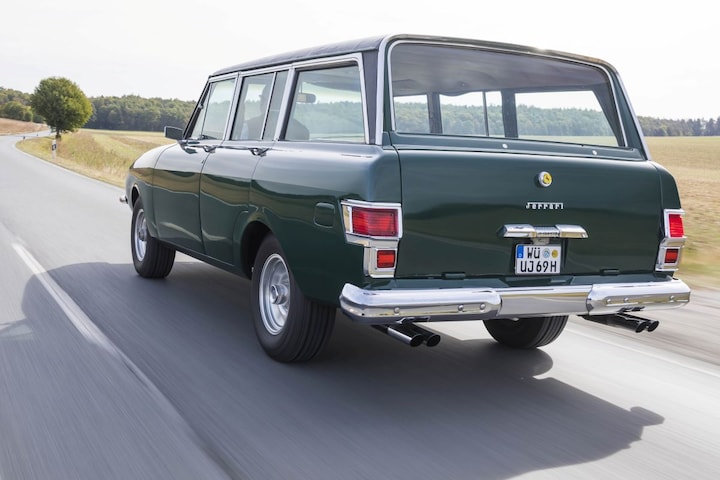
How the car drives? The four exhaust pipes, originating from Ferrari, roar nicely, the three-speed automatic transmission from Jeep shifts slowly, but refined, the turning circle resembles that of an aircraft carrier, the drum brakes are not exactly decisive and the steering is, as said, not the pinnacle of communication . You may have a wooden Ferrari steering wheel in your hand, but if you turn it three centimeters to the left or to the right from the center position, nothing will happen at first. At the same time, the driver must continuously correct to keep the car on the roadway. The Jerrari has only 8,000 miles on the clock, so it feels practically new.
American level
However, you notice everything that the finish was of American level: despite the new window rubbers, the wind whistles cheerfully above 70 km / h. Like many 1960s oldies, the car hates the stop and go traffic so common today. The air intake is too small for Kaiser’s V8 steam oven, which has been under the hood since 1977. In that year, Harrah has had enough of passers-by constantly addressing him about the green uniqueness. He longs for a discreet car again, but he doesn’t want to compromise on driving. So he spoons the Ferrari V12 into an optically unaltered Wagoneer, the Jerrari II is born. The Jerrari I is again equipped with the Kaiser-Jeep-V8 and the automatic transmission, so it can still be driven. We try to imagine the version with Ferrari temperament: 320 hp! And that in combination with that dead steering wheel and brakes that do little justice to their name. It must have been quite an adventure to drive this car.
Dangerous with V12
It is therefore not surprising that colleagues from the American car magazine Road & Track refused to drive the thing and estimate its top speed at the time. A speed of about 210 km/h should have been possible with the Ferrari engine, if you could find someone who was tired of life. Moreover, the spiky power delivery of the Ferrari V12 in combination with a rather long first gear does not exactly match the weight and driving resistance of the large Jeep. If Harrah wanted to drive off with a lot of spectacle, he had to engage the low gear. Where the Jerrari I drove at least a few thousand miles, the Jerrari II remained mainly a show car. In 1978, Bill Harrah passed away at the age of 66 as a result of failed heart surgery. His hotel and casino empire was swallowed up by the Holiday-Inn concern, which suddenly and unwittingly became the owner of nearly 1,500 collector cars. They formed the foundation for the National Automobile Museum in Reno, which still exists today. Incidentally, the number of cars was reduced to one seventh of the original number, the rest was sold during three auctions. The Jerrari I is also auctioned and initially ends up with an American buyer, who makes some modifications that are not in good taste, such as the installation of an 1980s stereo box and other gadgets. The car will be back on the market in 2008, for the very low amount of 20,300 US dollars from today’s point of view.
How did the Jerrari get to Germany?
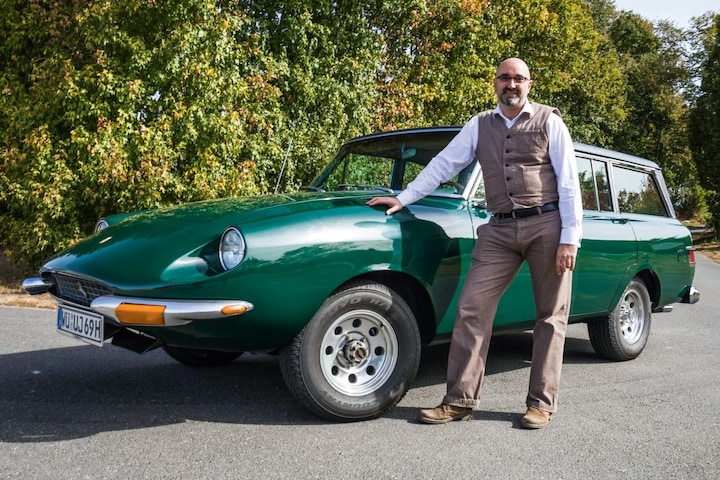
The German Alec Löckmann spontaneously falls in love with the unique and buys the car. After that it was quite a job to get this mix on the German roads. For the necessary data, he has to do a lot of research – and that was the easy part. “It has already taken two years to repair all the damage caused by the long standstill. And I had to replace all the bushes in the chassis,” he says. The cylinder head seal, the radiator, the gearbox – there is always something to do, even if the complex Ferrari engine has been eliminated. Löckmann did not do much to the interior, which looks neat, with a little bit of patina. It appears to be older than the rest of the car. Löckmann doesn’t like over-restored cars.
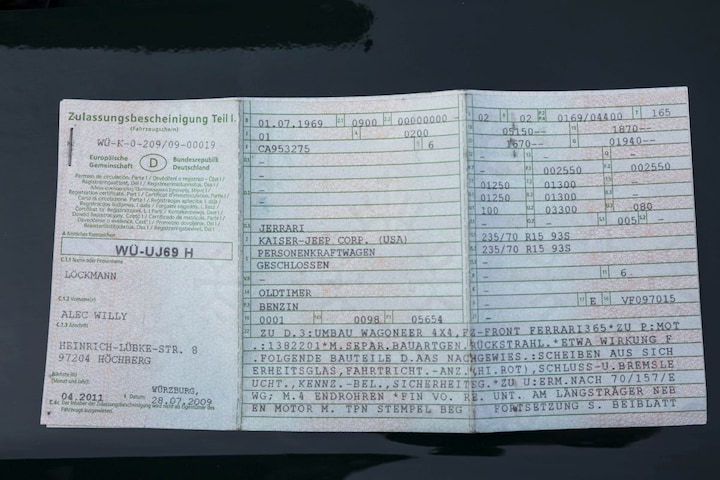
His everyday car is an International Harvester Travelall, a tall mix of off-roader and van that, of course, features a rumbling V8. The car has been restored, but with patina. In any case, a ‘better than new’ repair is not an option, because the required Ferrari parts are very expensive. At parts supplier Europarts, for example, Löckmann found a perfect chrome-plated bumper half, but it cost €3,000 – each, that is! And that for a piece of metal of approximately 50 centimeters. In addition, Harrah’s employees made modifications to the original bumper halves in 1969. Alec Löckmann nevertheless had a lot of fun with this creation for ten years. He is now considering selling Bill Harrah’s former winter car again, but he has a clear idea of what he wants to get for it. The price is based on the Ferrari part of the car (“I think it will fetch somewhere between €200,000 and €300,000”) and he also wants to sell the car to someone who will take good care of it. “I’m thinking of someone like Jay Leno, so a real enthusiast”, says Löckmann. “The Jerrari is unique, it must end up in good hands.”
This story was previously published in AutoWeek Classics 13 2020. This creation was for sale in the summer of 2021, where it eventually ended up is unknown
.
– Thanks for information from Autoweek.nl