

The view of the sea, the walk along the river, the swim in the lake – water attracts us. Experts explain how the element influences our psyche and how we can actively use it.
Without water there is no life. Life on earth arose from water; water is essential for our survival. The settlements of our ancestors primarily arose on rivers and coasts. This early imprint is deeply anchored in our subconscious.
From a psychological perspective, that’s not the only reason water is attractive. Spending time by the sea, lake or river lowers cortisol levels. The brain switches to a quieter mode. The environmental psychologist Sandra Geiger refers to the so-called stress reduction theory. According to her, nature through plants or water evokes positive emotions – interest, joy and calm. This promotes recovery and reduces stress.
see water
Another theoretical basis is provided by the attention recovery theory. In a hectic, noisy environment like the city that often floods us with stimuli, our attention is constantly required. Spending time in nature creates balance. “It distracts – but in a less strenuous way,” says the scientist. Looking at the steady movement of the water is calming. Worries lose weight and mental presence can recover.
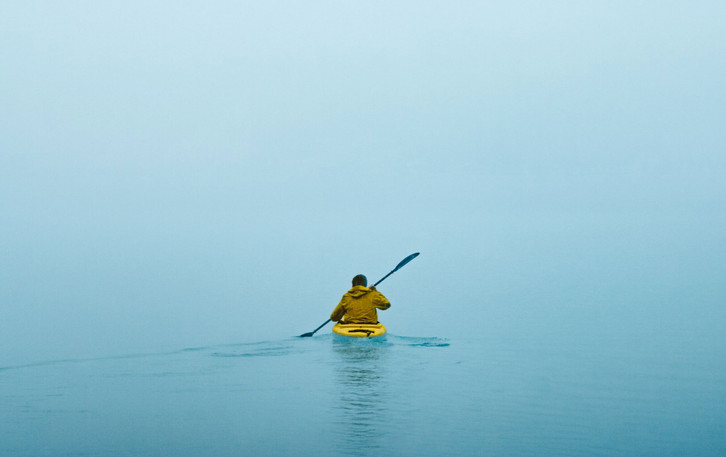
Historically, this was not always the case. In the Middle Ages, the sea was considered threatening – full of dangers and uncertainties. “That changed with the Enlightenment and the emergence of health resorts in the 18th century,” says psychologist Florian Schmid-Höhne. He offers burnout coaching by the sea. Today we know: the sea relaxes our psyche. “Looking into the distance calms our eyes and our mind. In terms of color psychology, the blue-green color also contributes to this.” It stands for space, peace and relaxation.
Hear water
But it’s not just the sight that has an effect – the sound also has an influence. The sound of waves, the steady babble of a stream: “The sounds of water are often perceived as positive,” says Sandra Geiger. Researchers from Carlton University and Michigan State University examined the effects of natural soundscapes in US national parks. The result: just consciously listening to nature sounds can reduce pain and stress, brighten your mood and improve cognitive performance. The sounds of water had the greatest influence on health and positive feelings.
Explanations can also be found in depth psychology: According to Schmid-Höhne, the steady sound of the sea triggers a feeling of security in us. It can subconsciously remind us of the time in the womb.
Feel water
Skin contact can also be beneficial. A jump into the lake, barefoot through the stream, bathing in the water – all of this stimulates the senses, the autonomic nervous system and the circulatory system. “There is something energetic about touching water,” says Florian Schmid-Höhne. The cold of the water is invigorating. Just like movement in the water. “There’s something playful about it. Childlike feelings come up.”
However: “Only those who have had positive experiences with water as a child will enjoy spending time in it as an adult,” says Geiger. Negative impressions can have the opposite effect.
In the flow of the “Blue Mind”
In his book, American marine biologist Wallace J. Nichols finds much evidence of the “blue mind” – a slightly meditative state of calm, peace and inner balance that occurs near water. However, how quickly the effect occurs depends on the individual condition. For example, “about what problems I encounter in the water and what personality I bring with me,” says burnout coach Schmid-Höhne. Most of his clients open up after two to four days by the sea.
📖 The book “Blue Mind: How Water Makes Us Happier” by Wallace J. Nichols is available online from Buch7, Thalia and Amazon, among others.
Ideas in flux
For many people, water is also a source of ideas. Water inspires – through movement, sound, changing light reflections. It creates an atmosphere in which associations can be made more easily. And it provides the necessary peace so that new thoughts can emerge. “This is particularly helpful in the initial phase, during brainstorming, when you collect ideas and let them sink in,” explains Geiger. Less so in the later phases, where analytical thinking sets in.
Learn from water
Water is also a teacher. Its fluid, adaptable movement shows how we can deal with challenges ourselves. Instead of remaining stationary, water flows around obstacles. It stays in motion, adapts without losing itself – a principle that can be transferred to your own life.
“The coast and the sea offer us many metaphors for looking at our own problems,” says Florian Schmid-Höhne. “I can approach them very close to the sea or look at them from a high cliff.”
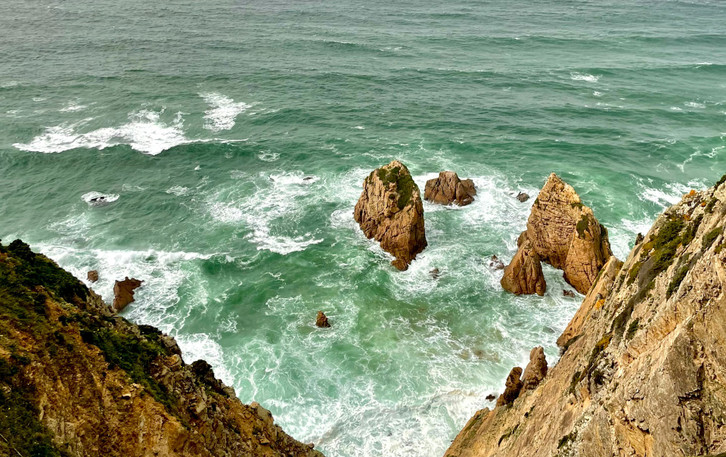
At the sea, a lot of things are put into perspective: “I can classify my situation and come to the conclusion that it’s not all that important.” Or: “I can reflect my feelings in harmony or in contrast to the sea surface when the sea is raging.”
The sea, Schmid-Höhne continued, symbolizes life that goes on. With the calm that it triggers in us, new plans arise, the idea for a change in life.
Water rituals for everyday life
The benefits of water can be integrated into everyday life. Anyone who regularly spends time on rivers, lakes or seas benefits measurably. Sandra Geiger refers to her study with the environmental psychology working group at the University of Vienna. It shows that people who live near the coast or regularly visit the sea have better health. This connection was found in a large-scale study of over 15,000 people from 15 countries, regardless of country and income.
Even short stays have an effect: two hours of contact with nature per week is already beneficial – after that the effect levels off, says Sandra Geiger. In between, memories can help: “Pictures, videos and sounds of water calm the nervous system.”
Regularity is important. Florian Schmid-Höhne recommends taking the relaxation you experience at the sea into your everyday life with rituals – for example, through morning exercises or walks by the river or lake.
** marked with ** or orange underlined Links to sources of supply are partly partner links: If you buy here, you are actively supporting Techzle\.com, because we then receive a small part of the sales proceeds. More info.