
At the IAA Mobility 2025 Motorshow, BMW Group presented the BMW Motorrad Vision CE, a vision of the future of electric mobility on two wheels in urban environments. According to the Germans, BMW Motorrad underlines its undisputed leadership in the field of intelligent, connected, fully electric two -wheeler bobility.
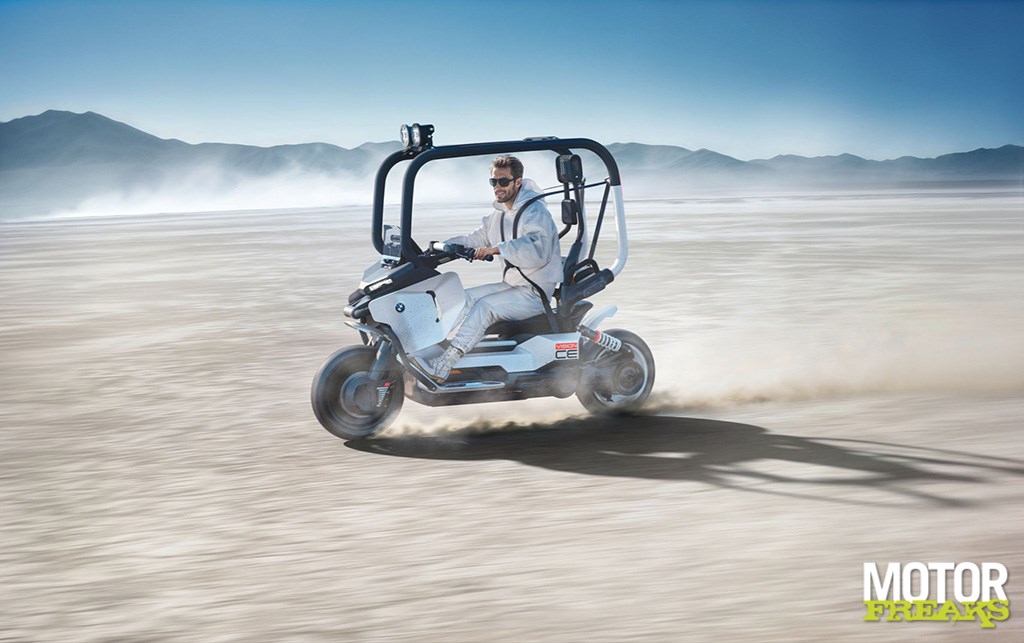
In addition to the emission -free electric drive, the striking characteristics of the BMW Motorrad Vision CE include removing the need for a helmet and protective clothing, giving drivers an increased sense of freedom and a relaxed, carefree driving experience. The Vision CE sets new standards and offers an emotional, creative and fresh view of commuting, and describes the future of urban two-wheeler bobility.
The above is the quote with which BMW Group opens its press release. According to BMW Group, BMW Motorrad is committed to constantly coming up with urban electromobility – emission -free, innovative and provided with groundbreaking designs. In 2014 this resulted in the C Evolution, the first EV motor scooter of German-made.
A sales success was not exactly the C Evolution, but that did not stop the Germans that he would not continue to invest. His successor CE 04 was launched in 2022, according to BMW Group to this day the world market leader in his segment. That sounds very impressive, but it is not: it is the only EV-Maxiscooter on the market. Two years later the CE 02 was launched, which is available as a motor scooter and as a moped scooter.
With both models things are not yet storming. The first half year 2025 there were 26 CE 02s and 11 CE 04s on license plate, the vast majority of which will be dealer demos. Only one electric BMW motor scooter has been sold to private individuals, a CE 02. That is in stark contrast to the C 400 GT and C 400 x, of which 36 went to private individuals in the first 6 months.
The Vision CE presented at the IAA Mobility 2025 Motor Show is a vision of the future of EV mobility in urban environments. A C1, but with an electric drive. The C1, put on the market 25 years ago by BMW Motorrad, has never been a sales success.
The unique thing about the C1 was that due to the cage construction you didn’t have to wear a helmet, promotional visual material was also invariably with a rider in a 3-part suit, but apparently there was never a need for that. In 2001, in addition to the 125cc, a 200cc was put on the market, but it did not really catch on, so that the C1 was taken out of production in 2003.
In October 2009, six years after the C1 was taken out of production, BMW presented a new study model C1-E with EV drive. The electric motor came from Vectrix, which in 2006 had put the VX-1 the world’s very first EV-Maxiscooter on the market, but went bankrupt in 2014. However, the C1-E has never made it into a production model.
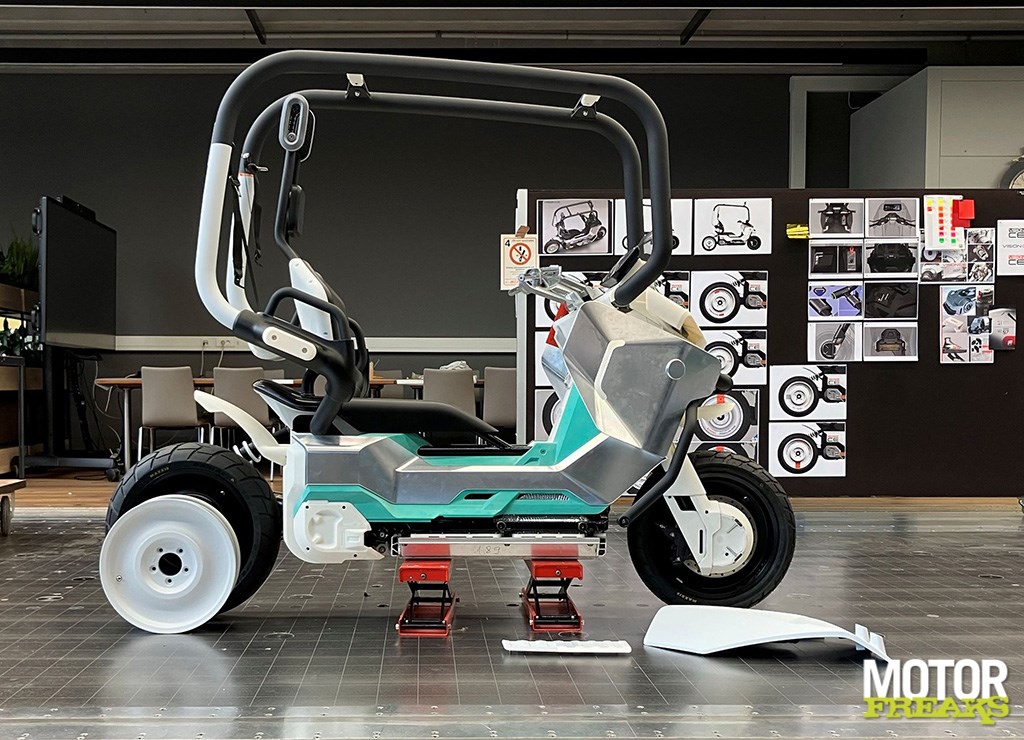
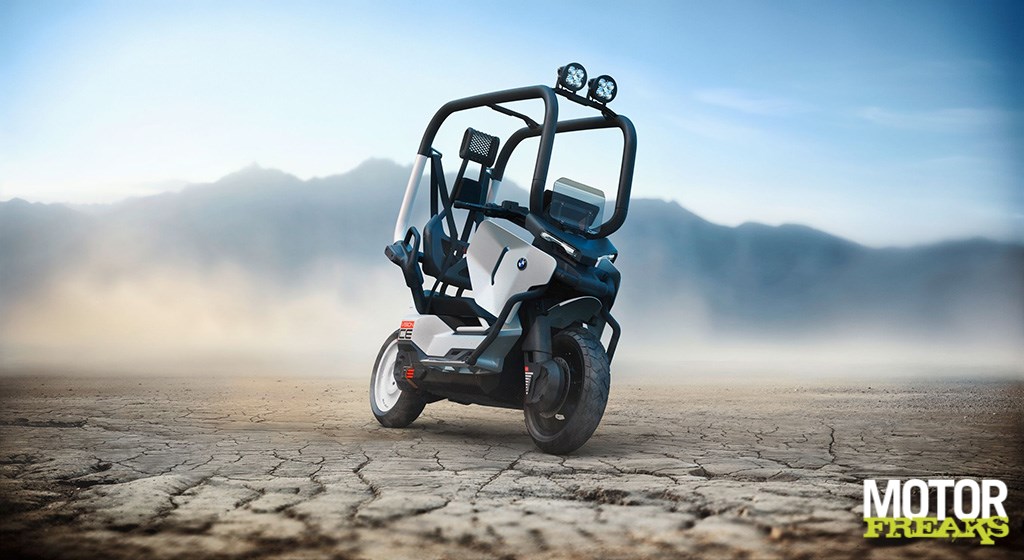
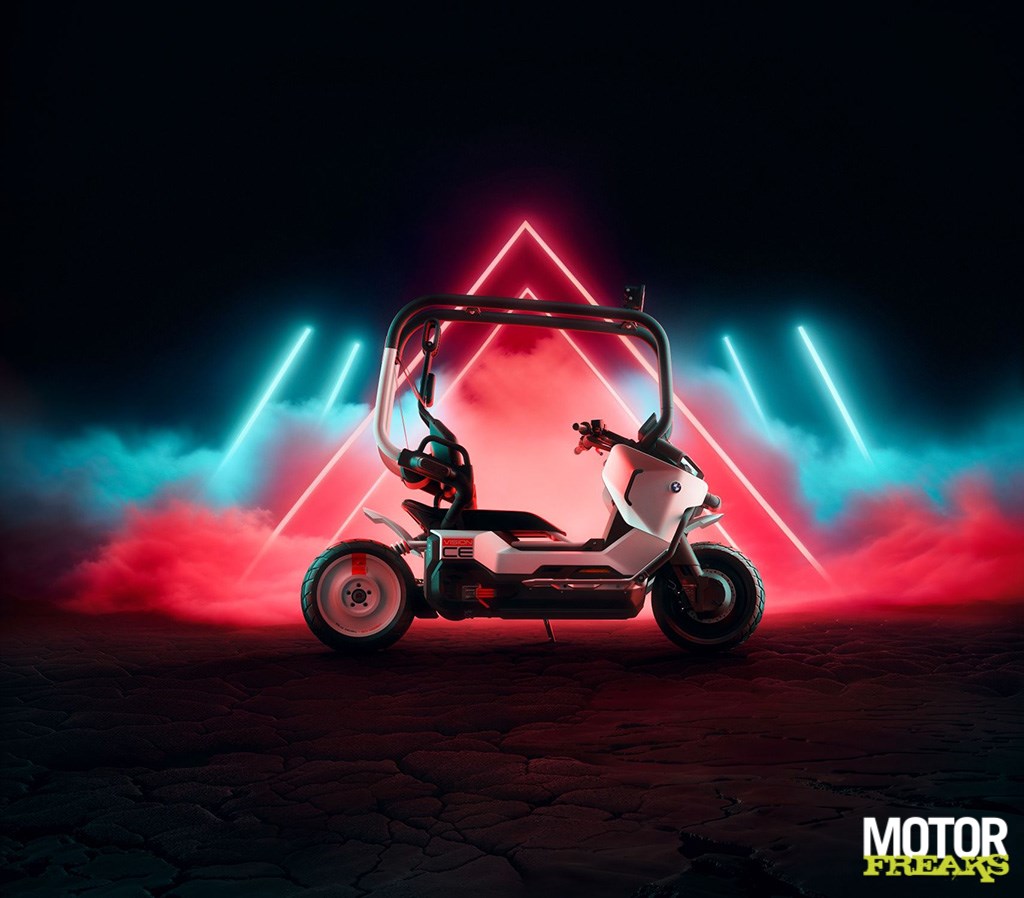
Sixteen years after the DATO, BMW Motorrad therefore dusted the concept of an electrically driven C1 again, but then mixed with the design concept of the CE 04 and CE 02. And we have to be honest there: Vision CE looks a lot more appetizing than the C1. Like a CE 04, but then with a cage construction with four -point seat belt.
The reduced total height of the cage and the open, airy design, combined with a long wheelbase, give the Vision CE a stretched, dynamic and visual light appearance, according to BMW. The open use of coated aluminum adds an exclusive technical test.
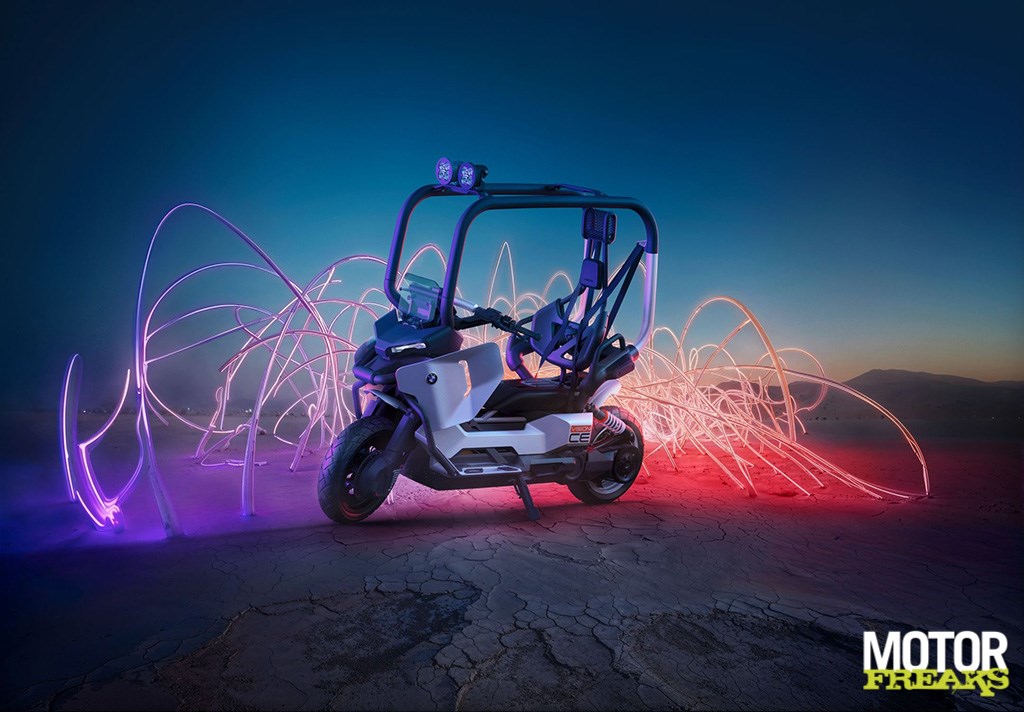
The combination of the basic color matt white and the contrasting color black gives the Vision CE a clear, reduced and sculptural appearance. This innovative design and color scheme is supplemented with an elegant matte buddyseat with integrated lettering and neonrode accents on the graphics and other striking details.
You would almost forget that it is just a concept model. What makes Vision CE, in addition to its cage construction, unique is his balancing function, with which the scooter can keep itself completely balanced when it stands still.

– Thanks for information from Motorfreaks.