
The emergence of Bitcoin has reshaped the technological landscape, placing decentralized ledgers at the forefront of innovation. In this comprehensive exploration of Bitcoin’s technology and its diverse applications, we’ve uncovered the foundational principles underpinning its success. In this ever-evolving landscape, it’s crucial for both individuals and organizations to remain well-informed and consider engaging with user-friendly solutions on this Web designed to facilitate seamless navigation within the digital asset realm.
The Birth of Bitcoin: A Decentralized Ledger
Satoshi Nakamoto’s Whitepaper and the Blockchain Concept
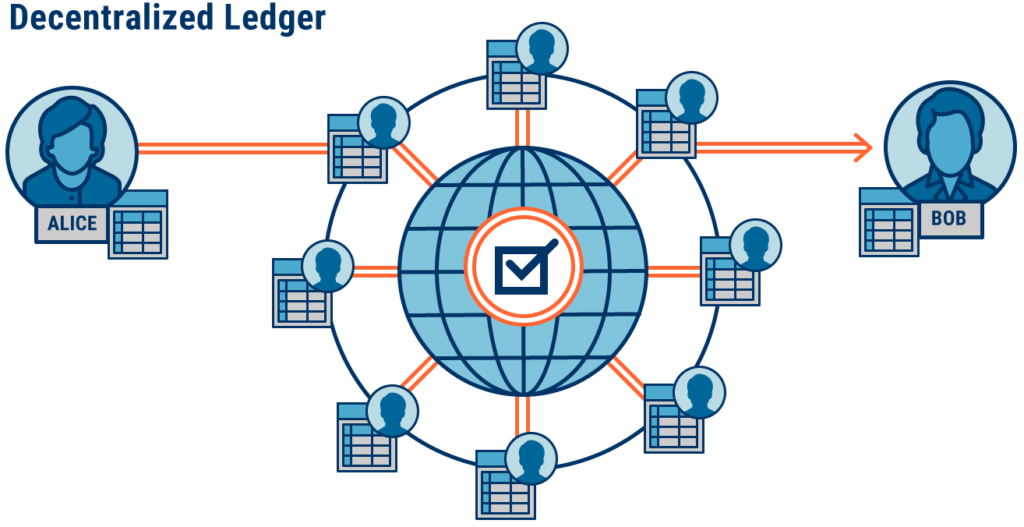
Bitcoin’s origin can be traced back to a whitepaper published by an anonymous entity known as Satoshi Nakamoto in 2008. The paper introduced the concept of blockchain, a decentralized ledger that records transactions across a network of computers. It operates on a peer-to-peer network, eliminating the need for intermediaries such as banks.
How Bitcoin’s Decentralized Ledger Works
At its core, Bitcoin relies on a distributed ledger called the blockchain. Transactions are grouped into blocks, which are then added to the chain in a sequential order. Miners, individuals or entities with powerful computing resources, validate and confirm these transactions. Once verified, the transactions are added to the blockchain, creating a permanent and tamper-proof record.
The Role of Miners in Verifying and Recording Transactions
Miners play a pivotal role in the Bitcoin network. They compete to solve complex mathematical puzzles, a process known as mining, to validate transactions and add them to the blockchain. Miners are rewarded with newly created bitcoins and transaction fees for their efforts. This decentralized validation process ensures the security and integrity of the ledger.
Beyond Bitcoin: Applications of Decentralized Ledgers
Overview of Blockchain Technology Beyond Cryptocurrencies
While Bitcoin was the pioneer, blockchain technology has evolved to offer solutions beyond digital currencies. It provides a secure, transparent, and immutable ledger system that can be applied to various industries.
Smart Contracts: Automating Agreements on the Blockchain
Smart contracts are self-executing contracts with the terms of the agreement directly written into code. They automate and enforce contractual agreements, eliminating the need for intermediaries such as lawyers and escrow services. This technology is used in fields like legal, real estate, and finance.
Supply Chain Management: Enhancing Transparency and Traceability
Blockchain enables end-to-end visibility in supply chains. Each product’s journey, from production to distribution, is recorded on the blockchain, ensuring transparency, reducing fraud, and enhancing traceability. This is particularly valuable in industries like food and pharmaceuticals.
Identity Management: Securing Personal Information with Decentralized Ledgers
Blockchain can provide secure and decentralized identity management solutions. Users have control over their personal information, reducing the risk of data breaches and identity theft. This technology has applications in digital identity verification, access control, and online privacy.
Challenges and Limitations
Scalability Issues in Blockchain Networks
One of the challenges facing blockchain technology is scalability. As more transactions are added to the blockchain, network congestion and slower transaction times can occur. Various solutions, such as layer 2 scaling solutions, are being developed to address this issue.
Energy Consumption Concerns Associated with Mining
The energy-intensive process of mining has drawn criticism due to its environmental impact. Some blockchains, like Bitcoin, rely on proof-of-work consensus mechanisms, which consume significant energy. Transitioning to more eco-friendly consensus mechanisms, such as proof-of-stake, is being explored.
Regulatory Challenges and Legal Considerations
The decentralized nature of blockchain technology poses regulatory challenges for governments worldwide. Issues such as taxation, anti-money laundering (AML) compliance, and consumer protection are subjects of ongoing debate and development.
Ethereum and the Rise of Decentralized Applications (DApps)
Introduction to Ethereum and Its Role in Blockchain Development
Ethereum, launched in 2015 by Vitalik Buterin, introduced the concept of decentralized applications (DApps). It expanded the potential of blockchain technology by allowing developers to build decentralized applications on its platform.
Decentralized Applications (DApps) and Their Impact on Various Industries
DApps are blockchain-based applications that operate on decentralized networks. They have impacted a wide range of industries, including finance, gaming, and healthcare, by providing transparent and trustless solutions.
Examples of Popular DApps and Their Functionalities
Notable DApps like Uniswap (decentralized exchange), Aave (decentralized lending platform), and CryptoKitties (blockchain-based collectibles) demonstrate the diverse capabilities and applications of blockchain technology.
Decentralized Finance (DeFi) and Decentralized Autonomous Organizations (DAOs)
Understanding DeFi: Decentralized Lending, Borrowing, and Trading
DeFi refers to decentralized financial services that enable users to lend, borrow, and trade digital assets without relying on traditional financial institutions. It has gained significant attention for its potential to democratize finance.
The Concept of DAOs: Decisions Made by Code and Consensus
DAOs are organizations governed by smart contracts and the consensus of their members, rather than centralized authorities. They enable decentralized decision-making and management, with applications in governance and collective decision-making.
Risks and Benefits Associated with DeFi and DAOs
While DeFi and DAOs offer exciting opportunities, they also come with risks such as smart contract vulnerabilities and regulatory uncertainty. It is crucial to balance the potential benefits with the associated risks.
The Future of Decentralized Ledgers
Emerging Trends and Developments in Blockchain Technology
The blockchain space is constantly evolving, with ongoing research and development. Emerging trends include interoperability between blockchains, non-fungible tokens (NFTs), and decentralized storage solutions.
Potential Applications in Healthcare, Voting Systems, and More
Blockchain technology has the potential to transform various sectors, including healthcare (secure patient records), voting systems (tamper-proof elections), and intellectual property (NFTs for artists and creators).
Ethical Considerations and Societal Implications
As blockchain technology continues to expand its reach, ethical considerations regarding privacy, data ownership, and decentralization become increasingly important. Striking a balance between innovation and ethics is essential.
Conclusion
In conclusion, decentralized ledgers, as exemplified by Bitcoin and blockchain technology, have disrupted traditional paradigms across numerous industries. Their impact extends far beyond cryptocurrencies, offering solutions to a wide array of challenges and opportunities. As we move forward, staying informed and engaging with this transformative technology will be crucial for individuals and organizations alike.