

Difficult colleagues can make what is otherwise a wonderful day at work more difficult. We’ll explain five possible reasons why you find certain people particularly stressful and give you tips on what you can do.
Some colleagues make everyday work unnecessarily stressful: they constantly criticize, react irritably, withhold information or create a bad mood with passive-aggressive comments. If this stresses you out on a regular basis, it’s not necessarily just your fault – but it’s not always just the other person’s fault either.
There can be different causes behind conflicts in the workplace. Sometimes a colleague actually behaves in a difficult way. Sometimes different expectations come together. And sometimes time pressure, overload or unclear responsibilities further exacerbate a conflict.
The psychologist and mediator Melanie Berger names five mechanisms that can play a role: the mirror effect, the so-called amygdala hijacking, cognitive distortions, the need for belonging and self-esteem protection.
Not all of these terms are equally well scientifically proven. But the basic idea behind it is definitely relevant: Difficult social situations can trigger automatic emotional and mental reactions – and these in turn influence how we behave.
1. The mirror effect: The bad mood is contagious

A colleague comes into the office in a bad mood, answers curtly and slams the door. A little later you find yourself more irritable than before.
This is not an uncommon phenomenon. People respond to the emotions of others and can adopt moods within social situations. In research, this is referred to, among other things, as emotional contagion.
If you notice that someone else’s mood is affecting you, a little distance helps at first. Ask yourself: “Am I really annoyed about this situation right now – or have I taken on the mood of the person I’m talking to?” Just this short break can help you avoid automatically falling into the same mood.
This doesn’t mean you have to simply accept unpleasant behavior. You can set a boundary without making the other person’s emotion your own.
2. The amygdala hijacking: When criticism suddenly acts like an attack

A colleague criticizes your work in front of the entire team. Before you can even think about it, you get angry or feel like you have to immediately defend yourself.
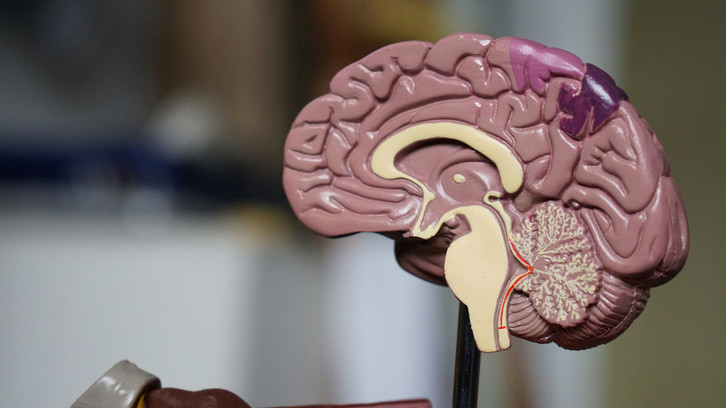
Melanie Berger describes this as “amygdala hijacking”. The term simply describes the idea that a strong emotional reaction makes our deliberate actions more difficult in the short term. Scientifically, however, the brain is not so simply divided into an “emotional” and a “rational” part.
The amygdala is involved in processing threatening stimuli. At the same time, prefrontal brain regions that are involved in the regulation of emotions are involved. Studies show that these systems are interconnected and influence each other.
Especially when it comes to criticism or personal attacks, it can make sense not to respond immediately.
A few seconds of pause, a glass of water or a quick walk out of the room can help you avoid responding to the situation immediately based on your first emotional reaction. For example, you can say, “I want to address this, but not spontaneously. Let’s discuss it after the meeting.”
3. Cognitive Bias: Your brain complements the rest
A colleague doesn’t greet you in the morning and you automatically assume she’s mad at you. But in reality you don’t even know that.
The reason: Our thinking often works with shortcuts. Systematic distortions can arise, especially with incomplete information. These include, for example, the confirmation bias, in which we prefer to perceive information that fits our existing assumptions, or the negativity bias, in which negative information can receive a lot of attention.
With difficult colleagues, a pattern can quickly emerge: Once you have saved a person as unfriendly, you will particularly notice their unfriendly comments. On the other hand, you tend to overlook neutral or friendly situations.
The so-called fundamental attribution error can also play a role: With others, we tend to attribute behavior to their personality, while we take situational reasons less into account – for ourselves it’s the other way around.
Try to keep observation and interpretation separate. Example: “She didn’t answer my question today” is the observation, and your interpretation might be: “She is deliberately ignoring me.” That doesn’t mean the interpretation has to be wrong. But before you react accordingly, it’s worth asking: “What other explanation could there be?”
This does not prevent every conflict. But it can prevent a single unpleasant situation from becoming a whole story about the person in question.
4. The need for belonging: Why rejection is particularly stressful

Workplaces are social places. It’s not just about tasks and salary, but also about collaboration, recognition and belonging to a group.
That’s why it can be particularly stressful when colleagues exclude you, ignore you or obviously reject you. Research on workplace ostracism, i.e. social exclusion in the workplace, shows connections with various negative consequences for well-being and work behavior. A meta-analysis with 95 independent samples and a total of over 25,000 people found connections with, among other things, a lower sense of belonging, lower job satisfaction and emotional exhaustion.
For example, if you want to contradict a colleague but fear that it will make you look worse in the team, it can help to consciously separate the two things: “I would like to continue to work well with the team. However, I do not agree with this point.”
Professional collaboration doesn’t mean always having the same opinion. However, if you are actually being systematically excluded, don’t just dismiss it as personal sensitivity. Repeated exclusion can be a relevant psychosocial burden in the workplace.
5. Self-esteem protection: Why criticism sometimes hits harder than expected

A colleague points out an error in your presentation. The content of the comment may be justified, but you still immediately feel attacked.
This can also have to do with self-esteem protection. Criticism of a specific performance can quickly feel like an evaluation of oneself – especially if professional performance makes up a large part of one’s self-image.
Research on self-esteem threats shows that people react differently to information that challenges their positive image of themselves. These include, among other things, defensive reactions.
Conclusion: You should ask yourself these questions
You don’t have to psychologically analyze every conflict. However, a few simple questions can help to better understand the situation:
- What actually happened?
- Which of these is my interpretation?
- What emotion does the behavior trigger in me?
- What limit might be crossed?
- What role do time pressure, amount of work or unclear responsibilities play?
- Do I have to solve the problem myself – or is support appropriate?
In the case of a one-off argument, a little distance might be enough. If disrespectful behavior is repeated, a clarifying conversation may be useful. If a conflict drags on for a long time or turns into bullying at work, harassment or threats, you should seek support from a manager, the works council or another responsible body.
Read more on Techzle\.com:
- New job: How to get started confidently
- Quit your job: stay fair and keep your form
- Job crafting for more joy at work
Independent journalism needs people who stand behind it – including in Google searches. Now send a signal for more sustainability and → Save Utopia as a preferred source.
** marked with ** or orange underlined Links to sources of supply are partly partner links: If you buy here, you are actively supporting Techzle\.com, because we then receive a small part of the sales proceeds. More info.