
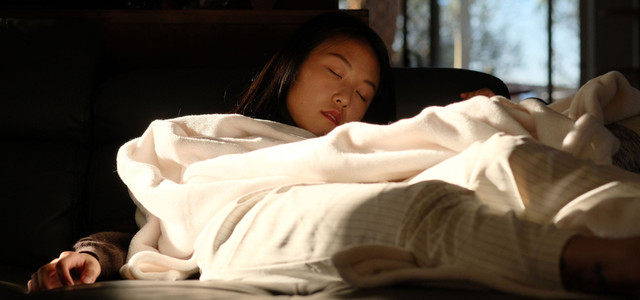
Comfortable, but problematic: If you doze off in front of the TV regularly, you don’t just risk neck pain. The habit can permanently disrupt sleep quality and confuse your brain. Here you can find out the consequences of falling asleep on the sofa and what you can do about it.
It’s a familiar scenario: after a long day, the couch beckons, the TV is on and before you know it, your eyes close. As tempting as an evening nap in the living room may be, it shouldn’t become a regular habit. Anyone who falls asleep on the sofa night after night is not doing their health any favors in the long term.
Ergonomic nightmare: The consequences for the back and neck
Correct posture is crucial for healthy and restful sleep. Health experts, like those at AOK, emphasize that the spine must be positioned in its natural S-shape overnight so that the muscles can relax and no pain occurs. A conventional sofa usually does not meet this basic requirement.
Because sofas are not designed for lying down for hours. Their padding is often too soft or gives way unevenly. This causes heavy parts of the body such as the pelvis to sink too deeply, while the sensitive lumbar region receives no support. This forces the spine into an unnatural position.
The neck also suffers if, for example, a rigid armrest serves as a pillow and the cervical spine bends. This unergonomic, cramped posture is a direct cause of the typical consequences: tension, neck and back pain, with which you wake up feeling exhausted the next morning.
Disturbed sleep quality due to light and noise
The environment in the living room is anything but conducive to sleep. Light and noise prevent your body from falling into a deep, restful sleep.
-
Light inhibits the sleep hormone: The most important clock for our internal clock is light. Brightness in the evening signals the brain to stay awake by suppressing the production of the sleep hormone melatonin. A study in the Journal of Clinical Endocrinology & Metabolism found that even normal room lighting in the hours before bedtime significantly delays melatonin release. This makes it difficult to fall asleep. If you fall asleep on the sofa, you don’t still have the room lights on. However, the television is often still on at night, which is also a source of light and can therefore disrupt sleep.
-
TV noise prevents deep sleep: Unlike monotonous noise (like a fan), TV noise is abrupt and irregular. As sleep expert Hans-Günter Weeß explains to Focus Online, such noises put our organism on alert. The body then releases stress hormones and blood pressure and heart rate increase. Weeß summarizes: “Sleep is increasingly interrupted and restorative sleep stages, such as deep or dream sleep, do not occur to a sufficient extent.” This also happens if you are not consciously aware of the disturbances.
How sleeping on the sofa affects your psyche
Another problem with falling asleep on the sofa is psychological. Because our brain associates places with certain actions. If you regularly fall asleep on the couch, it learns: “The sofa is the place where relaxation begins and sleep is initiated.”
The result: the bed loses its function as a primary sleeping place. When you wake up in the middle of the night and go to the bedroom, your body is often more awake again. This makes actually falling asleep in bed more difficult and disrupts the sleep cycle. This will only make things worse. As the German Society for Sleep Research and Sleep Medicine (DGSM) warns, “torturing attempts to fall asleep” in bed can lead to a “negative association between the bed and the desire to sleep”.
The DGSM therefore recommends: “Do not sleep outside of the bed (e.g. sofa).” Especially for people with sleep disorders, the following applies: use the bed mainly for sleeping and avoid working or arguing in it.
The specialist society calls the principle “stimulus control”: By reducing the time spent in bed without sleep, the relationship between sleep and bed can be normalized again.
Conclusion: Give your body the sleep it deserves – in bed!
If occasionally nodding off on the couch becomes a habit, you risk a downward spiral of poor sleep quality, pain, and long-term sleep problems.
The most important step is to make the bed your sole sleeping place again. Consciously go into the bedroom when you notice that you are getting tired. Create a quiet, dark and cozy atmosphere there. Your well-rested future self will thank you for it.
Independent journalism needs people who stand behind it – including in Google searches. Now send a signal for more sustainability and → Save Utopia as a preferred source.
** marked with ** or orange underlined Links to sources of supply are partly partner links: If you buy here, you are actively supporting Techzle\.com, because we then receive a small part of the sales proceeds. More info.