
Will it be enough?
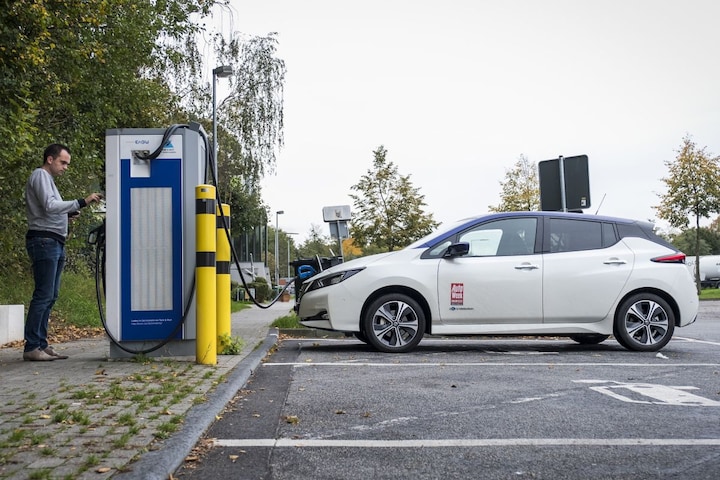
The EV transition is also in full swing in Germany. In order to remove as many obstacles as possible, a nationwide and user-friendly charging network must be created. That says the German Minister of Transport, Volker Wissing. The new target: 1 million publicly accessible charging points by 2030.
According to traffic minister Volker Wissing, charging should become like refueling: something that his predecessor also called just over a year ago. Whereas the ambition then ‘only’ had to do with tens of thousands of charging points, several hundred million euros and 2025 as a target year, Wissing goes a step further. He reserves €6.3 billion in the coming years to upgrade the public charging network. This should ensure that Germany has 1 million public charging points by 2030. There are currently about 70,000.
At the moment, 1 in 5 new cars in Germany is already a fully electric one. That share is expected to continue to grow for the foreseeable future. That is the ambition. As an important player in the car industry, the country wants to play an exemplary role in the transition to electric driving. A thorough charging network should facilitate this. The plan that Wissing and his colleagues drew up, initially focusing on charging points at gas stations and in residential areas, has already been made. Municipalities, federal states and the ministry agree to the billions to be spent. The largest part of that amount is used for the necessary investments in upgrading the energy grid.
Look at the Netherlands
The charging network is also growing rapidly in the Netherlands. A while ago it turned out that the Netherlands has the most charging points in Europe (about 90,000). In addition, in 2021, i.e. in one calendar year, the number increased by 30 percent. The Netherlands is expected to have well over 100,000 around this time next year. However, that is still far from enough: according to the National Charging Infrastructure Agenda, there should be 1.7 million by 2030. So a lot more than Germany now aspires to.
Germany turned out to be the number two in Europe in June when it comes to the number of charging points. At that time, Germany and the Netherlands together accounted for 48.8 percent of the charging points in the EU. Now Germany has considerably more consumers, so the absolute number of EVs will increase faster than in the Netherlands. In percentage terms, the share of the EV in the car market is about the same at the moment.
Whether the new charging station ambition, despite the billions, is sufficient in that light? In any case, the Germans seem to underestimate the task earlier than the Dutch, because here some think that 1.7 million points are needed. Although there may be more important factors than just the size of the road network and the motorist population to arrive at such a number. In terms of charge point density per kilometer of road, Germany still has a lot to do compared to the Netherlands, although this may not necessarily be necessary due to the lower population density. We’re going to experience it.
.
– Thanks for information from Autoweek.nl