
Solar panels are now as common as a video doorbell. If you are moving, building or renovating, these are probably on your list. Now that we generate and supply energy ourselves, we are faced with the next innovation: the home battery.
Dimitry Wing
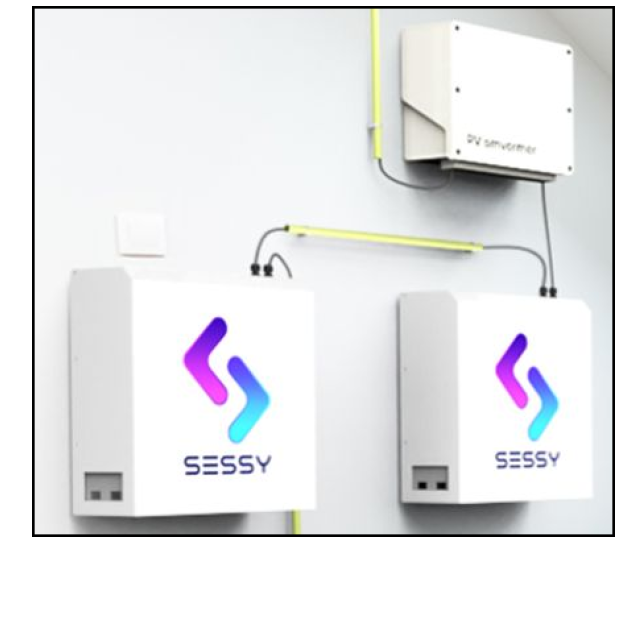
Before we discuss the usefulness of the home battery, it is good to determine what exactly it is. Actually that is very simple. A home battery, also called a home battery, is a way to store energy in your home to use it at a later time.
|
You can also earn money with Zonneplan’s home battery |
The advantages
With solar panels you often produce more than you use and supply the power back to the electricity grid. With the netting scheme, the energy company reimburses you annually for the energy supplied back. Although this arrangement will remain in place for a while, it is finite. More and more energy companies are charging higher rates to pay the costs of supplying electricity and to spare people without solar panels. In short, supplying back does not yield as much bottom line as we think. When you save the power you have left, you can use it for free at a later time. But even in the event of a power outage – fortunately we do not experience this very often in the Netherlands – a home battery takes over the task of the power grid within milliseconds. This means you will not be without power, unless the outage lasts a very long time.
Do you use a flexible contract? Then charge your home battery when the electricity is at its best. If the price of electricity rises above a certain amount, you simply switch to your own home battery.
You can take this much further by trading in electricity: selling when prices are high and charging when prices are low. It generates money and helps restore balance to the energy market. An additional advantage is that in the Netherlands you can reclaim the 21 percent VAT on your home battery. In this case, the tax authorities see you as an entrepreneur, and that is why you are entitled to a VAT refund.
The last benefit I want to mention is not about money or saving, but about our environment. When a house provides its own power supply and uses less external sources, we help our earth to recover from the damage it has suffered over the past hundreds to thousands of years. Unfortunately, this benefit is usually ignored by the average buyer.
Are there also disadvantages?
Home batteries are a fairly new development and, just like with electric cars, we discover things during use that may not be in favor of use at that time. For the electric car, for example, this was the number of charging stations or the limited range. With every technological innovation we encounter (unexpected) problems. You can assume that these will be resolved quickly. That was the case with the electric car and it will also be the case with the home battery.
The biggest disadvantage of the home battery is the price. Depending on the model and capacity, the purchase price can be between 3,000 and 10,000 euros. That’s a lot of money and for many people too much money. In addition, the payback period is quite long and there are little to no subsidies. This is being worked on and the aforementioned VAT refund is one of them. We also see that more and more companies are getting involved in this market. More players creates competition and that means a lower price for us as consumers.
 |
|
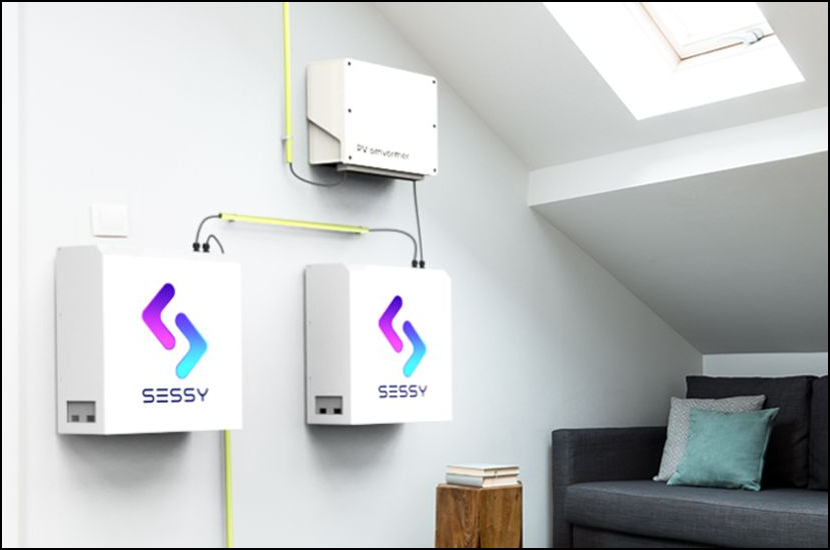
Sessy is a completely Dutch initiative |
You will also not be able to do without a connection to the energy grid with a home battery for the time being. An average family uses 7.6 kWh of energy per day, and that doesn’t even include an electric car. Because we are not blessed with 365 days of sunshine in our country, you will never be able to survive all the days without sun. That is why you continue to need the power grid.
You also read about the safety of home batteries, especially about the risk of fire. Just like all other products that your home uses, the home battery must also meet a number of requirements. Safety is one of them.
When considering a home battery, check what measures have been taken within such a product. Most products switch off automatically when the temperature or voltage becomes too high. There are even home batteries on the market that have an internal extinguishing system.
The final and perhaps most important tip: be well informed, buy your product from a recognized installer and have it installed by him.
Where do I hang the home battery?
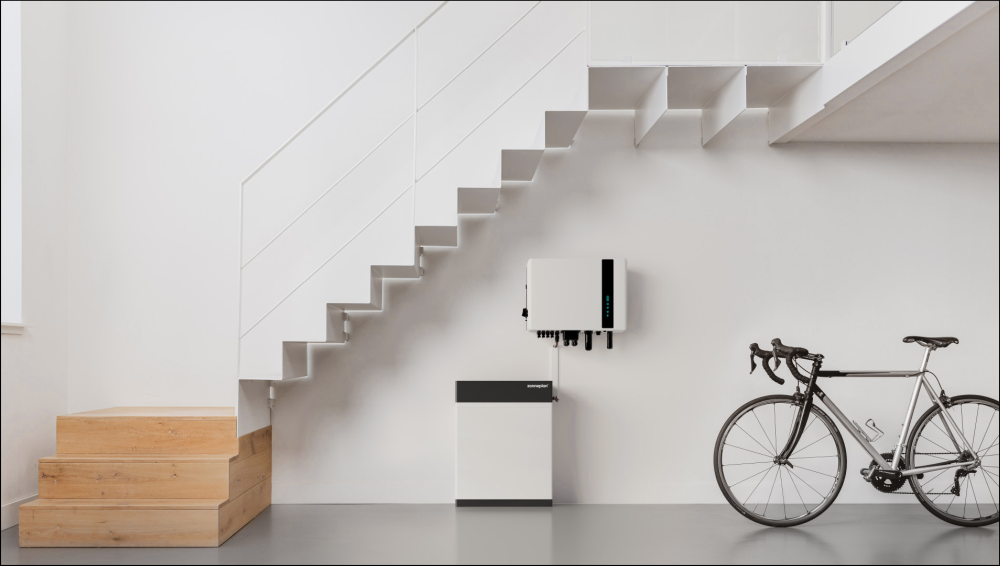
Unlike solar panels, the home battery is installed inside your house. That is something to take into account when purchasing. Because if you live large and have an attic or a basement, you can easily store them. If you have a smaller home, I would determine in advance what the maximum dimensions of the home battery can be.
It helps if the room where the battery hangs is cool or well ventilated. The batteries are also quite heavy. With an average weight of 75 kilos, you need a sturdy wall.
By the way, it is best to hang the home battery in plain sight. The models you buy now look great and they won’t look out of place in the garage, basement or attic.
 |
|
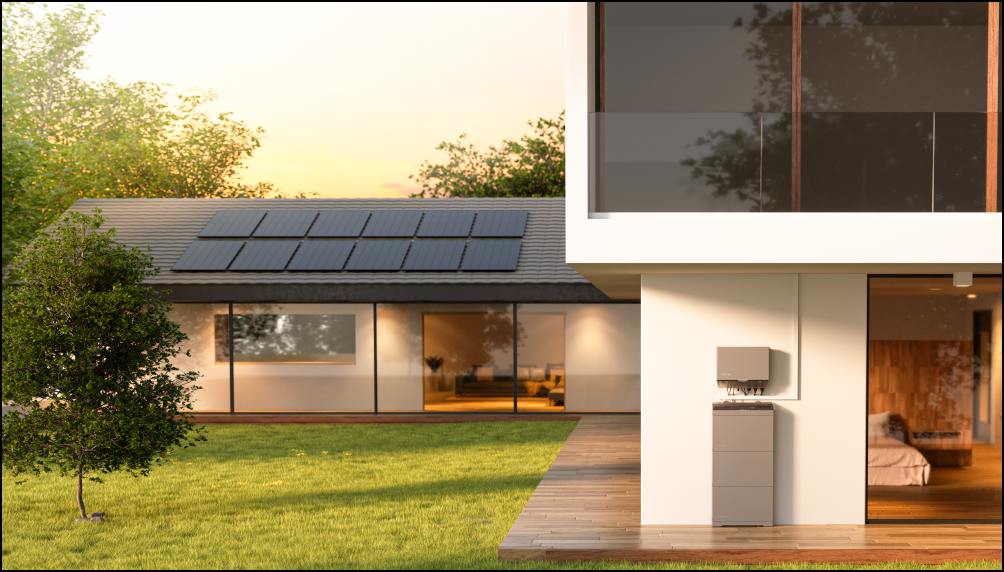
You can even attach the EcoFlow PowerOcean to the outside wall or under the carport |
How do I install the home battery?
The only correct answer to that question is: not! You cannot install a home battery all by yourself unless you are a certified electrician. Of course you save money if you do as much as possible yourself, but we still recommend that you have the installation done by an official company.
How drastic the installation will be depends entirely on the location and type of installation. In addition to the home battery, you also need an inverter and a changeover relay. This requires wiring to be drawn from and to the meter cupboard. Again: the cabling must be connected by a certified electrician, you are not allowed to do this yourself.
Which home battery should I choose?
There are four different choices when it comes to home batteries: lithium-ion, lithium-iron-phosphate, saltwater and lead-acid batteries. Only the first two types are interesting. The most common battery is lithium-ion. It is compact, can store a lot of energy and has a long lifespan. The lithium-ion home battery uses cobalt. This metal is very polluting and is often extracted under appalling conditions. That may be something you want to take into consideration. A good alternative is the lithium iron phosphate battery. This excels in longevity and safety, because it is less sensitive to overload and temperature. Because this battery uses less expensive and also less polluting raw materials, it is cheaper than the lithium iron phosphate battery. Unfortunately, the supply of this battery is limited.
An even safer and environmentally friendly choice is the saltwater battery. However, this is not the right choice due to its low energy density and low peak power. As a result, it cannot power all the appliances in your home.
In addition to the above choice, you will also think about what you want to do with the stored energy. Are you going to collect and use the excess energy from your solar panels yourself or do you want to charge electricity when the rate is low and use it when the rate is high?
Conclusion
The answer to the question of whether you should get a home battery is at the same time simple and complicated. This has everything to do with the netting arrangement. For a long time it looked like this would disappear, making a home battery an interesting option in combination with solar panels.
Now that the Senate rejected the abolition of the netting scheme in February, the financial need for home batteries has diminished. After all, you can still use the netting scheme. However, this is the short-term view. If you have a long-term view and you have the budget, then purchasing home batteries is definitely recommended. You are less dependent on the overstressed energy grid and in combination with a flexible contract you can save a lot of money. And again, generating and using your own energy is better for the environment.