
A look into the claims culture
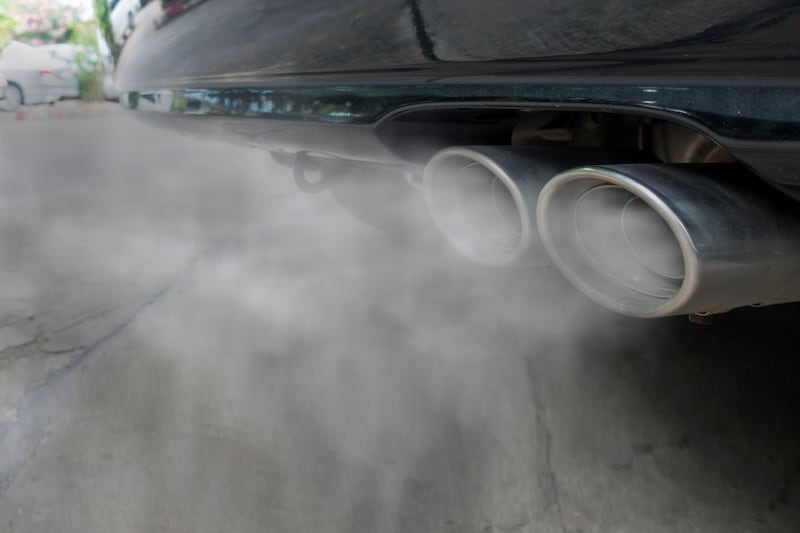
It has been eight years since the earthquake that would come to be called Dieselgate shook the car world. Yet the rubble is far from cleared. Numerous car owners are demanding compensation from Volkswagen, among others, through claim clubs. That raises the question: have they actually suffered any harm or is claiming claiming to be the new popular sport?
The spider web that entangled the automotive industry after Dieselgate came to light in September 2015 has only become more complicated in the years that followed. Even consumers claim to have been duped and demand compensation, now in most cases by joining forces. Various clubs are also active in our country, such as the Consumer Claim Foundation, the Car Claim Foundation, the Volkswagen Group Diesel Efficiency Foundation and the Diesel Emissions Justice Foundation. The latter recently faced Mercedes-Benz in court.
Claim culture brought over from the US?
You can also ask yourself whether a consumer whose car emitted slightly more NOx than stated in the brochure actually suffered damage as a result. In fact, if you look at the CO2 emissions, for which many efforts were also made to keep them as low as possible, these cars with higher emissions would have even been more expensive in gross type approval, so it is defensible to say that they are actually have benefited from the diesel fraud. Volkswagen AG itself stated in previous legal cases in its defense, among other things, that there is ‘no question of actual financial damage suffered’ by the consumer. Because claim foundations are increasingly emerging in other industries, the question arises: are we not getting bogged down in a claims culture that has come over from the United States?
Textbook example of how everything can go wrong
We ask Joost Edixhoven of Birkway, one of the lawyers for years who, through the Diesel Emissions Justice Foundation, represents the interests of hundreds of thousands of motorists who believe they have been duped and are therefore entitled to compensation. “It is a textbook example of how everything can go wrong, resulting in a gigantic problem that no one can solve. These types of actions are a stepping stone to open the playing field again,” he says.

Volkswagen hit harder
Edixhoven would like to note that Volkswagen has been hit harder than other brands for the time being: “Volkswagen was unlucky enough to be forced to admit under pressure from a criminal investigation in the US that it did this identically in all its vehicles. Other manufacturers hide behind massive fragmentation; they say some models may have it and others may not. Go ahead and prove it, evidence is difficult to come by. This means that you have a much more difficult story for the other manufacturers than for Volkswagen, which is actually unfair. That brand has been punished both criminally and civilly, but it would be fair if the same happened to the rest.”

European type approvals not centrally regulated
Another complicating factor, according to Edixhoven, is the fact that European type approvals are not centrally regulated. “In the US there is one Environmental Protection Agency and it has always stated that manufacturers have a reporting obligation when it comes to illegal defeat devices. Anyone who does not comply will be dealt with severely. In Europe, each country has its own regulator, where national manufacturers go to have their cars tested. Such a national regulator does not have much interest in cracking down on its own manufacturers, especially when they see that supervisory authorities in other countries do not do the same. You saw that at one point the Italian supervisor did not intervene, despite rock solid evidence on the table. The Germans seem stricter at first glance, but do not go so far as to say that it works identically for all vehicles. The authorities keep manufacturers out of the loop and do not share information, making it difficult to prove that there is something wrong with a model. In such a case, manufacturers try to slow things down, because the longer it takes, the more cars are off the road and the smaller the remaining problem.”
‘Farmers tackled, but look at the fleet of diesel vehicles’
This concerns many millions of vehicles, all of which emit much more than the standard, Edixhoven describes. “That is enormous social damage, especially within the nitrogen discussion. We are now cracking down on farmers and I think there is a pretty good case for that, but it is strange that nothing is being done about that enormous fleet of diesel vehicles. And while those cars can be repaired with a hardware fix.”
Deutsche Umwelthilfe tested 140 to 150 cars
Nevertheless, things are moving, says Edixhoven. “We have good ties with the Deutsche Umwelthilfe. It tested 140 to 150 cars and published the results and compared them with government information. We also derive some of our evidence from that. She is now trying to persuade the European Court of Justice to take action and she is succeeding. She was recently declared admissible by the court in a case against the Kraftfahrt Bundesamt, in which she stated that a type approval granted was incorrect and that the certificate should be withdrawn. A lower court ruled in favor of the Deutsche Umwelthilfe. An appeal is still pending about this, but it could have a major impact. Then you get a situation where those cars are no longer allowed on the road until they are repaired. So you can see that it really starts to move. Moreover, it is now possible through software research to detect and precisely describe tampering software, and then check whether the same tampering software is also included in software versions for other cars. We have submitted such research as evidence in various cases; that’s also a big one game changer.”
Type approval for car owners is a guarantee
A remarkable development: the European Court has ruled that type approval is a guarantee for a car owner. Edixhoven explains the result: “When the manufacturer violates this by certifying a car that he knows is incorrect, he is violating that warranty. This provides a very low threshold for the car owner to recover damages. The result is that the entire debate turns upside down, because manufacturers enjoy a degree of protection through type approvals. The European Court is currently setting new standards and that is the result of endless litigation by all kinds of authorities and the pressure from foundations like ours.”

A 2021 Opel Opel Insignia 1.5 CDTi, now worth about half of what it cost new.
Diesels have become less valuable
This also means that the mass claims are much more than a never-missed-always-wrong action by private individuals hoping to make a profit from the diesel scandal, Edixhoven believes. “With that judgment of the European Court, it could happen that an environmental organization forces the regulator to withdraw a type-approval and then your car is no longer allowed on the road,” he says. “You also see that diesels have become much less popular since the scandal emerged. have become more valuable compared to, for example, petrol cars. So you have a diesel that has something to do with it. You have been cheated. It has an emission control system that has been deliberately set by the manufacturer in such a way that it never actually works properly.”

According to the car manufacturers, tampered diesels can still meet the standards through a different calibration of the emission control system. “In the older Euro 5 models you have an EGR (exhaust gas recirculation; ed.). It is actually unsuitable, because if you turn on the EGR hard, far too much soot is blown into the engine, resulting in wear. So that thing cannot actually do what the manufacturers promise. In short, the manufacturer has built in a system that does not do what it is supposed to do under most circumstances. You couldn’t solve that with a software update. Later, to meet the even stricter Euro 6 standard, they installed an AdBlue system. Research into selected journey data has shown that in most cases these systems only use a fraction of the AdBlue that is needed to remove the NOx.”
The question then is why do manufacturers do that? Edixhoven: “Because they find AdBlue consumption far too user-unfriendly. Consumers expect such a tank of AdBlue to last for an entire service interval, so that they do not have to worry about it. In some cars you can barely even reach it. If you were to make those cars really compliant, it would have an impractical effect for consumers.”
Estimate amount of damage
But still, to return to the opening question: have the consumers on whose behalf the foundation claims really been duped? Now chairman Peter Goes of the Diesel Emissions Justice Foundation is joining the conversation: “The manufacturers also reason the same way, they try to target the individual. There are hundreds of thousands of them, which makes the matter practically impossible. However, in judgments in individual cases you do not see a complete figure, but an estimate of the amount of the damage, which is allowed under the Civil Code. In the securities leasing case you see what individual litigation leads to: that case has been dragging on for 23 years now.”
Edixhoven continues: “You see that there are all kinds of companies that are walking on the edge and doing things that are bad for society. Perhaps not always for their customers, but disastrous for society. Yet they get away with it because there is no collective and targeted legal action against them. They are assisted by the most expensive law firms, so you as an individual cannot break through.” And he finally illustrates that the supervisory authorities have dirty hands with a remarkable detail: “The boss of the Kraftfahrt Bundesamt wrote to his own employees that they had better not call a detected defeat device that, otherwise the manufacturer would become angry. He signed it with ‘Mit Industriefreundlichem Gruss’. Unfortunately for him, it was leaked to the German media. Isn’t that too crazy for words?”
– Thanks for information from Autoweek.nl