


BMW – The electrification drift spreads across almost all segments. The luxury top limousines will also be joined by electrically powered variants. At BMW it is the i7 that can fulfill this role. Munich does not just go for an electrically powered 7-series, but for an extremely striking stand-alone model.
BMW does not exactly have an unambiguous policy when it comes to electrifying its offer. It once started with the i3 and i8, which came on the market as stand-alone models, but the approach has now changed. Under the motto ‘The Power of Choice’, BMW wants to offer as much choice as possible. If you want a car with a combustion engine, a plug-in hybrid or a fully electric type, you should be able to look at the same model. The manufacturer proves this with the iX3, essentially an X3 with an electric powertrain. Apart from some distinctive elements, they are almost identical in appearance. The same goes for the i4 and the i3. These will be the electrically powered 4-series Gran Coupé and 3-series respectively. However, things are different higher in the range. After all, the recently unveiled iX is an X5-sized SUV, but comes on the market purely with electric drive. In the top class, where we now meet the 7 series and X7, BMW takes the same different approach.
Extravagant
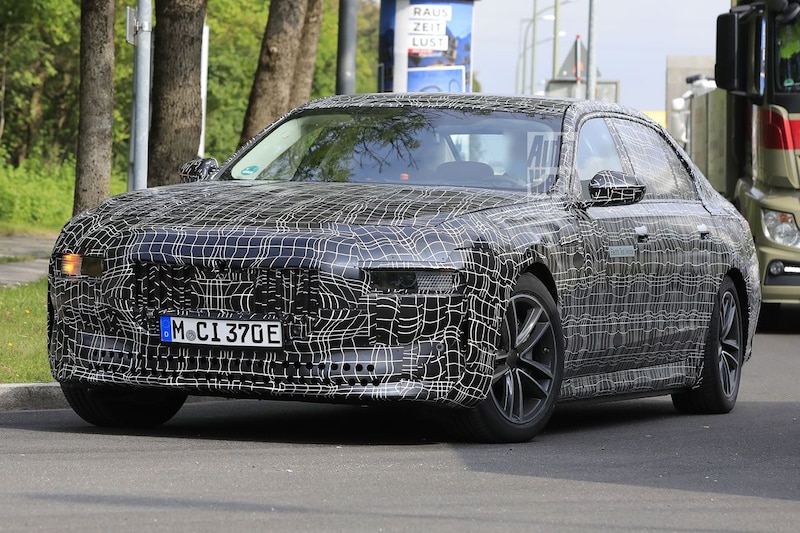
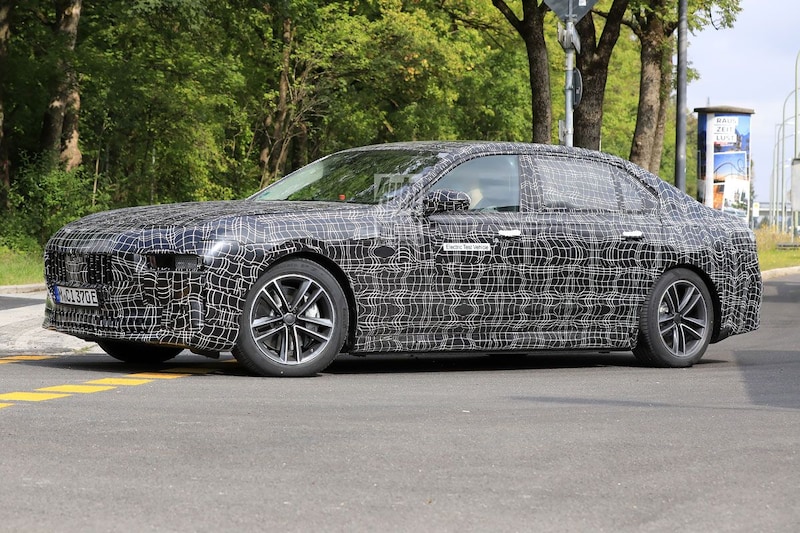
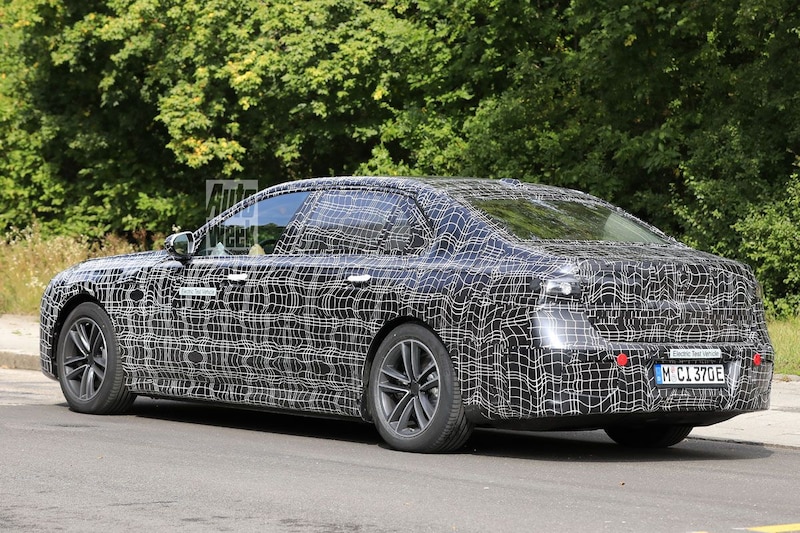
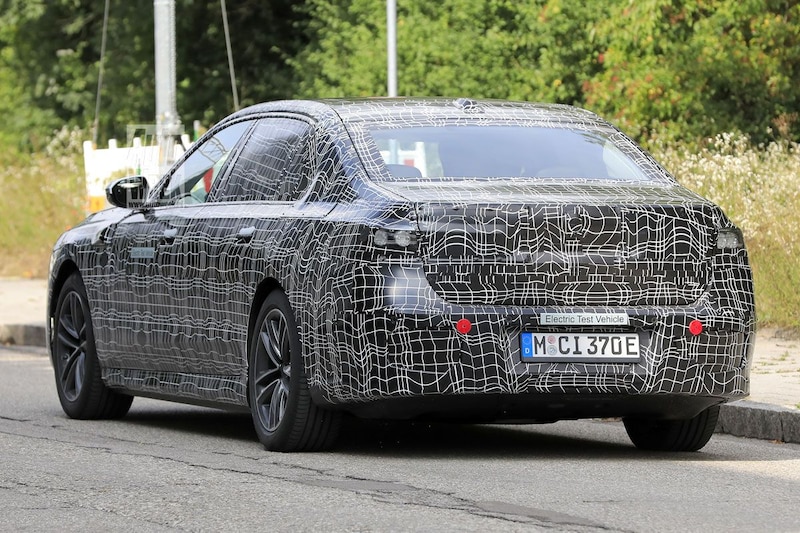
The BMW i7 will not just be an electrically powered 7-series, but a truly stand-alone model. That most likely means that it does not share its base with the next 7 series. The platform of the iX is more obvious. With the iX, BMW already showed that it is not afraid to come up with an extravagantly designed car and the same applies to the i7. Although classic 7-series lines still shine through, especially the front deviates completely from the familiar. The headlights sit remarkably low in the fairly sloping nose and the distinctive two ‘kidneys’ that are normally separate from each other almost form one large grille. It is certainly striking, but it looks less busy than we are currently used to from BMW. The stern will probably also be drawn in a fairly minimalist way. Of course, there are also various blue accents that are characteristic of the i-series. Those who prefer not to do so will probably have the opportunity to do so. After all, that is also possible with the iX.

Visor on EQS
With the i7, BMW opens the attack on another electric newcomer at the top of the food chain: the Mercedes-Benz EQS. Both models promise to be the cream of the crop in terms of range, power and autonomous technology. Noblesse oblige. If BMW wants to make a good impression, it must at least match the EQS in terms of specifications. According to the latest reports, it travels just over 700 km on a full battery. And that with a power of 500 hp in combination with four-wheel drive. In the same context, the i7 is also expected to operate, although BMW is still silent about expected performance figures in all languages. Incidentally, Mercedes-Benz has opted for the same approach as BMW with the EQS, because it will also be a technical and visual model separate from the S-class. The two German top EVs will soon be groundbreaking in terms of infotainment and autonomous technology. So be convinced that the i7 within BMW will be the new benchmark in that area and that the next 7 series will come up with similar gadgets. Hardware and software that enable almost fully autonomous driving (level 4) are probably available. With this, BMW is already sorting ahead of the time when the legislation is also ready for this. Until then, you can largely relinquish the steering wheel in various situations and let the i7 drive you. It’s nice that you no longer need an expensive private driver for that in the long run. It just takes a while; the BMW i7 is not expected to appear on the market until the first half of 2022.