
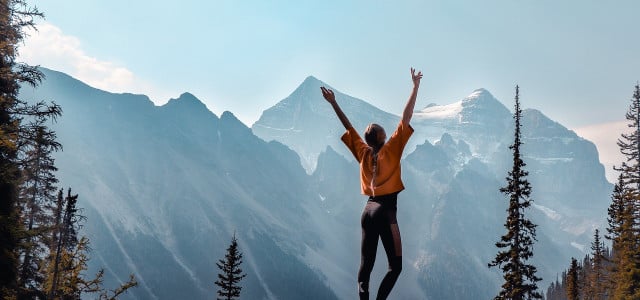
During mountain running you are in the middle of nature – but the sport also has a lot to offer. It makes sense, especially for beginners, to prepare extensively for running in the mountains. We’ll explain what you should pay attention to.
Mountain running takes you high up. Instead of running through flatland, the running route, as the name suggests, leads up a mountain. Mountain running is a demanding sport that requires a lot of preparation. But you are in the great outdoors and are usually rewarded for your efforts with a beautiful view.
If you are interested in mountain running, it is a big advantage if you already have running experience and have good endurance. A mountain run is too demanding for complete beginners. After all, the terrain in the mountains is completely different than, for example, the short jogging route in the park. This is not just due to the height differences or slippery stones, but also to many other factors. In addition, mountain running can put a huge strain on the body. So before you take part in a running competition in the mountains, you should start your mountain running training slowly and improve step by step.
By the way: In Germany, mountain running is not only possible in the Alpine region. There are also routes suitable for mountain running in the Harz Mountains, Saxon Switzerland, Franconian Switzerland, the Ore Mountains and the Black Forest.
Training for beginners: How to prepare for mountain running

The typical route of a mountain run is usually between six and twelve kilometers long. But there are also real mountain marathons in which the runners cover up to 40 kilometers. To be well prepared for this, practice is everything. Here’s how you can prepare for a mountain run:
-
Train in hilly terrain: To prepare for mountain running conditions, you should not only train your endurance on flat terrain. If you don’t live near the mountains, there may be hilly terrain near you or a park with a viewpoint where you can do your running training. Intensive stair running or a height-adjustable treadmill will also prepare you for the steep conditions of mountain running.
-
Learn to divide your strength: When running in a mountain, the climb is usually very steep right from the start. If you exhaust yourself at this point, you may run out of breath after the first few kilometers. When running in the mountains, you should always adapt your speed to the terrain. If the running route is particularly rocky and impassable or leads over fallen tree trunks, it is better if you cover this section at a brisk pace. This also prevents falls. Mountain running alternates between running, fast walking and running. If you are exhausted or on unsafe terrain, you can only walk quickly. Therefore, you should also incorporate different running speeds into your training.
-
Stride length and running technique: It is better to take smaller steps to save your energy. Make sure to keep your upper body upright and look into the distance and not at the ground when running uphill.
-
Prepare your body for mountain running: When running in the mountains, your body is put under different strain than when running in the valley. There is a lot of strain, especially on the legs and torso. To avoid unpleasant tension or pain, especially in your upper body, you should make sure to keep your upper body as straight as possible and stretch your hips when training on hilly terrain. You should also bend your arms and always pull well. This provides additional momentum when running in the mountains.
-
Find out about the terrain in advance: Every mountain running route is different and has its own characteristics. So before you head up the mountain, you should research the route carefully. Hiking guides, hiking websites on the Internet or exchanging ideas with other mountain runners can be options for this. If you have enough time, you can explore the route at a slow pace before the mountain run.
Mountain running for beginners: You need this equipment
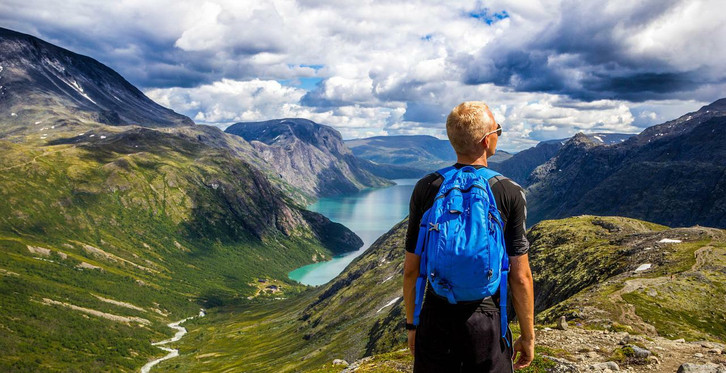
A mountain run needs to be well prepared. It is therefore important that you are appropriately equipped. The following equipment is recommended:
- Well-worn running or trail running shoes that stabilize your foot. Be sure to break in your shoes before heading up the mountain. Even though running socks are designed to prevent blisters, that’s no guarantee.
- Functional shirt and running pants.
- A fully charged cell phone so you can call for help in an emergency or check if you are still on the right route.
-
Sunglasses, sunscreen and a cap to protect you from the sun.
- A lightweight backpack that can hold a light water bottle and energy bars. It also doesn’t hurt to carry a map in your backpack in case your cell phone doesn’t have reception, or to pack a light running jacket in case you get cold.
- A GPS device or a GPS watch offers you even more security when it comes to the route.
- A headlamp in case you are surprised by the darkness.
- A rescue blanket – on some mountain runs it is even mandatory to have one with you.
Mountain running or trail running: these are the differences
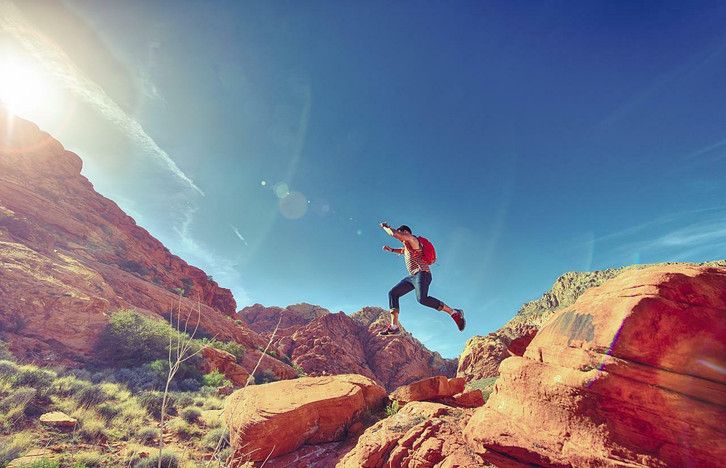
If you have already asked about mountain running, you have probably come across the term trail running. There is no exact definition of the two sports and the boundaries are fluid. In Germany, Austria and Switzerland, mountain running mainly only goes up. The starting point is in the valley and the finish is usually at the summit. The descent then often takes place at a normal, more leisurely pace.
When trail running, you also go back down at high speed. The risk of injury is therefore higher in this sport, as running downhill puts a lot of strain on joints such as the knees and makes it easier to fall. In addition, when trail running, large parts of the route are often off paved paths.
Read more on Techzle\.com:
- Long-distance hiking: That’s what’s special about it
- Slow Jogging: This is how you can run mindfully
- Gentle tourism: 15 travel tips for sustainable holidays
** marked with ** or orange underlined Links to sources of supply are partly partner links: If you buy here, you are actively supporting Techzle\.com, because we then receive a small part of the sales proceeds. More info.