

Natural running should strengthen the feet, improve running technology and prevent foot misalignment. Find out how best to start with what you should pay attention to and whether this running style is suitable for you at all.

Natural running is called barefoot running without shoes. On the other hand, it can also mean that shoes such as “barefoot” run. You try to use the original, natural form of running again. This means that this technique is less on the heel and more in the area of the midfoot.
The shoes used have less weight and less damping than classic running shoes. They also have a flat midsole and the explosion is also lower. The heel area is therefore lower to support running at the front and midfoot.
Minimal shoes are usually used for natural running. You have an even thinner sole as barefoot shoes and therefore even less damping.
By the way: In this article, the term ‘running’ is used in the sense of quick, sporty locomotion and not in the colloquial meaning of ‘go’.
Advantages and disadvantages of Natural Running
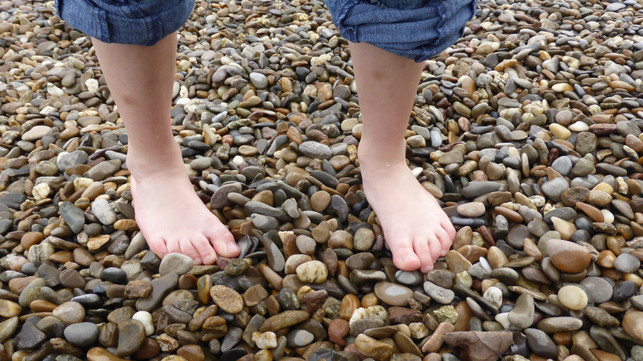
In addition to advantages, Natural Running also offers risks. An overview helps to realistically assess whether natural running makes sense for you.
The advantages of Natural Running are according to the running magazine Runner’s World:
-
You strengthen your abdominal and back muscles because you support the erection of your upper body by running barefoot.
- You improve blood flow to your feet.
-
You prevent foot and nail fungus and support healing through better blood circulation and a drier climate than in classic running shoes.
- The barefoot running is intended to contribute to activating the reflex zones, which should have a positive effect on the function of the organs. This has not been proven scientifically.
- You stimulate your brain through a better perception of the surface over the sole of the foot.
- The mobility of your foot and ankle improves.
- You prevent flat, sinking and spreading feet.
- You perceive physical symptoms faster than when jogging in classic running shoes and can therefore have them treated.
- Improved and more natural training for muscles, tendons and ligaments. Many muscles that are relieved by modern running shoes have to work again on the natural running.
There are also disadvantages at Natural Running, according to the Runtimes running magazine:
- The impact load is higher because the damping is missing from the shoe. So the burden for your joints is larger and problems in the knees, hips and spine can come.
- Fating fractures on the midfoot and irritation of the Achilles tendon and the plantar fascia are possible if the change is too fast.
- You increase the risk of cuts if you completely do without your shoes.
Who is Natural Running suitable for?
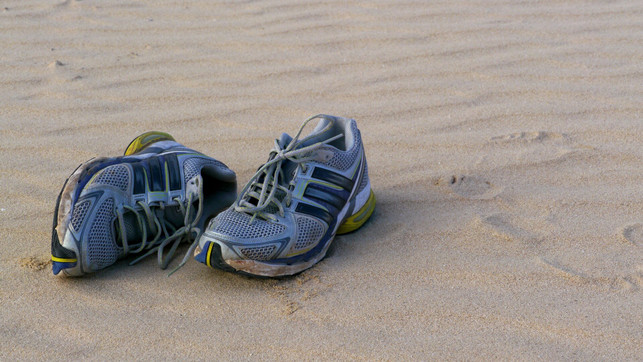
Basically, according to Runner’s World, Natural Running is basically suitable for everyone: n without relevant previous illnesses:
- If the foot misaligned in need of treatment, you shouldn’t just leave out your insoles and start running barefoot. This can lead to problems in the knee, hip or spine. In any case, clarify whether and to what extent the barefoot running makes sense for you.
-
Spine complaints or a recent surgery on this are also a reason to only start with barefoot walks and get medical advice beforehand.
-
Diabetics: Inside, walking barefoot should do without. They often have a less pronounced sense of pain and poorer wound healing, which can lead to problems even with small injuries.
- Runners: According to Runtimes, the natural running should rather avoid natural running.
- •, even if you have problems with the Achilles tendon or a heel spur, you shouldn’t go jogging barefoot.
Start natural running sensibly

“Highly steamed shoes take off work – but they also protect it. Minimal shoes promote the muscles – but they can also overwhelm many feet,” says Dr. Bader, specialist in orthopedics and trauma surgery towards Runtimes. He advises Natural Running to see as an addition and less as a replacement for classic running, especially when training is long and intensely trained.
This is how natural running beginners should start: slowly start and, for example, only at the end of the actual training session with minimal or barefoot shoes. In addition, soft floors such as forest, sand or grass are ideal because they springs better. At the beginning you should do without mountain runs, as you can concentrate on speed and technology on flat routes.
In addition, these tips from Runner’s World can help you at the beginning:
-
Warming up the foot muscles: roll your foot or circles it to prepare the muscles for the running unit.
-
Desensitization of the feet: For example, use a massager from the avocado tore to prepare your feet on uneven floors. This promotes blood circulation and improves the regeneration of the muscles.
-
You should thoroughly disinfect minor injuries and bubbles and protect them with a patch. This is how you prevent dirt and thus the development of inflammation.
- In order to keep the load less, it makes sense to shorten the steps and thus increase the step frequency: 170 to 190 steps per minute are a sensible value.
-
Pay attention to the surface and reduce your pace in wet, slippery areas to prevent injuries.
Read more on utopia.de:
- Barefoot in the snow: 3 reasons why you should try it out
- Barefoot hiking: Is hiking without shoes really?
- Mindful Running: Find more mindfulness when running
** marked with ** or orange underlined Links to sources of supply are partially partner links: If you buy here, you will actively support Techzle\.com, because we will then receive a small part of the sales proceeds. More information.