
A world first, battery life standards and more
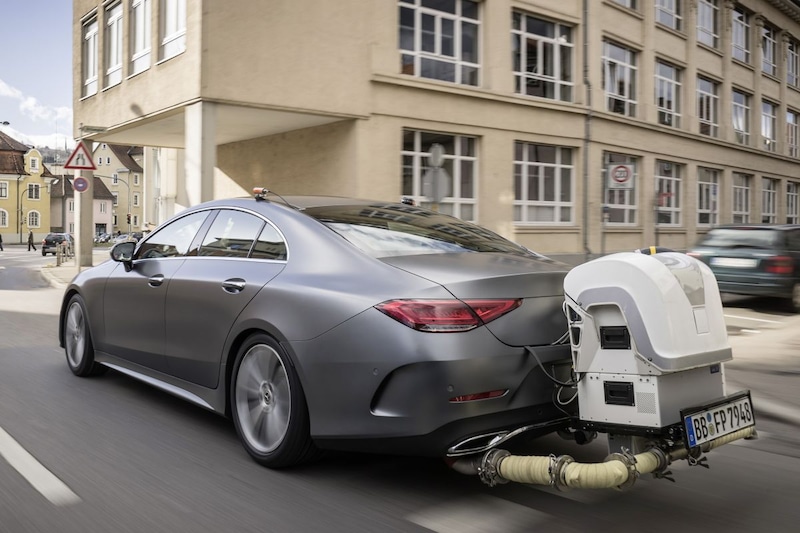
The European Commission has established the frameworks for the Euro 7 standard. New cars should comply with this from 1 July 2025. The most important points: the maximum emissions will be the same for all types of cars – regardless of the energy source they use, there will be standards for the particulate production of brakes and tires and cars must be used under more different conditions. and remain below the standard for a longer period of time.
The Euro 7 standard for harmful emissions for new vehicles on European public roads has already been much discussed. It was previously rumored that the new standard would be so strict that combustion engines would become almost irrelevant. That was recently adjusted. In fact, the Euro 7 standard would not even become stricter at all for passenger cars than the currently valid Euro 6 standard. That is now partly true.
The European Commission has now submitted its proposal for the Euro 7 standards to the European Parliament. Should that proposal be implemented unchanged, which must be done on July 1, 2025, it will mean the following for the emission standards applicable from that date.
Standards for all vehicles now under one denominator
Firstly: from 1 July 2025, the Euro 7 standard will say something about all passenger cars, commercial vehicles, trucks and buses. Until now there was a Euro 6 standard for cars and commercial vehicles and a Euro 6 standard for trucks and buses.
Stricter measurement procedure
The standards for the amount of emissions may hardly become stricter (you can read about this a little later in this article), but the circumstances under which a vehicle must comply with those standards will be expanded. Previously, these were limited, but from the introduction of Euro 7 they must be able to be achieved on both short and long journeys and in both hot and cold – and that is also being tested.
Drive types treated equally, so partly stricter standards
Previously, diesel and petrol cars had different emission standards. That is no longer the case with Euro 7. Whether a car runs on electricity, hydrogen, synthetic fuels, LPG, diesel or petrol: the limits are the same. In doing so, they are aligned with the strictest limits that already existed. This means that the previous limits for petrol and diesel cars are partly stricter. New diesels are now allowed to emit 0.08 grams of nitrogen oxides per kilometer. That will be 0.06 grams – the same as petrol cars now. For the latter, the standard for carbon monoxide emissions will become stricter. This goes from a maximum of 1 gram per kilometer to 0.5 gram per kilometer in order to keep pace with the current diesel standard.
World first: particulate matter standards for brakes and tires
The European Commission also wants to set limits on the production of particulate matter from tires and brakes. To date, they exist nowhere in the world. Due to the generally higher weight of electric cars, more particulate matter would be released from their tires, which would have a negative impact on the immediate environment. In the view of Brussels, there must therefore be standards, which are therefore the same for all types of cars. The same applies to the fine dust production of brakes.

Due to their higher weight, tires of electric cars would lead to more particulate matter production.
Also standards for EV battery life
Electric cars will soon not only have to meet standards for particulate matter production, but also standards for battery life. The European Commission sees that consumer confidence in fully electric cars leaves something to be desired. Many people fear a limited battery life. That is why there will be rules for the minimum lifespan of batteries.
Better and longer-term control of emissions from ‘older’ cars
At the moment, a new car must continue to meet the standard for five years and 100,000 kilometers. That is stretched to ten years and 200,000 kilometers. According to the European Commission, there is insufficient monitoring of the current requirement. With a view to expanding the standard, there must therefore also be a better control method. To this end, the body wants to use the technologies that are available today. This means that new cars will eventually be fitted with extra sensors. This should make it easier to measure emissions, even if a car has been on the road for a few years.
Whether the described standards will become reality remains to be seen. First the European Parliament has to vote on them, and then they still have to go through the Council of Europe. As soon as they are final, you can read it here.
– Thanks for information from Autoweek.nl