
Source of inspiration for all models
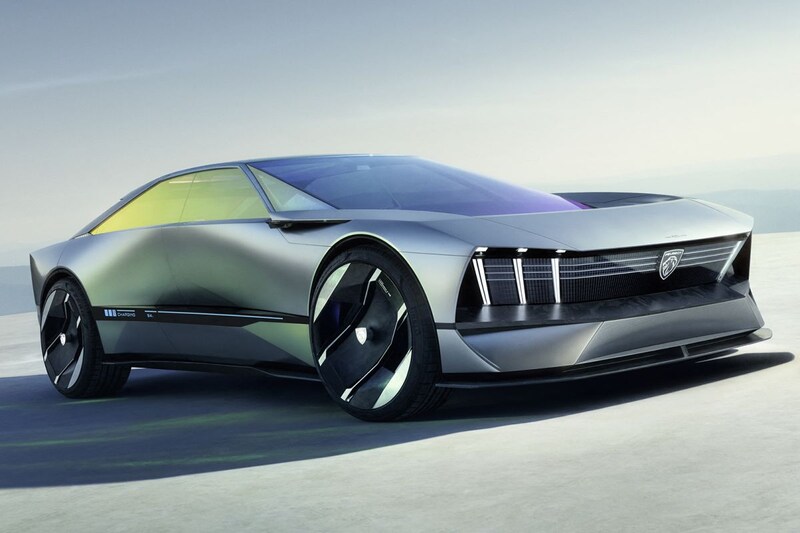
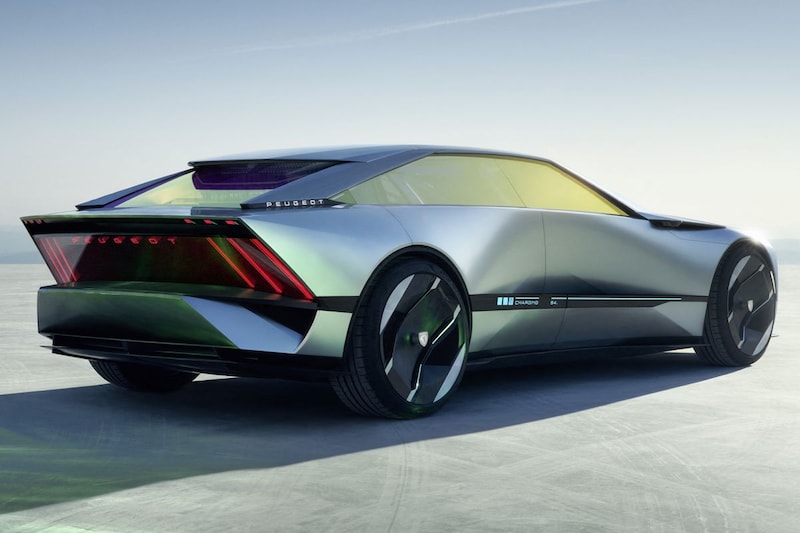


This is the Peugeot Inception Concept, by far the most important Peugeot study model in years. With the Inception Concept, the French look forward to a future in which Peugeots not only look very different, but are also developed according to a different philosophy. Of course, this also includes interesting new electrical engineering!
Highlights Peugeot Inception Concept
- Inception Concept introduces new design language
- New i-Cockpit: exceptionally clean interior
- 800 kilometers electrically thanks to new platform technology
- In 2025, the first EVs of Peugeot’s new phase
Peugeot will conjure up five completely new electric models from the top hat in the next two years. With this, Peugeot does not want to be just an EV brand in Europe by 2030, but immediately the leading one. Peugeot does not succeed just like that, not even as part of the wealthy Stellantis. Meet the Inception Concept, a show car that Peugeot says embodies its vision for future electric models.
As far as study models are concerned, Peugeot has a reputation to uphold. Over the past ten years, the brand has more often presented important concept cars that were more than just attention grabbers. We mention cars such as the Onyx (2012), Exalt (2014), the Fractal and Quartz concepts from 2015 and the Instinct Concept from 2017. All cars with which Peugeot actually gave strong hints to a revised or even completely new design language and with this Inception Concept, Peugeot certainly does not disappoint in that regard. He is certainly relevant. According to Peugeot, the Inception Concept marks the beginning of a new era, including in terms of design. From 2025, elements of this Inception Concept will seep to a greater or lesser extent into new Peugeot models. And not only to the bigger ones, also to the little ones!

Design
Although the Inception Concept is immediately recognizable as a Peugeot thanks to its taillights consisting of three vertical stripes, among other things, the show car introduces a new design language for the brand. We see sharp folds and clean lines in a design that, despite the heavily sculpted front and back, is relatively free of busy frills. Important elements include the geometric shapes, but also the shoulder section that takes a relatively large distance from the windows. Perhaps even more interesting is the front. That seems to have been done with the few LED tusks that characterize today’s Peugeots. Peugeot chooses to translate the design of the rear light signature to the headlights, with the result that you also see three vertical LED stripes that should resemble claws.

Peugeot Inception Concept: claws and classic influences.
The new Peugeot logo is of course central to the fully lit but closed ‘grille’, but three horizontal stripes run on either side. With this, the French probably wink at the relatively flat grilles filled with horizontal slats of models such as the 205, 405 and 605. The rising line above the ‘headlights’ reminds us somewhat of that of the 504 and 505.
The passenger compartment is placed ‘in’ the car in a special way. The whole resembles a glass capsule that is printed on the body. The windshield extends unusually far into the front. Literally even, the glass runs deeper than the nose is high. On the side you’ll find what Peugeot calls Tech Bars, displays that allow the Inception Concept to show information to the driver and passengers as they approach the car. The charge level is also visible, sensors from driver assistance systems are incorporated and the Inception can conjure up welcome messages. More notable things? The digital side mirrors are housed in wings that extend from the front to the rear and the car sits on distinctive 20-inch wheels with the Peugeot branding remaining static as the wheel turns.

Peugeot Inception Concept.
800 kilometers electric
Not only the design of the Peugeot Inception Concept is important, its technology is also more than relevant. It is in fact on one of the four new STLA platforms from Stellantis that have been developed specifically for electric cars. The STLA platform family will soon have four formats and this Inception Concept will be on the STLA Large version. That’s not just because the Peugeot Inception Concept is an exactly five meter long sedan. The study model may give a glimpse of an electric sedan in the segment of cars such as the upcoming Volkswagen ID7. So a future electric 508-like.
The STLA Large platform has 800v technology and has a battery pack measuring no less than 100 kWh in its bottom. That is good for a range of 800 km. Don’t feel like fiddling with a charging cable? No problem, the Inception Concept can be charged via induction. The reported relatively low energy consumption of 12.5 kWh/100 kilometers is striking. You will undoubtedly not get to that use if you regularly use the electric motors at full capacity. The Peugeot Inception Concept has two 680 hp strong copies together and with that the study model smashes to a speed of 100 km / h in less than 3 seconds.

Peugeot Inception Concept with the i-Cockpit of the future.
i-Cockpit of the future
At least as important is the interior of Peugeot’s vision of the future. It debuts a very futuristic further development of the well-known i-Cockpit, in which the rectangular steering wheel with large round holes is central, as it were, with incorrectly placed cup holders. The Hypersquare-called steering wheel acts directly as a means to operate almost all functions. You will not find conventional push buttons and touch-sensitive buttons do not play a role either. In the center of the steering wheel is a display with which you can easily operate all functions. In some form, this Hypersquare steering wheel will return in a new model, Peugeot already dares to promise.
As in almost every new Peugeot since the introduction of the previous generation 208, the Inception Concept also has a fairly high set of instruments, although it is certainly not a conventional one with its round shape. This part is also given a hip name: ‘Halo Cluster’. If you put the futuristic Peugeot in fully autonomous driving mode – it should also be able to do that – the Halo Cluster will sink into the dashboard and everything will slide in. A large screen will replace it. Ideal for watching a movie.

Sit comfortably.
Comfort
The furniture itself obviously looks very futuristic, but does not appear directly in a production model in this form. The seats are remarkably wide and the material used must adapt to the shape of the body. So comfort comes first, although the seats must also provide excellent support when things get wilder. Peugeot deliberately says to use as little black as possible in the interior and uses a striking amount of reflective materials such as glass and metal. Good for the atmosphere.
No more concept car without a passage about environmentally friendly materials, so Peugeot uses materials such as resin from dust remnants. The seats and floor are upholstered in velvet made from recycled polyester.
Of course you will not see everything from the Peugeot Inception Concept in production models, but it is evident that Peugeot will do certain things slightly differently in the near future. From 2025 we will know exactly what trickles down from the Inception Concept into reality.
.
– Thanks for information from Autoweek.nl