
‘Children are not road signs’
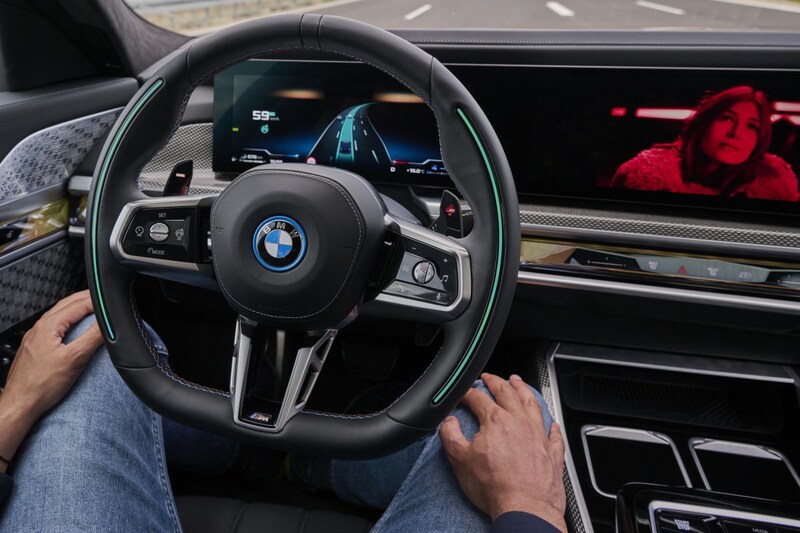
‘Faith’ in self-driving cars seems to be on the wane. This certainly also applies to the Breda University of Applied Sciences, where it is expected that the self-driving car will not be ‘smart’ enough for inner cities in the coming decades.
You can now leave some of the driving to the car in many ways, but completely handing over the wheel everywhere is not yet possible. Tesla’s FSD certainly still has its limitations. According to Ineke Spapé, professor of Mobility at Breda University of Applied Sciences, expectations of self-driving cars are often much too high. She is responding to TNO’s recently optimistic findings.
We probably don’t have to explain to you that children are not road signs, but according to Spapé, ‘smart’ self-driving cars do not see the difference. That is one of the examples of where things can go wrong with self-driving cars, especially in inner cities. “There is too much faith in this feasibility. Self-driving cars have been tested for years in different circumstances, but human behavior appears to be too complicated. Before self-driving cars understand human behavior, let alone the unpredictable behavior of children playing in the street, it will take decades are tested and further algorithms are built.”
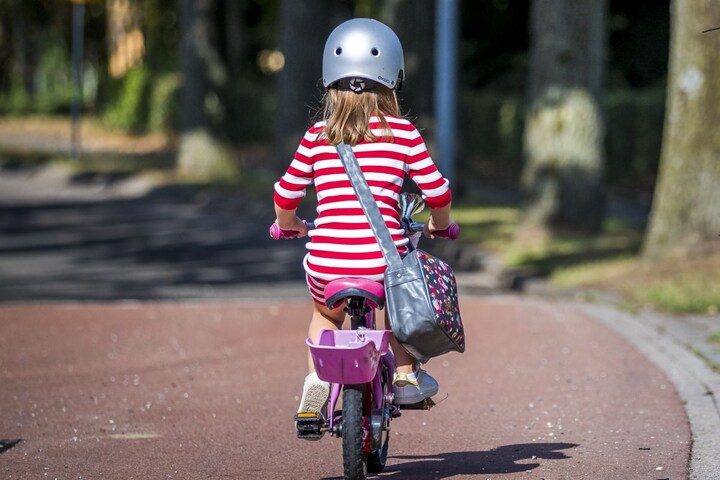
Child or traffic sign?
The recommendation is therefore to focus on innovations with which the car can support the driver, rather than replacing the driver completely. This may improve road safety sooner, although the focus will have to be broader. Spapé: “Examples include emergency braking systems, lane keeping assistance and blind spot detection. To date, these systems have mainly focused on the safety of the driver and occupants. It is time that these technologies are used to make vehicles safer and more attractive for other road users and their environment.”
The BUas professor also advocates technology to restrict telephone use by drivers, but also for ways to detect alcohol use and fatigue. Remarkably, people also see great opportunities for the often criticized ‘Intelligent Speed Assistance’, or ISA. “The Intelligent Speed Assistance (ISA), which automatically limits the speed of vehicles in accident-prone locations such as the city center and around schools, could provide a breakthrough. Trials are currently being conducted in Amsterdam for automatically limiting the speed for e-bikes This may provide a prelude to broader mandatory application of this variant, also for cars.”
– Thanks for information from Autoweek.nl