
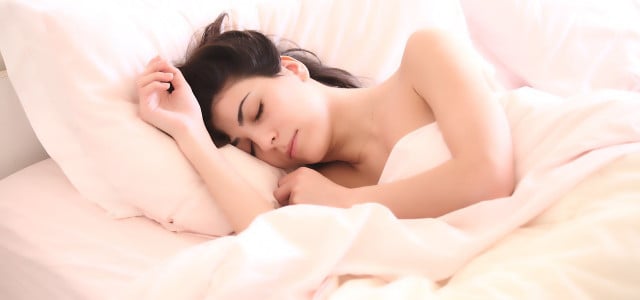
With a regular sleep rhythm, you will not only be fitter in the morning, but you will also live a healthier life in the long run. We give you tips for healthy sleep.
Every person has their own, individual sleep rhythm. This is often referred to as the sleep cycle and represents the sequence of sleep phases, which includes REM sleep, for example.
Sleep rhythm often also means the times at which a person goes to bed and gets up again or how long they sleep overall. The quality of sleep also plays a role.
That’s why a regular sleep rhythm is important
A regular sleep rhythm is important for your health. However, as already mentioned, every person is different – this also applies to their sleeping habits. When you go to bed and get up the next morning usually depends on your family, job and your habits. There are also different “sleep types”, which you will find out more about in the next section.
Jet lag and shift work can have a negative impact on your sleep. However, if you go to sleep at a similar time every day and wake up in the morning, you will make a significant contribution to healthy sleep.
According to studies, too little sleep or an irregular sleep rhythm can contribute to cardiovascular disease, obesity, metabolic problems and depression.
Sleep rhythm: These sleep types exist

However, the duration of sleep varies for each person. Seven to nine hours of sleep per night is considered “normal” sleep behavior. But this can also look different in different phases and situations of life. For women, for example, the cycle also plays a role in the sleep rhythm.
People are often divided into two categories:
-
Short sleepers need less than six hours of sleep.
-
Late risers usually sleep more than nine hours per night.
Long risers are not necessarily better rested than short risers. Instead, it is assumed that short sleepers sleep more effectively, while long sleepers dream a lot and wake up more often in their sleep. In addition, sleeping for long periods also has something to do with genes. And age also influences sleep: babies sleep up to 17 hours and people aged 65 and over usually sleep seven to eight hours.
There are also other sleep rhythm types. Early risers and night owls are described using technical terms that come from the bird kingdom:
- Larks are early risers who are fit early in the morning but go to bed early in the evening.
-
Night owls are people who are particularly productive late in the evening and at night and therefore sleep longer in the morning.
Tips for a regular sleep rhythm
The correct sleep rhythm depends heavily on your own internal clock. If you want to find out how your sleep rhythm works or how much sleep you actually need, there are several options, according to Harvard Medical School:
- Pay attention to how tired you are: If you are constantly sleepy, it may be a sign that you need more sleep and may need to go to bed earlier or sleep longer.
- Or you keep a sleep diary: In it you write down when you go to bed and what time you wake up. You also write down whether you woke up during the night or took a nap. You should also note whether you feel refreshed in the morning or not.
- Take a sleep vacation: For a period of two weeks, preferably during your vacation or holidays, avoid using an alarm clock and go to bed at approximately the same time. After a few days, once your sleep deficit has been filled, you should always wake up at approximately the same time. This will help you know how much sleep you need. For example, if you go to bed at 11 p.m. and wake up around 7:30 a.m. after a few days, that roughly means that your sleep requirement is over eight hours.
Sleep rhythm: This is what you can do to ensure healthy sleep
Finding the right sleep rhythm is not easy and lack of sleep cannot be compensated for. Luckily, there are many tips to help you sleep better:
- Establish an evening routine. These include, for example, fixed bedtimes.
- If you give up your cell phone and instead read a few pages of a book in the evening, this can improve the quality of your sleep. The blue light from screens can disrupt our sleep because it acts as a pick-me-up.
- Make sure you exercise regularly. This can also just be a walk.
- Avoid using alcohol to help you sleep. Wine and other alcoholic drinks worsen the quality of sleep. Of course, the same applies to drinks containing caffeine.
- Make sure you eat a balanced diet and eat light meals in the evening.
Edited by Lea Hermann
Read more on Techzle\.com:
- Overtired but still wide awake? 3 expert tips for falling asleep
- Sleep problems? These foods will help you sleep better
- Sleeping with the window open: Is that a good idea – even in autumn and winter?
** marked with ** or orange underlined Links to sources of supply are partly partner links: If you buy here, you are actively supporting Techzle\.com, because we then receive a small part of the sales proceeds. More info.