
Vectra variant missed the mark
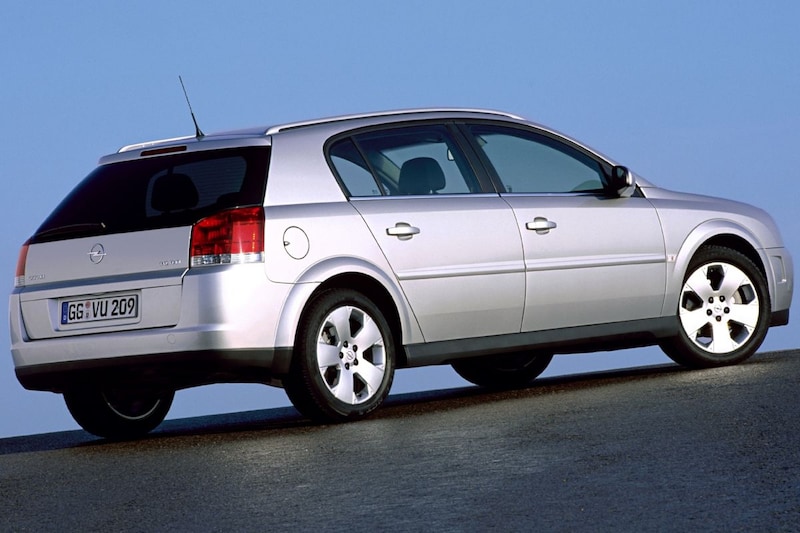


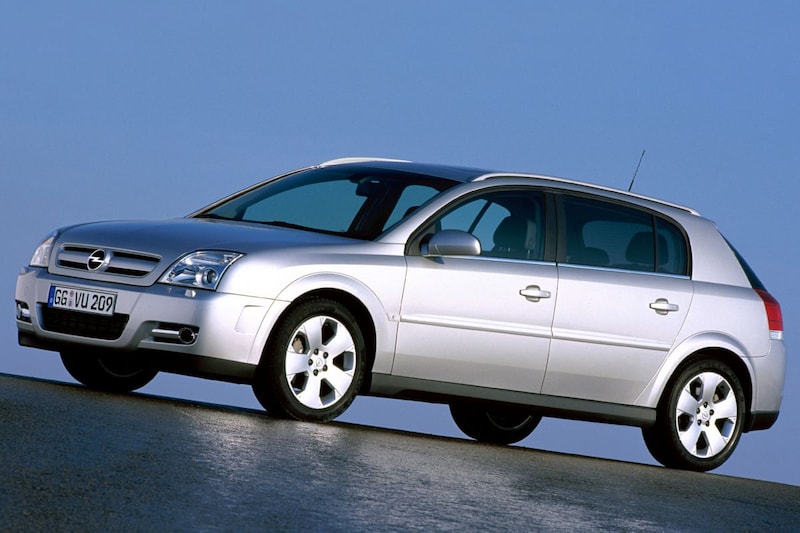
Twenty years ago, the business market was the terrain of well-behaved sedans and station wagons. If you searched carefully, you occasionally came across a hatchback disguised as a sedan, but it rarely became really special. But then Opel put the Signum in the showroom, a hefty Vectra with hatch butt. Had the Germans struck a goldmine with this, or was the Signum a desperate attempt to act stubborn? We look back, at the years of the Signum and what we did with it at AutoWeek.
As a successful businessman or woman, you also wanted to look good twenty years ago. In those days, that quickly meant that a fat German sedan or station wagon was parked in front of the door. Because BMW, Mercedes, Audi: you couldn’t really ignore it. But at a certain point Opel scratched its head and decided to play at this level. And this time the down-to-earth German brand didn’t venture on a huge sled like an Omega or Senator, but on a car that was somewhere between a hatchback and a station wagon. The Signum was born, and such a special packaging naturally required a special opponent.
We immediately looked for a Vel Satis
We didn’t have to search long. At the time, the French had the Vel Satis on offer, a huge Renault with a futuristic look. This big boy was also a mishmash, were we dealing with a hatchback or an MPV here? To add some ‘premium’ to the mix, we drummed up the A4 Avant, which, like the Renault, was often bought for its appearance or appearance. Did the Signum have enough to tempt the business driver?
Yes and no. The Signum profiled itself as the ultimate all-rounder. In terms of control, it was exactly between the buttery French and the sharp German. We had the Cosmo trim, and it was much better packed than the similarly priced Audi. His luggage compartment was a bit disappointing to us. The Signum was 4 cm longer than the Vectra it was based on, but that extra space benefited the rear passengers. Other minuses? Of course. We thought 40 grand for a Vectra variant was a bit much, but that did not prevent him from winning. Read the test again (log in and download pdf)
Signum as a thick 3.0 V6 diesel against 407 SW
A car that wanted to compete in the higher regions of the D-segment, of course, we had to put through its paces in its ultimate form. So we took the 3-liter V6 CDTi with all the trimmings. Again the German was hit by a French barrage from the Peugeot 407 SW. Cars for the enthusiast, the connoisseur who dared to drive something different. Did you like that a bit? We can answer that question in the affirmative. Both mileage eaters had a wonderfully creamy diesel under the hood. In terms of equipment, we had nothing to complain about and the price tags were evenly matched. We had to choose between German solidity and French softness. “The Peugeot has more on board and its engine is more powerful. Ultimate French comfort, but for long distances we opt for the slightly tighter Signum.” A photo finish, but another victory for the Signum.

Unfortunately for Opel, the business driver turned out to be stuck in the old pattern. De Signum managed to find less than 1,500 buyers in its first years. His facelift in 2005, after which he got the rounder Vectra front, was also unsuccessful. In total, Opel managed to sell 1,996 Signums, even less than the 2,187 Vel Satissen that Renault sold. And that is already an absolute rarity on Dutch roads. The stubborn Opel was in the showroom until 2010, the first Insignia took over from both the Vectra and the Signum, and more than 30,000 copies were sold until the second generation passed away at the beginning of this year. Meanwhile, the traditional middle class has also almost disappeared and the consumer now wants an SUV or crossover. Has that business driver still broken free of his old pattern …
.
– Thanks for information from Autoweek.nl