
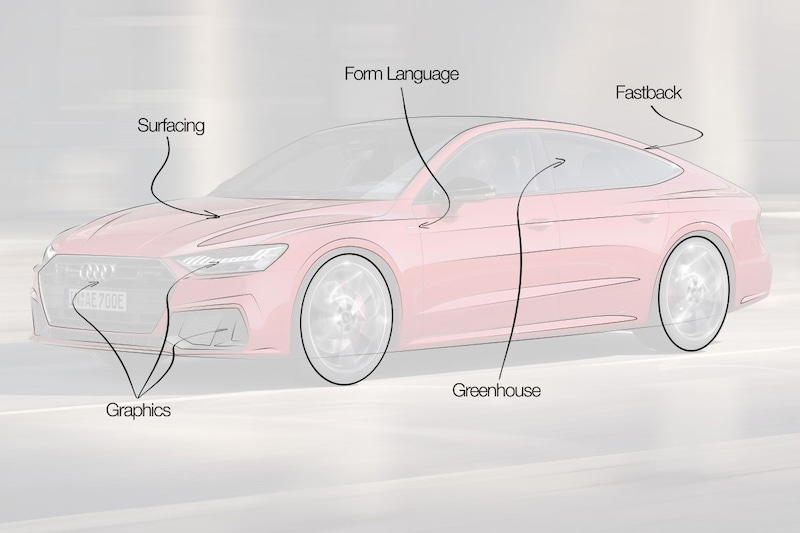
The design of the car designer has many terms. In episode 4 of ‘This is the jargon of car designers’, designer Niels van Roij discusses the concepts of fastback up to and including graphics.
Read previous episodes first?
Episode 1 from A-style to brightwork
Episode 2 from bodywork to cab rearward
Episode 3 from character line to down the road graphic
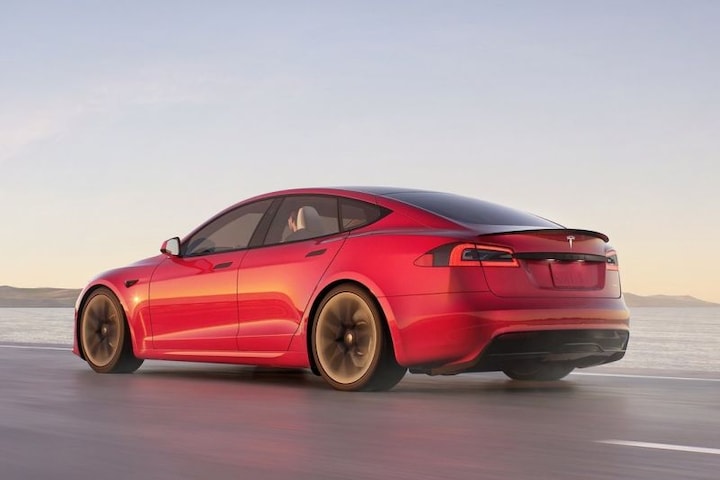
fast back:
This term for car bodies dates back to before World War II, when car manufacturers first started optimizing aerodynamics. Long roofs that slope down to the trunk of a car offer significant aerodynamic advantages. The fastbackshape gives cars a dynamic look and through its aerodynamic impact we see the fastback as an application nowadays more and more, especially in electric cars.

Form language:
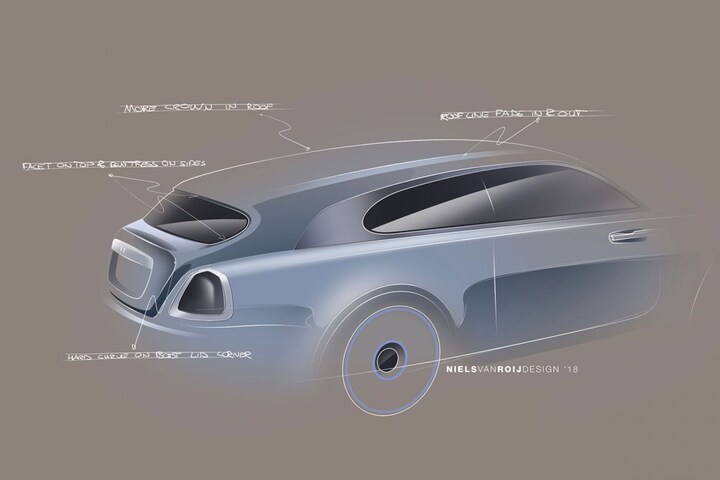
Once the basics of car design have been established, there are an endless number of form languages to apply: soft, hard, geometric, angular, organic, product-like, and so on. Between any two lines it is possible to create a large number of potential skin types: the so-called surfacing.
For example, cars with the same platform and proportions can have very different design languages. The Citroën C5 Aircross and Opel Grandland share a platform. The C5 Aircross uses a soft form language, the Grandland is harder, more linear and precise – more Germanic you could say. Within the many segments manufacturers operate in today, the main difference in design is generally the surface language used: the form language of the surfacing. Since chassis are shared and shapes are moving somewhat more towards each other due to safety requirements, production possibilities and aerodynamics optimizations, the difference in base volumes and proportions is often relatively small. The character of the brand and the model are therefore mainly formed by surface language and applied graphic elements.
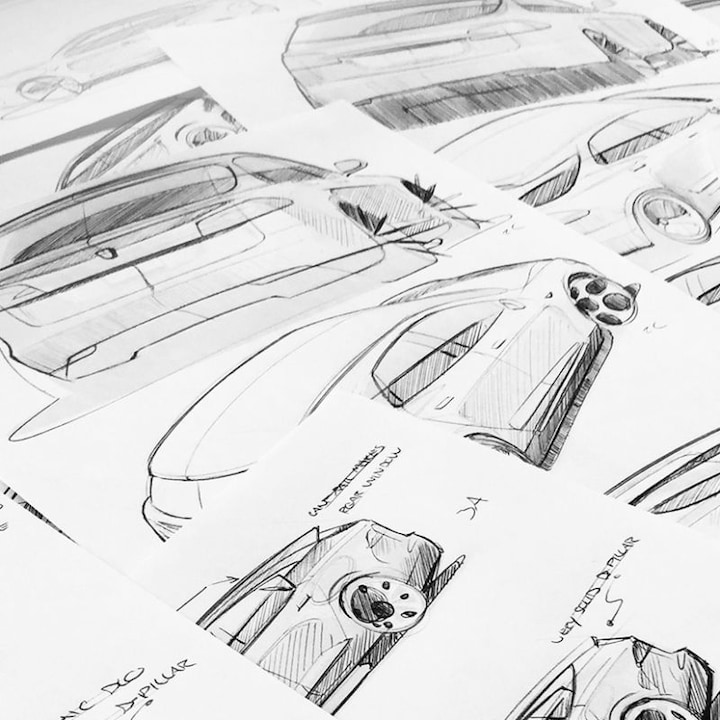
Representing complex surfaces and direction changes, highlights and shadows in a 2D sketch is one of the most important talents that car designers must have for developing the form language. The sketch is then developed in 3D. Refining the surfaces and controlling light lines across the body surface is a difficult task for the exterior design team and this phase is largely done in 3D on the computer. Often work is done in clay on scale models or full-scale models at the same time to create the form language to be able to judge in real light and (eventually) at full scale. Forming the form language is iterative: three steps forward and one back, the whole is further and further balanced and perfected. The development of the form language is complicated and forms the most important part of the design process in the car design studio.
(text continues below images)



G
Graphics:
Just as the muscles define the 3D shape over an animal’s bones, the graphics (the graphic expressions) the beast’s ultimate identity: the graphic expression of a tiger’s eyes tell you whether everything is still safe, or whether you really have to run. A subtle focus or relaxation around the eyes only makes a few millimeters difference, but we will immediately notice those millimeters in a face. The same goes for a car’s face: Grilles, grilles, headlights and taillights, window shapes and part lines are all parts of the graphics on a car. They are applied to the design once the base surfaces, the surfacingare more advanced in the process.
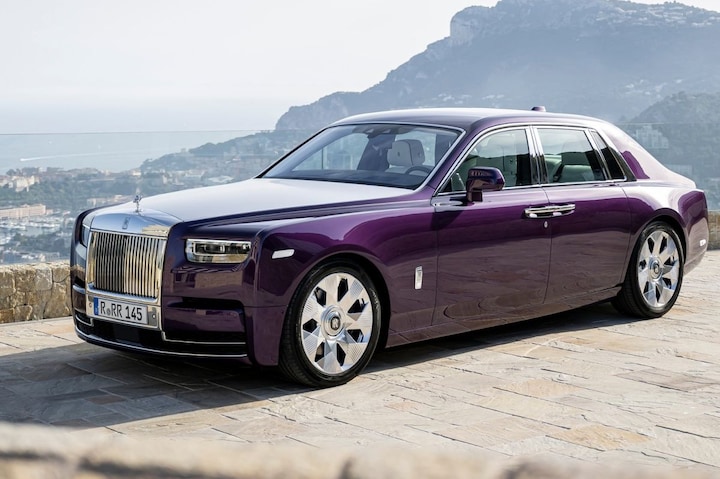
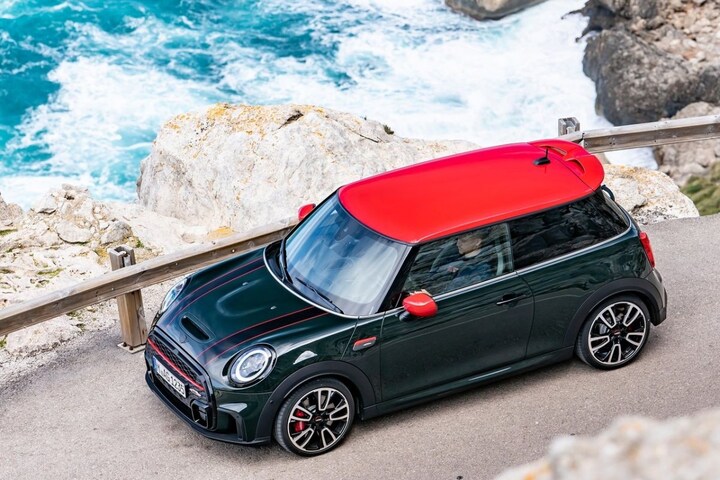
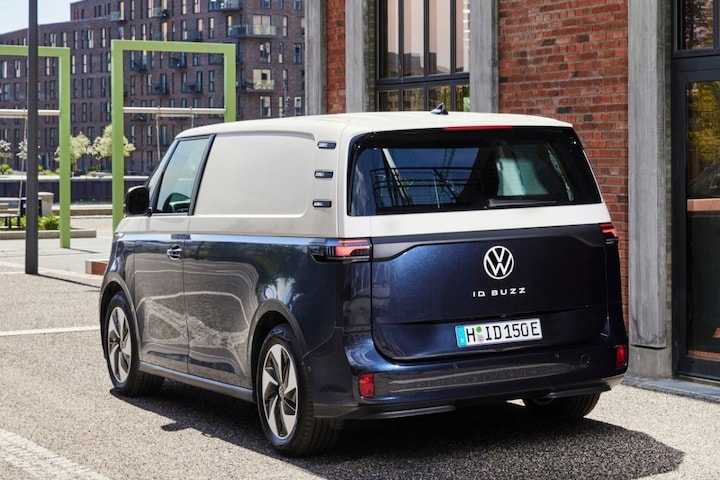
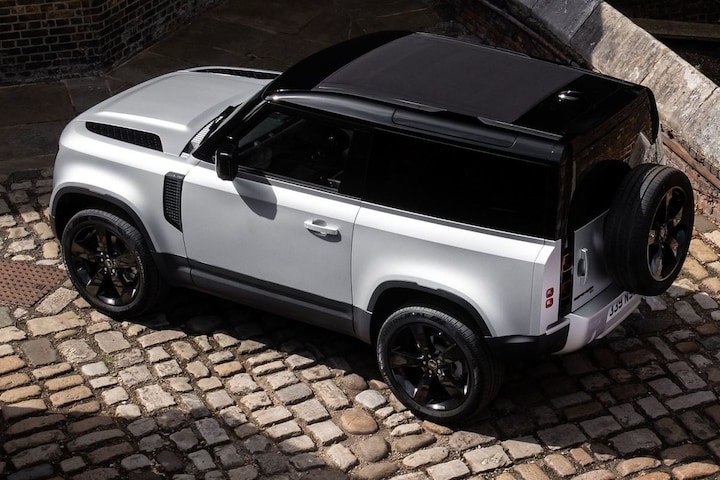
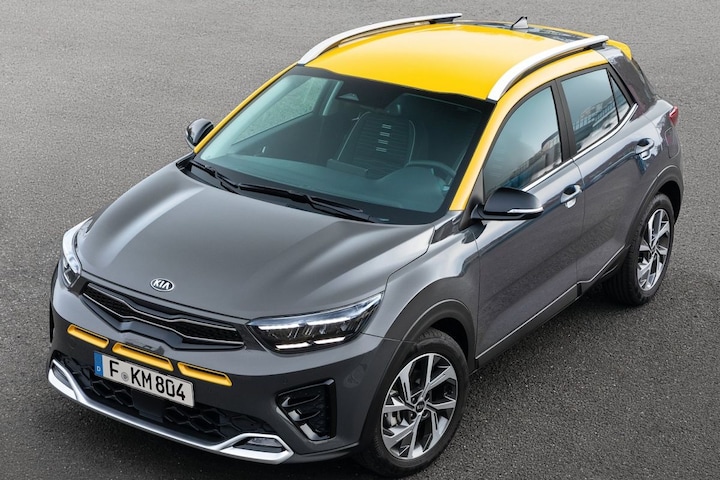
But the graphics go far beyond grilles and windows. Breaking down the underlying form using color is a very literal use of graphics on a car. Whether it’s two-tone paint on a Rolls-Royce, a contrasting roof color on a MINI, a coachline on a Bentley, the Volkswagen emblem on the nose of a VW ID Buzz, or the black wheel arch trim on a Defender: the purpose of this graphic elements is to break up the surfaces. They help make more visual impact and determine how we read the design. become often graphics also used to distract the eye. For example, to disguise visual weight in a design.
The previously treated Down the Road graphics are naturally part of the graphics. Like humans and animals, a car has a face, where the lamps are the eyes and the central grille is the focal point, the mouth.
(Text continues below images)

Green house:
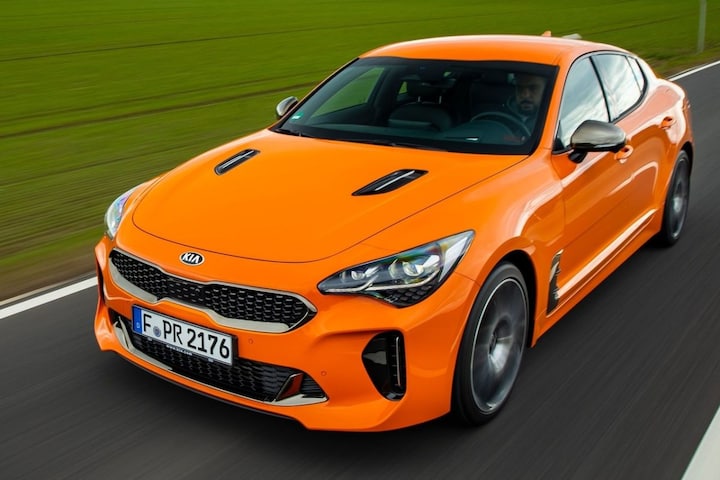
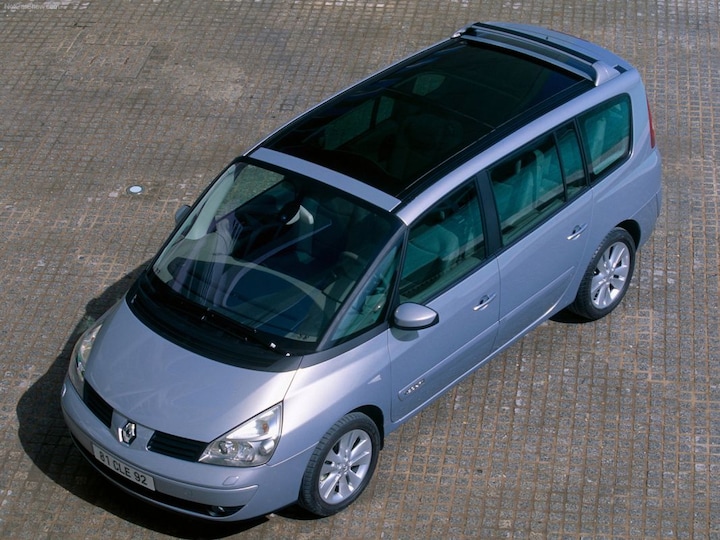
The glass surfaces of the body joined together to form the greenhouse of the car. The windscreen and rear window are traditionally less distinctive than the side windows, which are also DLO are called. There are, of course, exceptions to the rule that the windscreen and rear window are less distinctive. The so-called dog-bone that Kia has applied to various cars and the unique shapes of the glass surface in the Renault Espace are good examples of this.
(Text ends below images)
– Thanks for information from Autoweek.nl