
Shifting responsibility
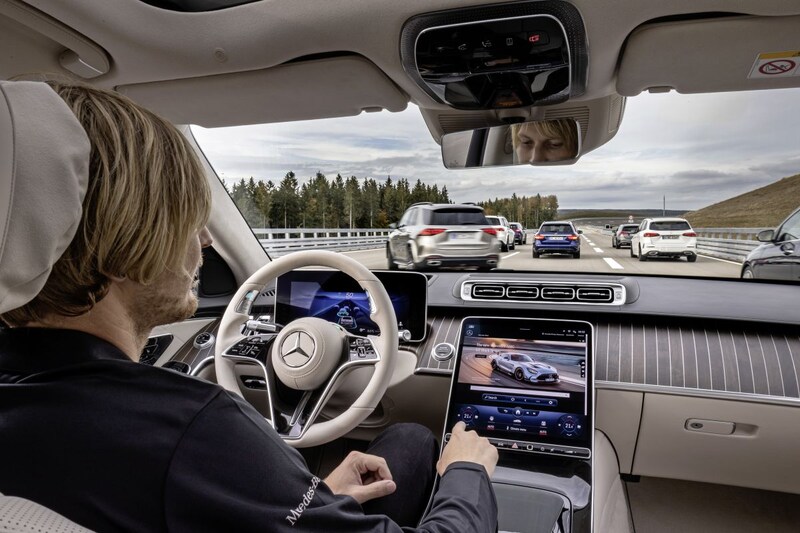
The British government is working on a legal plan for autonomous driving. That reports news agency Reuters. From 2025, autonomous cars should be able to drive on UK roads. Manufacturers are expected to have a considerable burden on their shoulders.
The British government’s plan states that manufacturers will be held legally responsible for the actions of the vehicle if it drives autonomously. This means that the damage caused after an accident can no longer be recovered from the driver, but that the manufacturer has to make the cut. That legislation should come into effect from 2025. The British are also investing €117 million in research and development around autonomous driving. Of that amount, more than €41 million is being invested in research into the safety of self-driving vehicles. Next year the first step should already be taken: then the British want to allow partially self-driving cars (level 3) on major roads.
“We want the UK to be at the forefront of developing and using this fantastic technology,” said Transport Secretary Grant Shapps. “That’s why we’re investing millions in key research and drafting legislation so we can reap the full benefit this technology promises.”
The UK government’s plan focuses on Level 4 and -5 autonomous cars. These are cars that can, in principle, drive without driver intervention, with level 5 being the most far-reaching level. In that case, any form of manual control will be deleted and the car can independently find its way to its destination without people on board.
Not ready yet?
The European Union is also working on a legal framework for autonomous driving, but the European legislator has not yet gone so far as to place the responsibility on manufacturers. As an intermediate step, the EU first wants to allow the sale of level 3 autonomous cars, whereby the driver can only relinquish control in specific situations and always remains responsible. So the United Kingdom goes one step further by holding the manufacturer responsible if the car drives itself.
At the moment, however, car manufacturers do not seem ready for a massive roll-out of the two highest levels of autonomous driving. For example, Tesla’s ‘Full Self Driving’ is still in the beta phase – not without problems – and concerns such as Geely, General Motors and Volkswagen are also still in the experimental phase with regard to level 4 autonomous driving. In addition: is the consumer really waiting for autonomous cars? A large American study showed that this was not the case, although that may of course be different on the European market.
– Thanks for information from Autoweek.nl