
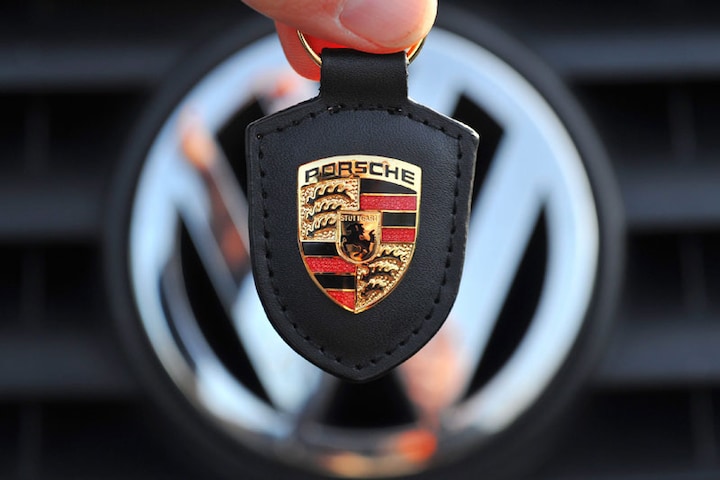
Volkswagen is listing a quarter of its Porsche shares to free up cash for the energy transition. So there is more distance between two companies whose history is so closely intertwined. But once the gap was many times wider. A look back at a difficult and turbulent marriage.
At the end of September, the newspapers worldwide headlined the IPO of Porsche. Volkswagen AG is selling a quarter of its Porsche shares to free up capital for the energy transition. That means the largest European IPO in twenty years, worth about ten billion euros.
familyyes, but happy?
Although most people see Volkswagen and Porsche as one big happy family, the reality has always been very different. Family, yes, but happy? Anything but. That is why it is good to look back on the turbulent years of Volkswagen and Porsche in the context of this IPO. To understand the situation, it is important to know that the Porsche family consists of two branches: the descendants in the male line of Ferdinand Porsche and the descendants of his daughter Louise, resulting from her marriage to Porsche’s lawyer, Anton Piëch. Two individuals from this rapidly expanding family tree determine the company’s turbulent history: Wolfgang Porsche (nicknamed WoPo) and his cousin Ferdinand Piëch. The ‘real’ Porsches often see the Piëchs as second-rate, but that cannot prevent the brilliant engineer and businessman Ferdinand Piëch from working his way up to the uncrowned king of the group, often arousing the dismay of his cousin Wolfgang.

Wolfgang Porsche
Besides being a genius, Piëch also turns out to be completely unpredictable at times, an unguided projectile. In 2006, for example, he shocked the world by calling on his unsuspecting CEO Bernd Pischetsrieder during the annual meeting en plein public, in order to make way for his new crown prince and right-hand man Martin Winterkorn. Pischetsrieder is a cost-cutter, he wants to scrap expensive models such as the Touareg and Phaeton because, in his opinion, they are too ambitious for Volkswagen. But coincidentally, those are the crown jewels of Piëch.

Ferdinand Piech.
Veto right of the state of Lower Saxony
Meanwhile, Porsche’s share in Volkswagen is growing, which also strengthens Wolfgang’s position. He has long criticized VW’s governance structure and wants to change it. However, to push through that, Porsche needs a 75 percent stake. And the veto right of another important shareholder, the state of Lower Saxony, must also be removed. Piëch’s position of power begins to falter, but brilliant as he is, he mercilessly strikes back. Through his wife Ursula, he restores his difficult relationship with the Prime Minister of Niedersachsen and VW Commissioner Christian Wulff, who in turn puts Angela Merkel in his favour and uses the right of veto, forcing Wolfgang to back down.

Ursula used to visit car shows in the company of Ferdinand.
The battle is won, but the war rages on. A year later, the CEO of Porsche Wendelin Wiedeking has devised a clever share trick that will allow the relatively small Porsche to acquire the gigantic Volkswagen, and it seems to be succeeding. But then the financial crisis hits. The banks want their money back from Porsche, money that is desperately needed for the monster takeover, and more. From one moment to the next, the aggressor dangles on the brink of bankruptcy and has to hope for the helping hand of Volkswagen.

Piëch and Winterkorn in better times.
Absolute low point was in spring 2015
Now it’s up to Piëch to play his trump card. He is willing to save Porsche, provided that things are put in order within four weeks. “It cannot be that Volkswagen has to pay for the risks that Porsche has taken.” This is how he serves his grandfather’s life’s work.
Once again, Ferdinand Piëch overlooks a steaming battlefield as the victor. Satisfied, he goes back to business, supported through thick and thin by his inseparable right-hand man and CEO Martin Winterkorn. But the relationship with his cousin Wolfgang, with whom he sits on the supervisory board of Volkswagen AG, has meanwhile reached an all-time low. In April 2015 he again makes friend and foe speechless. In an interview with Der Spiegel, he speaks the historic words: “Ich bin auf Disstanz zu Winterkorn.” In other words, he distances himself from his devoted ally.
It is an unprecedented vote of no confidence and, just like nine years earlier with Pischetsrieder, a bolt from the blue. But unlike then, Piëch doesn’t get off so easily this time. In fact, it will be his downfall. Wolfgang Porsche hastens to declare that the words are solely for the account of Piëch and most of the other commissioners also stand up for Winterkorn. Piëch is put in front of the block: no more bad words about Winterkorn or ‘Heraus!’ When it turns out that he already has Matthias Müller as a successor in the starting blocks, that’s enough. The supervisory board stands as one block (except for Piëch’s wife Ursula) against the falling patriarch. The couple drops off.
Redeemed, but not for long
Martin Winterkorn adjusts the panels of his jacket, straightens his back and goes on again, with the certainty of the supervisory board mandate behind him and freed from the whims of his former patron. Nevertheless, he has the class to extensively praise Piëch and his contributions to the success of Volkswagen at the next annual meeting.
Winterkorn cannot enjoy his victory for long, because in September of the same year, barely five months later, perhaps the greatest crisis in Volkswagen’s history breaks out and Winterkorn is killed at Dieselgate. It cannot be otherwise than Ferdinand Piëch has been rubbing his hands in the family villa on Lake Wörthersee as Winterkorn stumbles after all.
It’s tempting to think that Piëch saw the diesel scandal coming and left the sinking ship in this way, but we’ll probably never know for sure. He never spoke of it again and passed away on August 25, 2019.
.
– Thanks for information from Autoweek.nl