
©Volkswagen
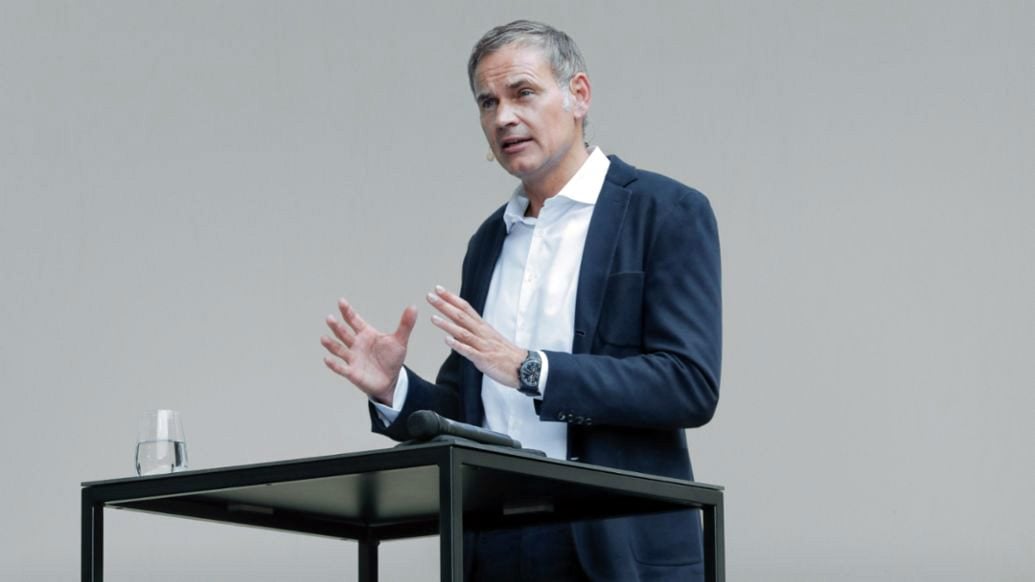
Current Volkswagen CEO Herbert Diess will be replaced in early September by Oliver Blume, who will also remain at the helm of Porsche. A change which is not trivial insofar as the new president of the group has different plans, in particular with regard to electric vehicles.
While Volkswagen’s current CEO, Herbert Diess, made the strategic choice to go electric, the group’s new CEO, Oliver Blume, is more nuanced on the subject. Indeed, he is a fervent defender of synthetic gasoline.
Towards a new Volkswagen electric strategy?
With a 27% increase in deliveries of its electric vehicles over one year, or 217,000 cars, Volkswagen is doing well. Growth driven in particular by its ID.4, which is one of the best-selling electric models in Europe. The German brand wants to continue this momentum with its new ID.5. Another proof of the group’s significant investment in the transition to electricity is the construction of its own Gigafactory to manufacture and recycle its batteries.
But the CEO of Porsche, who will also take over the reins of Volkswagen in a few weeks, has always been a fervent defender of e-fuel, also known as “synthetic gasoline”. This technology, which relies on hydrogen and carbon dioxide, has been the subject of a massive investment of 75 billion from Porsche to continue to produce combustion engines while becoming carbon neutral by the end of the decade.
However, Porsche has also shown its ambitions in terms of high-end electric vehicles. But the company may see in the electrification of its products a simple alternative or a transition before reaching its objectives in terms of the production of synthetic gasoline. Next year, Oliver Blume is counting on the 24 Hours of Le Mans to demonstrate the efficiency of this type of fuel. A showcase that could put the spotlight on e-fuel in which the new CEO of the group strongly believes.
Blume went so far as to put pressure on the German Minister of Finance, Christian Lindner, who then expressed his disagreement with the ban on the marketing of thermal cars in Europe from 2035. The energy transition of vehicles promises to be particularly eventful at Volkswagen , but also on the old continent.
lemon squeezer