
Exception creates a lot of work
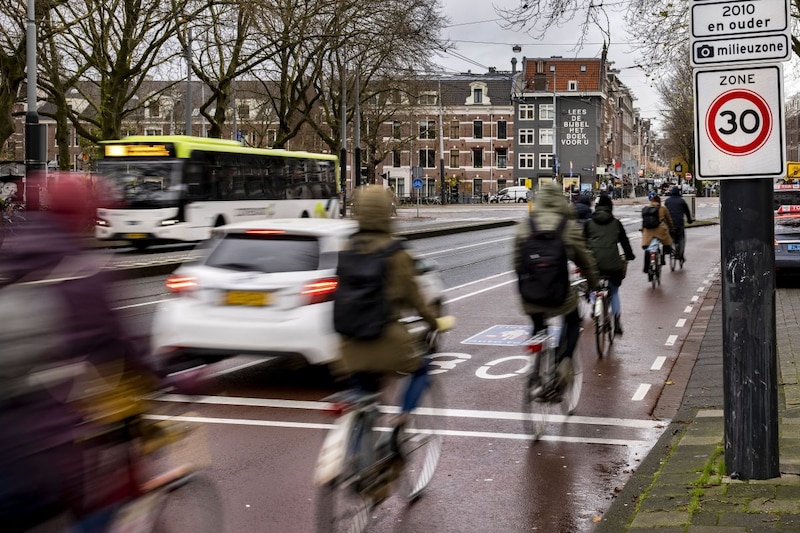
If it is up to Veilig Verkeer Nederland, a maximum speed of 30 km/h will become the norm in built-up areas and 50 km/h will be the exception. Now it’s the other way around. According to VVN, the lower maximum speed can prevent a lot of suffering.
Several municipalities have already changed their mind and would like to see 30 km/h become the norm within built-up areas. VVN shares that view. On its website, Veilig Verkeer Nederland indicates that it can save a lot of work to make 30 km/h the norm, instead of looking at each road to see whether 30 km/h is desirable. “At the moment there are still all kinds of regulations for the road layout of a 30 km/h area. This means that a road manager must first demonstrate that the lower speed is desired. Then the road layout must be connected to this. Think of the application of speed bumps. and road narrowings. That makes implementing a lower speed expensive and difficult. That is why we like to turn it around: make 30 km/h the norm, unless a road authority can demonstrate that a higher limit is desired.”
VVN is in favor of 30 km/h as the maximum speed, because according to studies it can save injuries and deaths. “The Road Safety Research Foundation (SWOV) estimates that with a speed reduction for half of the 50 km/h streets, no less than 22-31 percent of the number of road deaths and injuries can be prevented.” In addition, the survival rate for a pedestrian in a collision with a car would be 95 percent on a 30 km/h road, compared to 85 percent on a 50 km/h road.
On certain roads within built-up areas, 50 km/h will remain necessary as a limit. VVN also mentions that this is necessary, for example, for good passage for emergency services. However, there is still room for improvement on those roads. VVN advocates physically separating vulnerable road users from the carriageway on 50 roads if this is not already the case. So you can think of a cycle path that runs parallel to the road, but is not separated from motorized traffic by just a broken line. Another pain point, according to VVN, are streets where you can drive at 30 km/h, but there is no sidewalk. The agency prefers to see a maximum speed of 15 km/h there.
For the time being, it is still difficult to implement such changes. Since the end of last year, the House of Representatives has been requesting changes to regulations so that 30 km/h becomes the norm in built-up areas. It is not yet known if or when that will be the case. According to VVN, adjusting the regulations is ‘quite complex’.
– Thanks for information from Autoweek.nl