
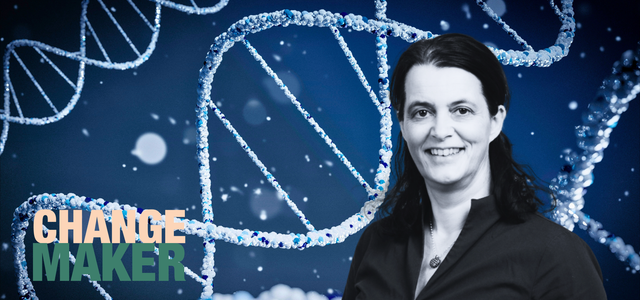
Heat, air pollution, loss of biodiversity: Environmental medicine Prof. Dr. Claudia Traidl-Hoffmann explains why our health does not only develop in doctor’s offices – and why prevention must become the most important medical project of the future.
When the apartment no longer cools down at night, when the air in the city is stagnant and there is a lack of sleep, many people suddenly feel firsthand what the “climate crisis” means in everyday life. For Prof. Dr. Claudia Traidl-Hoffmann is exactly the point: environmental and climate changes are no longer an abstract topic of the future, they have a direct impact on our health.
In the Utopia Changemaker Podcast, the environmental medicine specialist and allergist talks to Utopia editor-in-chief Martin Tillich about why heat is medically underestimated, what role air pollution plays in chronic diseases – and why she describes the energy transition as perhaps Germany’s largest health project.
In this article we summarize some of the key points from the conversation. You can listen to the full episode here:
Spotify, Apple Podcasts – and everywhere podcasts are available.
“The energy transition is a health project – and an economic project”
When asked what good news she would like to see from environmental medicine, Traidl-Hoffmann answers without hesitation: a stop to fossil fuels – and a consistently implemented energy transition.
The reason: Many pollutants in the air come from combustion processes. They can make mucous membranes and skin “more permeable” – and thus promote illness.
“The energy transition is both a health project and an economic project.”
How research has understood that environment can “turn genes on and off.”
Environmental medicine has been researching for decades how closely the environment, climate, biodiversity and health are connected. Traidl-Hoffmann sees a major breakthrough in the knowledge that environmental factors can influence which genes are active in the body via epigenetics.
Your point: Health depends not only on medical care, but also on how we live and in what environment.
“Health comes from where people live”
In the conversation, Traidl-Hoffmann comes up with a formula that reads like a criticism of the system:
“We supposedly have a health system, but this health system actually cares far too little about health; instead, it takes care of illness.”
Health does not primarily arise where people are treated – but where they live: in their air, their diet, their sleep, their environment.
The central message of her work and her book The Medicine of the Future:
“The medicine of the future is preventive.”
Why heat is more dangerous than many people think
Heat has long been trivialized in society, with images of “ice-licking children” rather than as a health risk. But that is changing: awareness has been growing in recent years, including in hospitals.
“The biggest problem with heat: it is underestimated.”
According to Traidl-Hoffmann, older people, people with previous illnesses and people who work outside are particularly at risk.
She also emphasizes the role of hot nights: If the body can no longer cool down sufficiently, there is no regeneration.
“A hot day costs us 400 million euros” – today
Heat is not only a health problem, but also an economic factor. Traidl-Hoffmann points to data according to which a single hot day already costs Germany enormous sums: 400 million euros per hot day – among other things through loss of productivity and strain in the health sector.
From their point of view, looking at costs is important because it can accelerate political decisions – similar to investments in sustainable buildings or clinics: invest today instead of making expensive improvements later.
This is what awaits you in the episode
- Why Traidl-Hoffmann describes the energy transition as a health project
- What epigenetics means in this context (“switching genes on and off”)
- Why heat was medically underestimated – and what is currently changing
- Practical heat tips from a medical perspective (including medication check)
- How air pollutants and biodiversity loss promote allergies and chronic inflammation
- Why prevention doesn’t work without urban planning, traffic and occupational safety
Listen now
Spotify, Apple Podcasts – and everywhere podcasts are available.
** marked with ** or orange underlined Links to sources of supply are partly partner links: If you buy here, you are actively supporting Techzle\.com, because we then receive a small part of the sales proceeds. More info.